

By Emmanuel Adegbite
To describe Nigeria as a democratic state is to affirm a constitutional identity that is persistently challenged by lived reality. The country possesses all the visible architecture of democracy, elections, a written constitution, and a separation of powers, but these structures, rather than guaranteeing democratic substance, often function as ceremonial assurances that conceal deeper dysfunction. The Nigerian experience forces a difficult but necessary distinction between democracy as a system of rules and democracy as a culture of accountability. It is within that gap that the true condition of the state must be examined.
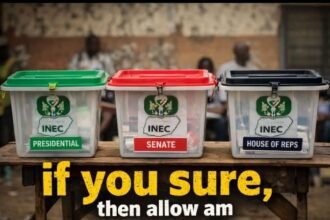
At the center of this examination lies a recurring contradiction: power in Nigeria is formally derived from the people, yet frequently exercised in ways that appear detached from them. Elections are the most obvious expression of democratic will, but their credibility has been repeatedly strained. The 2023 general elections, conducted by the Independent National Electoral Commission, were introduced as a technological turning point, with assurances of greater transparency through electronic transmission of results. What unfolded, however, was a stark reminder of the fragility of institutional promises. The failure of the result-viewing system to perform as expected did not merely disrupt a process; it disrupted confidence. When the mechanism designed to ensure transparency falters, the legitimacy of the outcome inevitably comes under question.
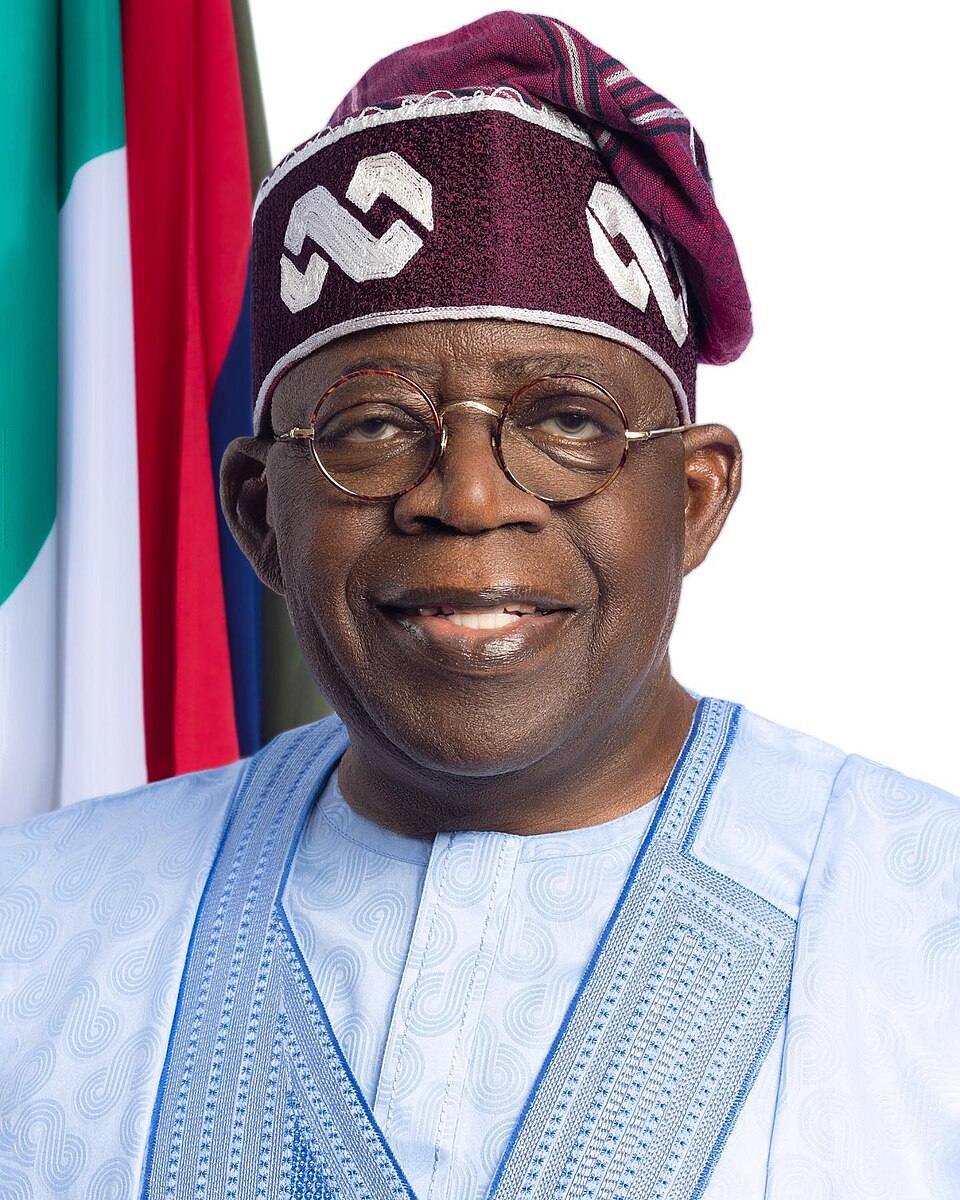
The administration of Bola Ahmed Tinubu inherited this fragile legitimacy and has, in its early tenure, faced the consequences of governing within it. The legal contestations that followed the election were resolved within the judicial framework, yet they exposed a deeper crisis, the inability of formal adjudication to command broad public trust. In theory, the courts are the final arbiters of electoral disputes. In practice, their decisions increasingly exist in tension with public perception, reinforcing the sense that legality and legitimacy are not always aligned.

Beyond the electoral process, policy decisions have further complicated the democratic narrative. The immediate removal of fuel subsidy in May 2023, long defended by economists as necessary, was executed with a suddenness that left millions exposed to economic shock. Inflation surged, purchasing power declined, and the cost of basic living rose sharply. Economic reform is not inherently undemocratic, but democracy demands that such reforms be accompanied by transparency, consultation, and credible mitigation. When citizens experience policy as imposition rather than participation, governance begins to feel extractive rather than representative.
Equally significant are the signals sent by the state in its engagement with dissent. Reports of pressure on protesters, constraints on civic expression, and the selective tolerance of opposition voices reflect an enduring discomfort with accountability from below. A democracy does not merely permit dissent; it relies on it as a corrective force. Where dissent is managed or discouraged, the system begins to drift toward control, even if it retains democratic language.
Yet, to understand the present condition, one must resist the temptation to isolate it from the past. The weakening of Nigeria’s democracy is not the product of a single administration; it is the cumulative result of patterns that have repeated across political eras.
Under Muhammadu Buhari, the tensions between state authority and civil liberty became sharply pronounced. The #EndSARS protests of 2020 represented one of the most significant civic mobilizations in recent history, a generational demand for police reform and institutional accountability. The events surrounding the Lekki Toll Gate shooting transformed that movement into a defining test of democratic tolerance. The state’s response, characterized by denial, contested narratives, and delayed acknowledgment, did not simply disperse a protest; it deepened public skepticism about the government’s willingness to engage dissent in good faith.
The suspension of Twitter in 2021 further illustrated this tension. Framed as a matter of national interest, the decision effectively curtailed a major channel of public discourse and economic activity. In a country where digital platforms have become essential spaces for political engagement, such an action carried implications far beyond its immediate justification. It suggested a readiness to regulate expression in ways that blur the line between governance and control.
The administration of Goodluck Jonathan presents a more nuanced legacy. His concession of defeat in the 2015 election remains one of the most significant affirmations of democratic principle in Nigeria’s history. It demonstrated that power could be relinquished without violence, reinforcing the possibility of peaceful transition. Yet, his tenure was not without its own democratic contradictions. Allegations of electoral irregularities, the pervasive influence of money in politics, and uneven institutional performance contributed to a political environment where democratic norms were upheld in principle but inconsistently applied in practice.
Earlier still, under Olusegun Obasanjo, the return to civilian rule marked a critical turning point, but it also exposed the fragility of Nigeria’s democratic foundation. The 2003 elections were widely criticized for irregularities, raising early concerns about electoral integrity in the Fourth Republic. The attempted constitutional amendment to secure a third presidential term further tested institutional resilience, revealing a persistent inclination within the political class to extend power beyond established limits. Although the attempt ultimately failed, it underscored the importance and vulnerability, of constitutional safeguards.
What becomes evident across these administrations is not merely a series of isolated failings, but a consistent pattern of democratic strain. Institutions that should function as checks on power often operate within the influence of that same power. Elections that should confer legitimacy frequently generate dispute. Policies that should reflect collective will are sometimes experienced as unilateral decisions. And civic space, which should expand under democracy, periodically contracts under pressure.
This pattern points to a deeper issue that transcends individual leadership: the absence of a firmly rooted democratic culture. Laws and institutions provide the framework for governance, but culture determines how that framework is used. In Nigeria, the culture of politics remains heavily influenced by hierarchy, patronage, and the pursuit of control. Loyalty is often transactional, accountability is frequently negotiated, and public office is too easily conflated with private advantage. Until these underlying dynamics are addressed, institutional reform alone will remain insufficient.
And yet, despite these challenges, Nigeria’s democracy is not devoid of vitality. Civil society continues to assert itself, often stepping into spaces where formal institutions falter. Journalists persist in exposing wrongdoing, even under pressure. A new generation of citizens, informed and connected, is increasingly unwilling to accept the status quo without scrutiny. These forces represent the unfinished promise of Nigerian democracy, the possibility that the system can evolve beyond its current limitations.
The question, therefore, is not simply whether Nigeria is a democracy. It is whether it is willing to become one in substance as well as in form. That transition will require more than periodic elections or constitutional compliance. It will demand a reorientation of political values, a strengthening of institutional independence, and a sustained commitment to placing the citizen at the center of governance.
Until then, Nigeria remains suspended in a state of democratic ambiguity, a nation that fulfills the formal criteria of democracy, yet continues to struggle with its fundamental principles. It is a system sustained by ritual, tested by reality, and defined by a tension that has yet to be resolved.