By Okoi Obono-Obla
Beyond Good Intentions: Why Character Alone Cannot Fix Nigeria
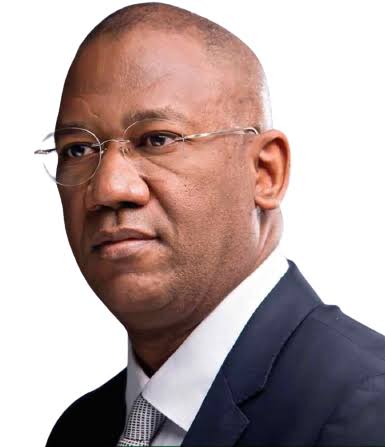
I enjoyed reading the article by Sir Oguneme Romanus Uchenna on Chatafrik.com titled “Peter Obi: The Man, The Message, and The Moment Nigeria Cannot Afford To Miss.” He deserves commendation for doing his best to sell and project Peter Obi, a man he clearly believes in.
Uchenna presents Peter Obi as a man of simplicity, courage, character, competence and capacity. He cites his low-profile lifestyle, his unblemished record with anti-corruption agencies, and his achievements as Governor of Anambra State where he rehabilitated schools, upgraded health facilities and left savings for his successor without borrowing.

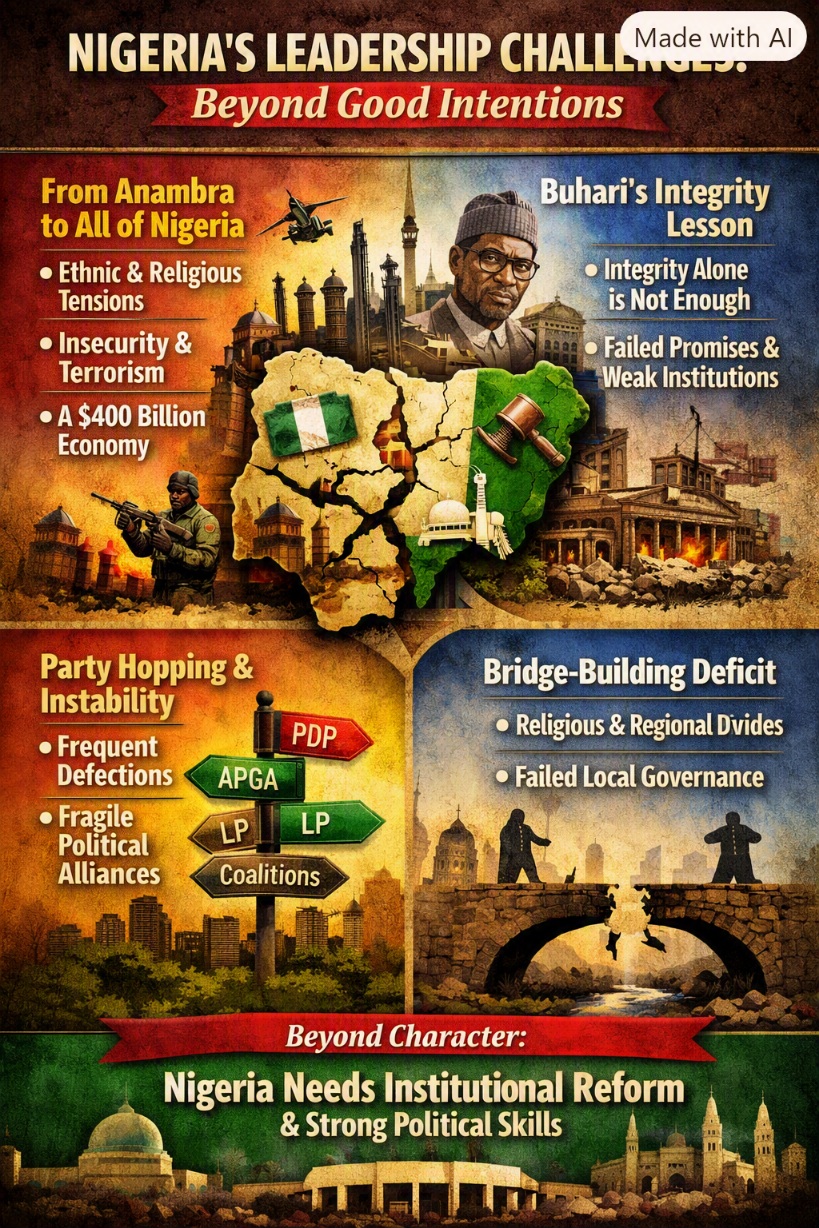
However, the leadership of a country as diverse and mosaic in its complexity as Nigeria, with over 250 million people, requires much more than personal virtues, however noble. Uchenna naively confuses personal character with governing capacity.
Nigeria does not just need a good and honest man; it needs a political operator, an institution-builder, and a crisis-manager who can hold a fractured and complex federation together.
Four realities expose the naivety of that pitch:
First, governing Anambra is not governing Nigeria. Anambra is a relatively small, homogenous state. Nigeria is a federation of 36 states, with deep ethno-religious fault lines, insurgency in the North-East, banditry in the North-West, militancy in the South-South, separatist agitation in the South-East, and a complex $400 billion economy. Success in frugality at state level does not automatically translate to managing the National Assembly, the judiciary, the military, the civil service, and entrenched interests.
Second, we have seen this script before. President Muhammadu Buhari from 2015 to 2023 was sold to the electorate with the exact same credentials Uchenna is using for Obi – integrity, honesty, simplicity, and incorruptibility. When the mantle of leadership was entrusted to him, he was found floundering against the complexities of Nigeria: deep-seated corruption, the waywardness and indiscipline of the governing elite, a transactional National Assembly, a weak judiciary, a corrupt civil service, and a bad economy. Character alone could not reform the system.
Third, political nomadism raises questions about capacity to build and manage institutions. Peter Obi has demonstrated a pattern of moving from one party to another – from PDP to APGA, from APGA to PDP, from PDP to Labour Party, from Labour to ADC and now linked to the NDC coalition. When asked about this tendency, he said he does not like to be engulfed in complex situations and environments where there is always fighting. Yet, the Nigerian Presidency is inherently about managing constant fights, complex negotiations, and competing interests. A President cannot decamp when the environment becomes difficult.
Fourth, even his record in a homogenous state raises questions about bridge-building. Even in Anambra, a largely Christian-dominated state, Peter Obi was accused of deepening the wedge between Catholics and Anglicans and other Pentecostal denominations. He was also accused of introducing a policy requiring non-indigenes, particularly Nigerians from Northern Nigeria, to obtain identification cards, and of failing to conduct local government elections in Anambra for his eight years in office, in violation of constitutional provisions. Critics allege that he is not a bridge-builder, is only comfortable with those from his own area, and panders to Nigeria’s fault lines of religious dichotomy rather than transcending them. If managing diversity in Anambra was challenging, managing Nigeria’s far more complex diversity would be even more demanding.
In conclusion, while Peter Obi may be a man of good character, Nigeria’s problem is not merely the lack of a good man at the top, but systemic institutional decay. What Nigeria needs is not just prudence and personal example, but the hard political skill to reform institutions, enforce discipline, grow the economy beyond saving, and negotiate a stable national consensus.