By LaBode Obanor
In January 2022, amid worsening insecurity and an acceleratingbrain drain, I wrote an article titled Give Us the Ballot or Keep Your Diaspora Investment Trust Fund. Four years later, Nigeria has changed presidents. Apparently, it has not changed its conception of the diaspora.
There is something almost admirable about the consistency of the Nigerian government. Every four or eight years the country changes its political administration. Just as its Ministers are changed, the slogans also take a new rhythm and convoysacquire new occupants. But when Abuja looks across the Atlantic and sees millions of Nigerians living abroad, one thing remains remarkably constant: it sees money.
In that 2022 article, I examined the Buhari administration’s proposed Diaspora Investment Fund a vehicle through which Nigerians abroad were encouraged to channel their money into investments at home. My objection then was never to invest, but that Nigerians in the diaspora do not need lectures from Abuja about investing in Nigeria. We have been doing this for generations, often without calling it investment, and certainly without waiting for government’s permission. For decades, we have been paying school fees, build family homes, finance businesses, settle hospital bills, support aging parents, and rescue relatives from emergencies that functional social institutions should ordinarily address. And year after year, weremit billions of dollars into the Nigerian economy.

My objection was to the extraordinary contradiction underlying government’s relationship with us, a contradiction that has now become grotesquely normal: The Nigerian government wants the diaspora’s capital while denying them meaningful political representation. I described the arrangement then as a simpler term: “Send us your money but not your ballot.” See article: https://kaftanpost.com/give-us-the-ballot-or-keep-your-diaspora-investment-trust-fund/
Four years later, I sometimes wonder whether Abuja framed the article and hung it somewhere as an instruction manual.
It is now three and a half years since President Muhammadu Buhari left office. His successor from the same party, President Bola Tinubu, now occupies Aso Rock. Yet here we are again, this time with the Nigeria Diaspora Investment Economic Conference in Toronto, carrying the alluring theme: “Invest Nigeria, Thrive Abroad.” This is the diaspora agenda of the Nigerian government this coming week. There is nothing inherently wrong about gathering investors, entrepreneurs, government officials and members of the diaspora to discuss economic opportunities in Nigeria. Quite the contrary. Nigeria desperately needs investment, expertise and international commercial networks. But context matters.
Before another delegation, once again boards aircraft to court diaspora capital, perhaps somebody should answer a rather elementary question: What happened to the last grand diaspora investment initiative? Where is the comprehensive accounting of the Diaspora Investment Trust Fund promoted under Buhari?What became of its ambitions?
How much capital was mobilized? What investments came from it? What returns were generated? What lessons were learned? A government cannot continuously unveil new versions of old ideas without accounting for what happened to yesterday’s announcement.Nigeria has developed an unfortunate talent for launching initiatives with microphones, banners and impressive acronyms, only for them to disappear quietly into the bureaucratic Bermuda Triangle. Then, a few years later, somebody discovers essentially the same idea, changes the logo, books a conference hall and announces that history is about to be made.
This diaspora deserves better. We reject government by PowerPoint.
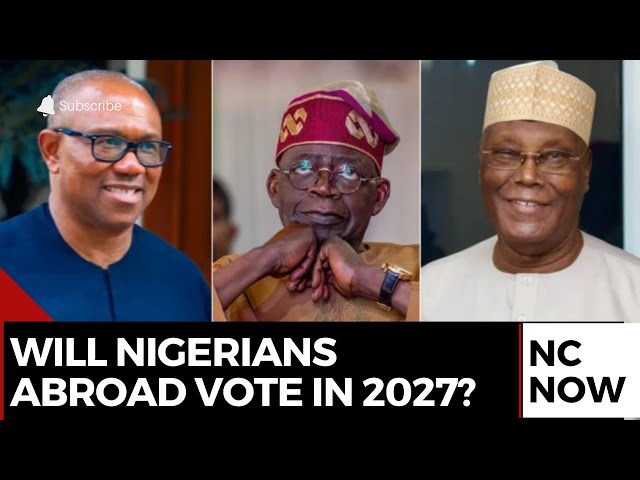
And then there is Femi Gbajabiamila. President Tinubu’s chief of staff and former Speaker of the House of Representatives. The irony becomes almost too generous when one considers that he is the one reportedly leading the federal delegation to Canada. I have seen this movie before. In my 2022 article, I recalled Gbajabiamila’s position when, as Speaker, he discussed the question diaspora voting. His reasoning against the inclusion and participation of the diaspora in the electoral body polity was: “Our elections here are not yet perfect, so how do we deal with diaspora voting?” He also pointed to Nigeria’s persistent post-election litigation as a reason for questioning how voting abroad could be administered.
Think about that argument.
The Nigerian state could not adequately administer elections at home; therefore, Nigerians abroad should be denied participation. Government failure, according to him, is the justification for continuing diaspora disenfranchisement. It was like a restaurant announcing that because its kitchen was unhygienic, customers should stop asking for dinner.
Now, four years later, the same political establishment apparently finds the diaspora considerably less complicated when money is involved. Voting from Canada? That’s too difficult. Investing from Canada? Ah, welcome aboard. What about political representation? The Constitution doesn’t allow it.And Dollar-denominated investment? Where do we sign? Apparently, the Atlantic Ocean becomes considerable easier to cross when money is traveling toward Abuja.
This is why the Canada conference should not be examined in isolation. It reflects a much broader pattern in Nigeria’s relationship with its citizens abroad. Successive governments praise the diaspora’s remittances, organize diaspora conferences, appoint diaspora advisers, seek foreign investment, and celebrate Nigerian professionals abroad when their accomplishments become internationally embarrassing to ignore.
But ask for political representation, and suddenly everyone discovers constitutional law. You begin to hear “There must be amendments. “There must be consultations.” “INEC must prepare.” “Technology must be studied. “Security must be considered.” A committee must examine the committee that previously examined the recommendations of another committee. And the diaspora must wait.
In 2022, I wrote that Nigerians abroad had been asking for the ballot for decades while successive governments blamed the Constitution and deficiencies in Nigeria’s electoral system. It is now 2026. How long exactly does a democracy require to determine whether its own citizens should participate in choosing their government?
This pattern of brazen exclusion and abuse exposes a deeper problem with Nigeria. The country has effectively created two categories of diaspora citizenship.
There is economic citizenship, which Abuja enthusiastically recognizes. Under this version of citizenship, Nigerians abroad are patriotic stakeholders. Their remittances are celebrated. Their investments are solicited. Their expertise is requested, and their professional networks are courted.
And then there is political citizenship. Here, the transformation is remarkable. The same patriotic stakeholder suddenly becomes logistically inconvenient. The same investor citizen becomes an absentee. The Nigerian passport apparently confers sufficient citizenship to finance the country but insufficient citizenship to help determine who governs it.
That contradiction should offend any reasonable person or anyone who takes citizenship seriously.
Citizenship is not a subscription service from which government may select the features it finds profitable. A Nigerian does not become more Nigerian when wiring money home and less Nigerian when asking for a ballot. The ballot is not separate from the investment climate. It is part of it. People who invest capital naturally care about the institutions governing that capital. They care who writes the laws, appoints regulators, manages monetary policy, administers courts and determines taxation. Political participation and economic participation are therefore not competing demands but reinforce one another. You cannot endlessly tell citizens that they are indispensable stakeholders in Nigeria’s economy while treating them as spectators in Nigeria’s democracy.
So, by all means, go to Toronto, meet Nigerian professionals in Canada, present credible investment opportunities, connect entrepreneurs and bring investors together. But please spare us another ceremonial pilgrimage in which officials fly thousands of miles, deliver speeches about the “enormous potential of the Nigerian diaspora,” pose for photographs, collect plaques and return to Abuja while the structural issues remain precisely where they left them.
And when the delegation returns, Nigerians should demand measurable outcomes. Ask questions: What investment commitments were obtained? What projects will follow? Who is responsible for implementation? What are the timelines? And when officials return in 2027 or 2028 with another diaspora investment initiative, will Nigerians be able to trace what became of the promises made in Toronto in 2026?
When I wrote in 2022, I ended with a deliberately provocative demand: “Give us the ballot, or you can hug your Diaspora Investment Fund. Four years later, I would modify it slightly.We do not have to choose between diaspora investment and diaspora voting. We need both.
What we should reject is the notion that one can perpetually substitute for the other. Do not invite us into Nigeria’s economy while locking us outside its democracy. Do not celebrate our remittances while postponing our representation. Do not call us stakeholders when seeking our dollars and strangers when counting the ballots. And certainly,do not fly across the Atlantic to lecture Nigerians abroad about patriotism while you continue postponing one of the most basic manifestations of citizenship. The diaspora has already demonstrated its commitment to Nigeria; it is time for Nigeria to demonstrate its commitment to the diaspora.
Give us the ballot, then come and talk to us about the wallet.