By Okoi Obono-Obla
Nsibidi: The Ancient Script of Interconnected Cultures:
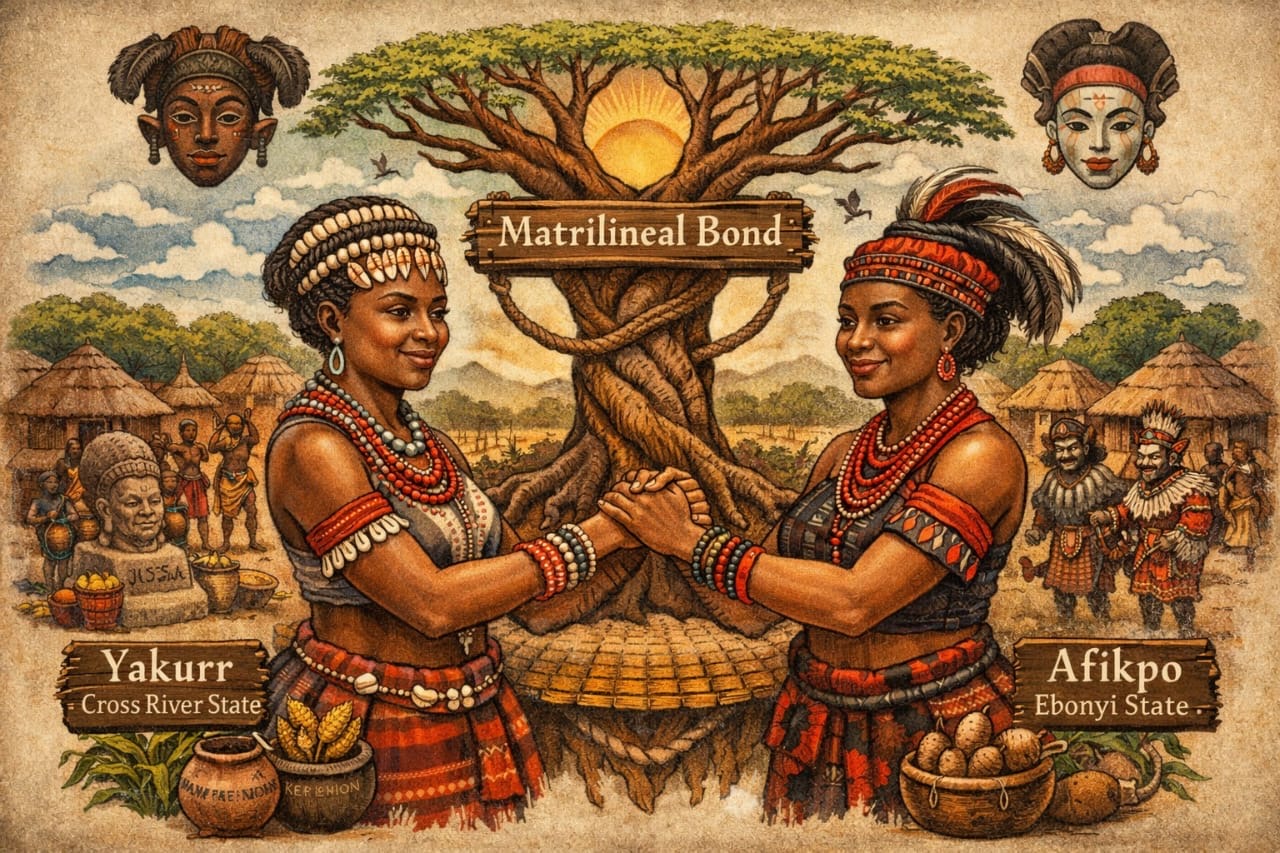
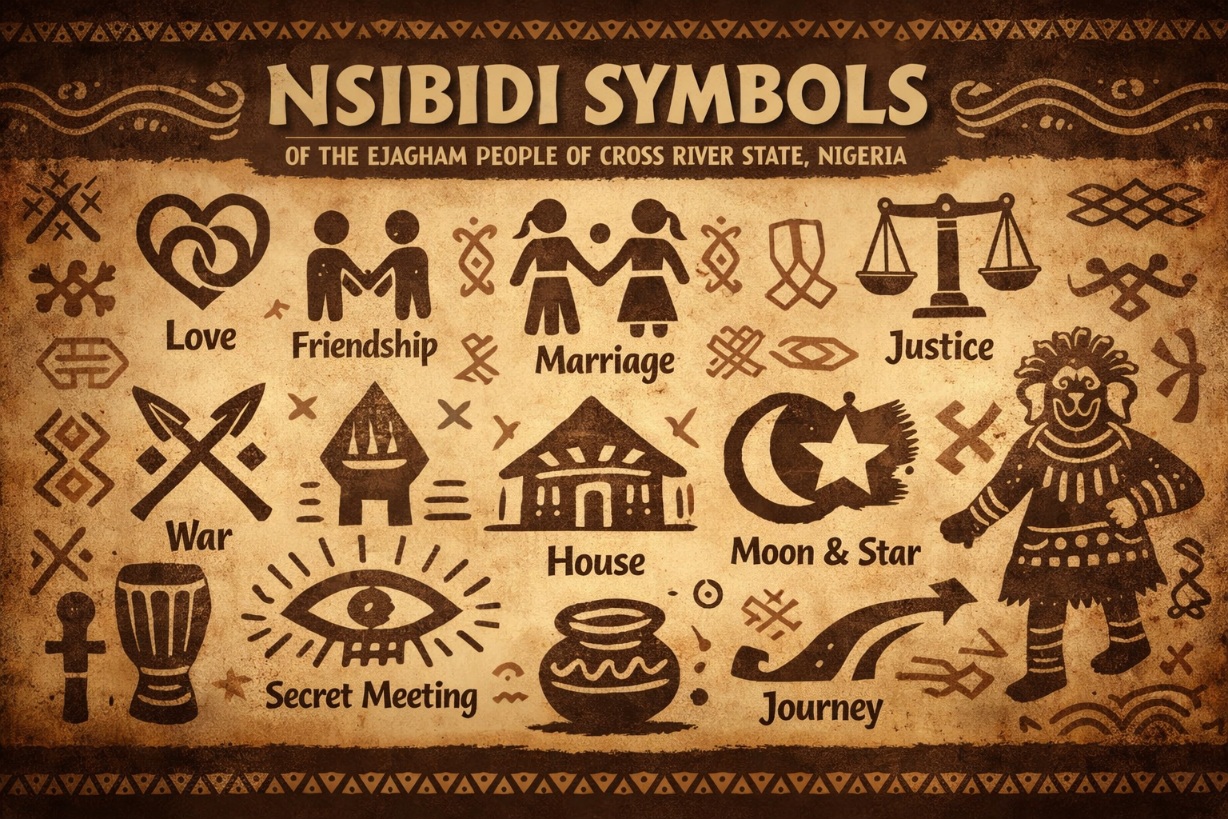
In Ugep and Yakurr, Nsibidi is used by members of the Mgbe (Ekpe) society and to decorate maidens during the Leboku (New Yam) Festival. This writing system is evidence of the interconnectedness of cultures and peoples across the region—Ekoi/Ejagham, Efik, Ibibio, Oron, Anang, Cross River Igbo (Arochukwu, Afikpo, Abriba), extending into South Western Cameroon, Gabon, DR Congo, and Equatorial Guinea.
For instance, the name Obono, common among the Yakurr, is also widely used in Gabon. Similarly, names such as Ettah, Eyong, Eno, Bisong, Efa, Leko, Ete, and Ndem are shared among communities in Cameroon, DR Congo, and Gabon. Through the Trans-Atlantic slave trade, Nsibidi was transported to Cuba, Venezuela, and Haiti, where it evolved into the Anaforuana and Veve symbols. Long before European adventurism and colonization, our people had already developed this unique form of ideographic writing.

Colonial historian and missionary Reverend J.K. Macgregor, in his work Some Notes on Nsibidi, likened it to ordinary writing: “The use of Nsibidi is that of ordinary writing. I have in my possession a copy of the record of a court case from a town of Enion [Enyong] in Odukpani Local Government Area taken down in it, and every detail … is most graphically described.”
It is widely believed that Nsibidi has been in use in this region of Africa since as early as 400 CE, with its oldest archaeological evidence dating back to 2000 B.C. It was employed to decorate the skin, calabashes, sculptures, clothing items, and to communicate messages on houses. More importantly, Nsibidi functioned as a signal language used by adherents of Mgbe or Ekpe to communicate.
In Ugep, the Nsibidi writing known as Eblemi, which is uniquely written only by women, is fading. However, in Mkpani, women can still be found practicing this script. Something urgent must be done to preserve this historic tradition before it slips into extinction.
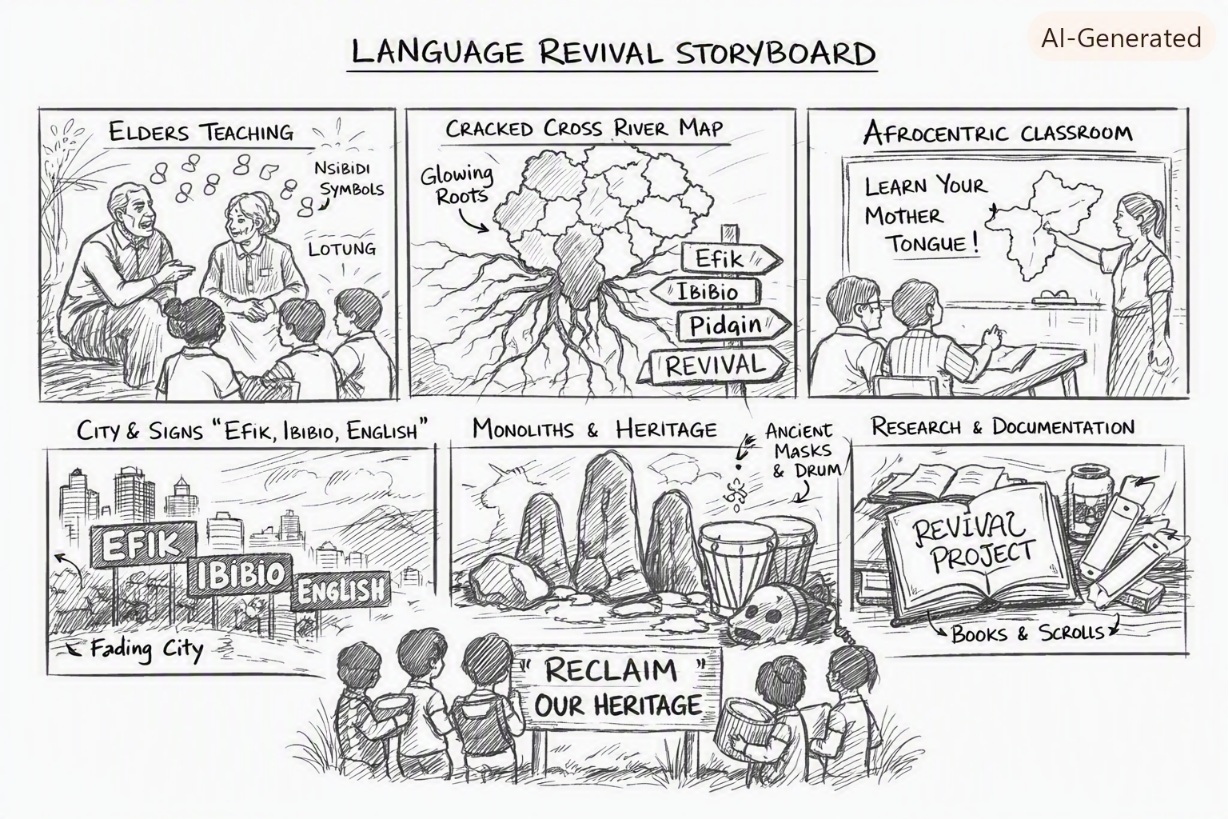
There is a pressing need to sponsor academic research on the cultures of the Ekoi-Ejagham people, particularly on the development of Nsibidi writings and other cultural materials. A people without knowledge of their history, traditions, culture, and origin are like a tree without roots.
Conclusion:
The preservation and study of Nsibidi is not only a cultural duty but also a historical necessity. It is a living testament to the creativity, interconnectedness, and resilience of our people across Africa and the diaspora. By investing in its research and revival, we ensure that future generations remain rooted in their heritage while contributing to global knowledge.