By Chief Akinwumi Akinfenwa
*Recap of Part One*
In Part One of this series, we examined how the All Progressives Congress (APC) came to power in 2015 on the promise of Change and secured a renewed mandate in 2023 under the banner of Renewed Hope.
We reviewed the major promises made to Nigerians in the areas of security, economic prosperity, employment, electricity, anti-corruption and improved living standards.

We also established a fundamental democratic principle: governments should be judged not by the promises they make, but by the results they deliver.
This week, we begin that assessment by examining what matters most to ordinary citizens—the economy.
For regardless of political affiliation, religion or ethnicity, every Nigerian feels the impact of economic policies in the marketplace, at the fuel station, in school fee payments, in transportation costs, and on the family dining table.
The economy, therefore, is perhaps the most important report card of any government.
*The Promise of Prosperity*
When APC sought power in 2015, it promised economic revival.
The party pledged to diversify the economy, create jobs, reduce poverty, stimulate investment and improve the welfare of ordinary Nigerians.
The expectation was simple:
Life would become better.
Opportunities would increase.
Families would become more prosperous.
Similarly, in 2023, President Bola Ahmed Tinubu campaigned on a platform of Renewed Hope, assuring Nigerians that economic reforms would unlock prosperity, attract investment and create a stronger foundation for growth.
More than a decade after APC first assumed power, Nigerians are entitled to ask a simple question:
Has life become better economically?
For millions of citizens, the answer appears painfully obvious.
*Inflation: The Silent Tax on the Poor*
One of the most important indicators of economic well-being is inflation.
Inflation measures the rate at which prices rise over time.
When inflation rises faster than incomes, people become poorer even if their salaries remain unchanged.
When APC assumed office in 2015, inflation was below 10 percent.
Over the years, inflation climbed steadily.
By the end of the Buhari administration, inflation had risen above 22 percent.
Under the Tinubu administration, inflation surged even further, crossing the 30 percent mark and reaching levels not witnessed in decades.
Food inflation became even more severe.
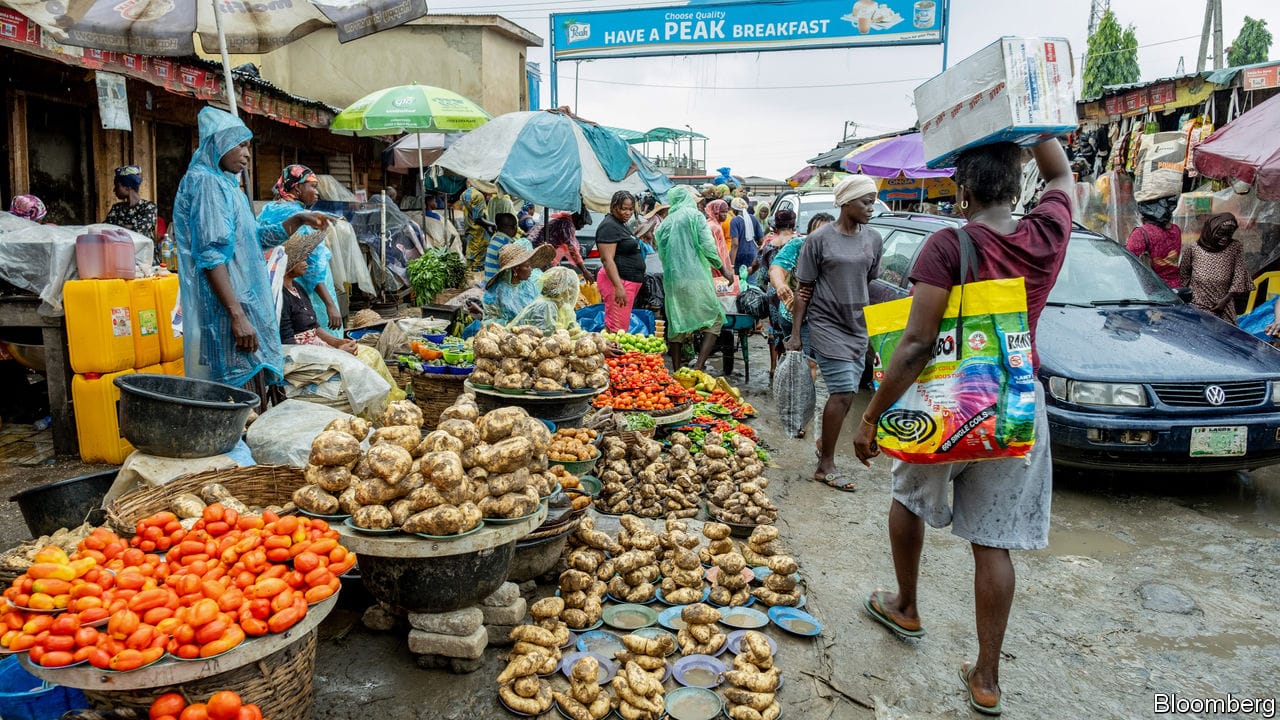
The consequence is visible in every Nigerian market.
A bag of rice that sold for a fraction of its current price a decade ago has become unaffordable for many families.
The prices of garri, beans, yam, vegetable oil, bread and other staples have increased dramatically.
The average Nigerian household now spends a far greater proportion of its income merely trying to survive.
Inflation has effectively become a tax on poverty.
The poor suffer most because they spend a larger percentage of their income on food and basic necessities.
*Fuel Subsidy Removal and the Cost of Living Explosion*
One of the most consequential economic decisions of the Tinubu administration was the removal of fuel subsidy.
The government argued that subsidy payments were unsustainable and that the savings would be redirected towards national development.
Economists may continue to debate the long-term merits of the policy.
However, there is little debate about its immediate impact on ordinary Nigerians.
Before subsidy removal, petrol sold at approximately ₦185 per litre.
Within a relatively short period, prices rose several-fold.
Transportation costs increased sharply.
Commercial fares rose.
Distribution costs increased.
The prices of goods and services followed.
Every sector of the economy felt the impact.
For workers whose incomes remained unchanged, the result was a dramatic decline in purchasing power.
Millions of Nigerians suddenly found themselves spending significantly more money merely to maintain the same standard of living.
Many could not.
*The Poverty Crisis*
Perhaps no statistic is more troubling than the growth of poverty.
Nigeria possesses enormous human and natural resources.
It is Africa’s most populous nation and one of its most strategically important economies.
Yet poverty remains widespread.
Recent estimates indicate that well over one hundred million Nigerians live below the poverty line.
Behind every statistic is a human story.
A family unable to afford healthcare.
A child unable to remain in school.
A graduate unable to find employment.
A retiree struggling to survive.
Poverty is not merely an economic indicator.
It is a measure of human suffering.
For a government that promised prosperity, the persistence and expansion of poverty raises serious questions about policy effectiveness.
*Unemployment and Underemployment*
Employment was another cornerstone of APC’s campaign promises.
Young Nigerians were assured that economic reforms would create opportunities and stimulate growth.
Yet unemployment and underemployment remain major challenges.
Even among those fortunate enough to secure jobs, many earn wages insufficient to meet basic needs.
The result is a generation increasingly frustrated by limited opportunities.
Many young professionals now see migration as their best option.
Doctors leave.
Nurses leave.
Engineers leave.
Academics leave.
Technology experts leave.
Entrepreneurs relocate.
The “Japa” phenomenon has become one of the most visible indicators of declining confidence in domestic opportunities.
When citizens increasingly seek prosperity elsewhere, governments must ask difficult questions about the economic environment they have created.
*The Shrinking Middle Class*
One of the less discussed consequences of economic decline is the erosion of the middle class.
Historically, a strong middle class serves as the backbone of stable democracies and productive economies.
Middle-class families invest in education.
They build businesses.
They purchase homes.
They create jobs.
They contribute significantly to economic growth.
Over the past decade, many middle-class Nigerians have found themselves sliding down the economic ladder.
Savings have been depleted.
Business margins have shrunk.
Educational costs have risen.
Healthcare expenses have increased.
Housing has become more expensive.
The result is a gradual but significant weakening of a segment of society that should ordinarily drive national development.
*Small Businesses Under Pressure*
Small and medium-sized enterprises are widely recognized as engines of economic growth.
They generate employment.
They stimulate innovation.
They support local communities.
Yet many Nigerian businesses operate under increasingly difficult conditions.
High energy costs.
Poor electricity supply.
Rising transportation expenses.
Currency instability.
Inflationary pressures.
Multiple taxation.
These challenges combine to create an environment where business survival often becomes more important than business expansion.
When businesses struggle, employment opportunities diminish.
When employment opportunities diminish, poverty expands.
The cycle becomes self-reinforcing.
*Economic Growth Without Economic Relief*
Government officials often point to economic growth figures as evidence of progress.
Economic growth is important.
However, growth statistics alone do not tell the full story.
Citizens judge economic performance by their lived experiences.
Can they afford food?
Can they pay school fees?
Can they access healthcare?
Can they save for the future?
Can they build businesses?
Can they improve their quality of life?
For many Nigerians, the answers to these questions have become increasingly difficult.
This disconnect between official economic narratives and everyday realities explains much of the frustration evident across the country.
*The Human Face of Economic Policy*
Economic discussions often become trapped in statistics and technical language.
Yet behind every policy decision are real people.
The market woman whose capital can no longer purchase the same quantity of goods.
The civil servant whose salary buys less each month.
The transport operator struggling with rising fuel costs.
The graduate unable to secure meaningful employment.
The family forced to reduce meals because food has become too expensive.
These are the true measures of economic success or failure.
Governments exist to improve the lives of citizens.
Economic policies should ultimately be judged by that standard.
*The Emerging Verdict*
After more than twelve years of APC governance, many Nigerians believe the gap between economic promises and economic realities has become increasingly difficult to ignore.
While governments naturally point to achievements and reforms, ordinary citizens often evaluate performance through a simpler lens:
Am I better off today than I was before?
For millions of Nigerians, the answer is troubling.
The rising cost of living.
The decline in purchasing power.
The persistence of poverty.
The challenges of unemployment.
The struggle of businesses.
These realities form a significant part of the economic legacy that voters will evaluate as 2027 approaches.
*Conclusion*
Economic prosperity was one of the principal promises that brought APC to power in 2015.
Economic renewal was one of the principal promises upon which it sought continued trust in 2023.
More than a decade later, millions of Nigerians continue to grapple with inflation, poverty, unemployment and a declining standard of living.
The economic debate is not merely about numbers.
It is about people.
It is about families.
It is about livelihoods.
It is about hope.
And for many Nigerians, hope has become increasingly expensive.
*Next Week:*
*Part 3 – The Collapse of the Naira and the Shrinking Middle Class*
In the next installment, we shall examine the dramatic depreciation of the naira, its consequences for businesses and households, the foreign exchange crisis, the rise of the Japa phenomenon, and how currency instability has transformed the lives of millions of Nigerians.