by Boma West
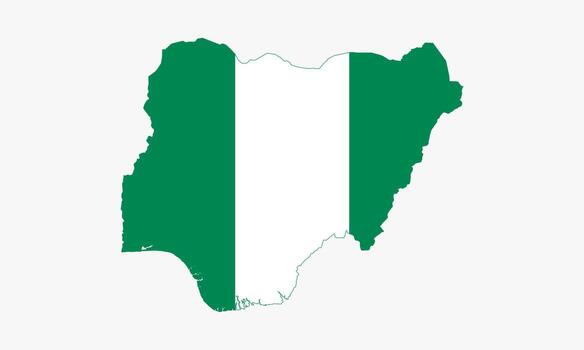
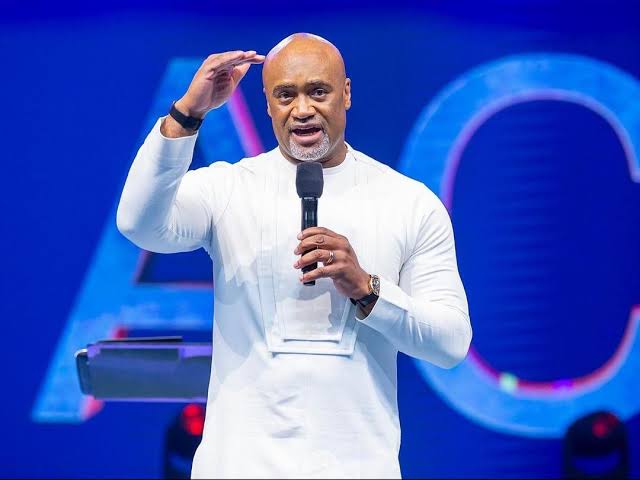
Paul Adefarasin has never been afraid of a fight. The founder of House on the Rock, a church that now counts roughly 50,000 members across Nigeria, South Africa and the United Kingdom, has built a reputation for saying out loud what many Nigerians quietly whisper. His latest sermon did not disappoint. Standing before his congregation, the Lagos pastor declared Nigeria functionally dead, a country born not of divine purpose but of colonial greed, stitched together by British commercial interests and left to slowly bleed out by the very people entrusted to run it.
The statement was provocative, as Adefarasin’s statements tend to be. He told his congregation that he did not believe Nigeria was created by God, arguing instead that its formation was the product of colonial agreements between empires designed to serve British financial interests. He pointed to historical dealings between Queen Elizabeth and the Ottoman Empire and encouraged his congregation to read a book called The Martyrdom of Man as evidence. He further argued that two empires got together and decided that this land would go to the sons of Ishmael, before pivoting to stress the church’s role in correcting societal wrongs.
It is the kind of sermon that goes viral in minutes, and it did. The reactions split neatly between those who stood and clapped and those who rolled their eyes.

To his credit, Adefarasin is not wrong about the diagnosis. Nigeria’s condition in 2026 is genuinely terrible. According to a PwC Nigeria Economic Outlook report, no fewer than 141 million Nigerians are expected to live in poverty this year, with approximately 33.1 million facing food insecurity due to economic hardship and violence in northern food-producing regions. Recent economic reforms have yet to translate into improved household welfare, as weak real income growth and rising living costs are projected to push more families into poverty over the next two years. The African Polling Institute found that 73 percent of Nigerians say they would seize any opportunity to emigrate from the country. These are not the numbers of a nation in recovery. These are the numbers of a nation in freefall.
In March 2026 alone, the humanitarian crisis in Nigeria’s northeastern states and Plateau State intensified due to conflict, economic hardship, and climate shocks, leading to increased displacement and protection risks for women and girls. Security analysts have warned that the security situation is likely to deteriorate further in 2026, with ethnic and religious divisions being fuelled by political campaigns as the election season intensifies.
So the facts are on Adefarasin’s side.
In 2021, he stirred controversy when he advised Nigerians to consider a Plan B in case the country collapsed. That comment drew swift backlash, with critics accusing him of elitism, defeatism, and a lack of patriotism. That same year, when the Lagos Governor was booed at his church’s annual concert following the EndSARS protests, Adefarasin publicly apologised to the governor and condemned the disruption. Many young Nigerians saw that gesture as a betrayal, evidence of a pastor more worried about political favour than moral leadership.
That is the central contradiction that haunts Adefarasin’s pulpit thunder. He diagnoses Nigeria with clarity and precision, names the rot, traces the colonial wound, and speaks with the authority of someone who has studied the system deeply. Then he steps off the pulpit, climbs into a luxury car, and returns to a life that most Nigerians will never touch. He once declared himself a billionaire from the pulpit, saying the words without flinching. His church hosts one of the continent’s largest gospel concerts, featuring global stars, and he frequently preaches the virtues of generational wealth through real estate and financial planning. That advice lands beautifully in Lagos Island drawing rooms and means absolutely nothing to a farmer in Plateau State who just lost his harvest to a bandit attack.
When a man who leads 50,000 people says Nigeria is dead, the question that deserves an answer is: what are you going to do about it? Nigeria has had no shortage of people willing to stand in air-conditioned rooms and pronounce the country finished. The deficit is in people willing to stay, sacrifice, organise, and rebuild.
In a separate sermon, Adefarasin stressed that Nigeria’s brightest minds, its thinkers, strategists, technocrats, and intellectuals across all ethnic groups, must come together to create a unified national plan, warning that without it, the country could face a future it is not ready for. That is a fine thing to say. It would be a finer thing to lead. A pastor with his platform, his financial resources, his connections to power, and his congregation of tens of thousands is not a bystander. He is a stakeholder who has chosen, repeatedly, the comfort of commentary over the cost of action.
None of this makes the sermon wrong. Nigeria’s colonial origins are real. Its governance failures are real. The suffering of ordinary Nigerians is devastatingly real. Economists have noted that Nigeria has shifted from risk watch to recovery watch, with credit rating upgrades and foreign exchange reforms showing some stability, but insecurity remains the critical bottleneck crippling farming communities and stalling genuine growth.
What Nigeria does not need is more funerals from wealthy men in tailored suits. It needs the people with megaphones and Adefarasin has one of the biggest in the land to point that noise not just at government failure, but at the concrete, specific, uncomfortable work of rebuilding.
Paul Adefarasin is brilliant, articulate, and he sees Nigeria clearly. The country deserves the full weight of what he is capable of, not just the part that fits neatly into a Sunday morning.