by Idowu Ephraim Faleye
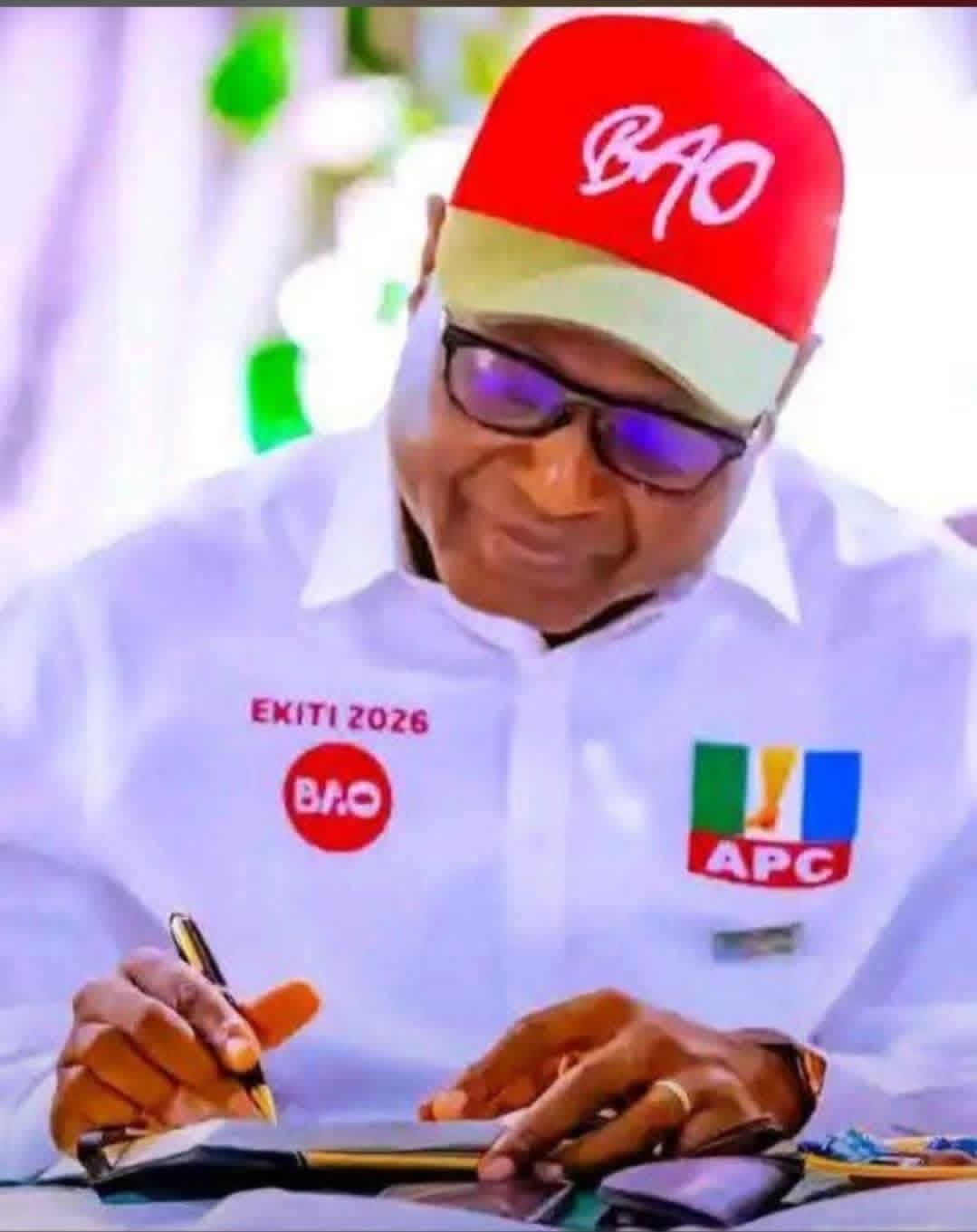
This week, 853 articles passed through our pipeline, and they painted two very different pictures of Nigeria. On one side, Ekiti celebrates, Nigeria watches as Governor Biodun Oyebanji won a second term in a landslide. “Oyebanji Wins Second Term”, “INEC Declares Ekiti Election Results”, “#EkitiDecides2026”, and “How Oyebanji Won His Re-Election” carried the kind of warmth you rarely see in political coverage. On the other side, the same week carried headlines about kidnapped schoolchildren, bandit camps in Kogi, and Iran shutting the Strait of Hormuz while warning the United States. Both stories are true. Both happened in the same seven days. That contrast alone tells you something important about how Nigeria is being covered right now.
Let’s start with the numbers, because they explain a lot. Out of 853 articles, 397 were low risk, 288 were medium risk, 147 were high risk, and 21 were critical. That means roughly 1 in every 5 articles this week carried real weight. The average risk score across all articles was 0.415, which sits in the “watch closely but don’t panic” zone. On sentiment, 484 articles leaned negative against 369 positive, so the mood of the week, taken as a whole, tilted gloomy even with Ekiti’s good news pulling in the other direction.
Now, what were people actually writing about? The “general” category swallowed up a huge share. That’s not unusual on its own, but it does mean a lot of important context lives buried inside a catch-all bucket rather than a clean topic label. Crime came in at 84 articles, elections at 59, sports at 22, and politics at 18. Further down, the economy managed only 6 articles, education and technology got 3 each, protest got 2, and security and policy each had just 1. That gap between general stories and economy stories is a warning sign, not just a quirk of classification.

The election coverage this week was almost entirely about Ekiti, and almost entirely positive in tone, which makes sense; headlines like “#EkitiDecides2026: APC Secures Victory in PDP Candidate’s Stronghold” carried a confident, decisive tone. But buried inside that same cluster sits “#EkitiDecides2026: IReV Uploads Stall as 66 Polling Unit Results Remain Missing,” which is the kind of detail that gets lost when the overall story is “landslide win.” That’s exactly why every election produces two stories at the same time, and most people only ever see one of them. The first story is the result sheet, the cold count of who won and by how much. The second story lives in the insights derived from the data. This week, EphraimHill DC pulled both stories together for the Ekiti State governorship election: what the votes from the collation sheets said, and what the data captured by our own monitoring pipeline in the 48 hours around results day. Read side by side, they tell a more complete and far more interesting account than either one tells alone.
Start with the plain numbers, because they set the stage. Across the whole state, just over 375,000 valid votes were counted, and one party walked away with roughly 85% of those votes. The next-closest party managed just over 10%, a respectable distance behind but nowhere near close enough to threaten the outcome. Every other party on the ballot shared what little was left. Meanwhile, voter turnout was under 40% of registered voters statewide, meaning the majority of people who could have voted simply did not show up, which is worth remembering.
But local government to local government, the picture is far from uniform, and one place in particular breaks the pattern completely. Ikere Local Government stands almost alone in this election, and the reason is easy to understand once you know the background. The main opposition candidate is a native of Ikere, and the sitting deputy governor is also from the same town, which means one community had two of its own people sitting on opposite sides of the biggest contest in the state. For years, Ikere has produced several deputy governors, a real achievement, but still the second seat rather than the first, so when a hometown son stepped up this time for the top job, it made sense that the whole town rallied hard behind him. The ruling party was never going to surrender its own deputy governor’s hometown without a serious fight, and the result shows exactly that kind of contest in a state where every other local government broke 70 or 80 points in one direction.
That closeness makes one more number in Ikere worth flagging. The rate of rejected ballots there was the highest anywhere in the state, almost double that of the next-closest local government. It is also worth noting that this was not something only data analysts noticed weeks later. Two of the smallest local governments in the state, Ilejemeje and Efon, tell an entirely different kind of story. Ilejemeje carries the added weight of an unresolved kidnapping case, the kind of background that would normally suggest people might stay away from the polls out of fear. Instead, Ilejemeje recorded the highest turnout percentage anywhere in the state, crossing the halfway mark while the statewide average sat under 40%. That is genuinely surprising, and the responsible next step is not to draw a quick conclusion either way but to look at the specific wards closest to the kidnapping and see whether turnout there matches the rest of the local government or quietly tells a different story of its own.
A quieter pattern shows up when you look at how the smaller parties performed across all 16 local governments. In most places, every minor party combined still added up to only around 4% of total votes, which is the normal, expected pattern. Three local governments broke from that pattern noticeably: Ekiti East, Ijero, and Ekiti South West, where the combined minor party share nearly doubled to around 7%. Ekiti East deserves the closest look of the three, because the lift was not limited to one small party doing unusually well. Almost every minor party on the ballot performed better there than in a comparably sized local government, several times better in some cases, and a pattern that lifts every small party at once in exactly one place is not something that tends to happen by accident. None of this proves anything improper on its own, but it is exactly the kind of signal worth a closer review at the polling-unit level before anyone says more than that.
Crime coverage this week leaned toward security operations rather than just incidents, which is a healthier pattern than we sometimes see. “Troops Overrun Bandits’ Camp in Kogi, Rescue Two Victims” is a story about response, not just risk. So is “FCT CP Gives DPOs Two Weeks’ Ultimatum to End Robbery in Abuja or Face Sanctions,” which shows a commander setting a real deadline rather than issuing a vague promise. That said, “Kidnapped Schoolchildren: Rage Over Terrorists’ Toxic Demand” sat in our critical-risk bucket this week, and it’s a reminder that the underlying threat hasn’t gone away just because Ekiti’s election went smoothly.
Geographically, Nigeria as a general reference, appeared 240 times, with Abuja close behind at 97 and Lagos at 93, the usual centres of gravity for national coverage. What stands out is that the United States appeared 60 times and Iran 25 times, both ahead of states like Kaduna, which had 22 mentions. That’s a sign of how much international tension, particularly around Iran, the Strait of Hormuz, and US-Iran talks, bled into Nigerian coverage this week, likely because of its effect on oil prices and, by extension, Nigeria’s economy. Ekiti and Ekiti State together logged 50 mentions, which is proportionate given the governorship result, but it also means a state with under 5 million people briefly punched well above its weight in national coverage.
If you’re a decision-maker reading this, here’s the part that should get your attention first: the economy received only 6 articles this week, yet our risk-scoring system flagged it with a 0.75 risk score well above the week’s average of 0.415. That’s what we call an early warning. It means a high-risk issue is currently getting low visibility, which is exactly the kind of gap that lets a problem grow quietly before it becomes a crisis loud enough to dominate headlines. Given that Iran’s actions in the Strait of Hormuz directly affect global oil markets, and Nigeria’s economy is deeply tied to oil revenue, this is not a coincidence worth ignoring.
There’s also a sharper warning sitting in our geographic data: the Maradun River location carried the highest risk index of the week, at 0.95, higher than any other place we tracked, including Abuja, Lagos, or anywhere tied to the Iran situation. When a single location outranks every major city in risk terms, it usually means something specific and serious is unfolding there, even if it hasn’t yet generated the volume of coverage that bigger, more familiar places attract. We’d encourage journalists and local officials in that area to treat this as a flag worth following up on directly.
Our system also picked up something we call a contradiction signal: 27 articles this week used positive or neutral framing on events that our risk model scored as high or critical. The clearest example is “US and Iran Set for New Talks After Delay and Deadly Strikes”, a headline that reads almost hopeful, about a situation that involved actual deadly strikes. This isn’t necessarily bad journalism; sometimes a hopeful framing of a dangerous situation is exactly right, because talks genuinely are good news. But when this happens 27 times in one week, it’s worth a policymaker or editor asking whether the public is getting a clear enough picture of the risk underneath the optimism.
Now to the people who shaped this week’s news. President Bola Tinubu led all mentions by a wide margin, appearing 93 times, more than any other figure, and more than three times the mentions of the next-closest international figure. Donald Trump followed at 20 mentions, largely tied to the Iran situation. At the same time, Governor Oyebanji appeared 19 times under that name and another 17 times as “Biodun Oyebanji,” meaning his combined presence across the week was actually higher than Trump’s. The split between Oyebanji’s two name variants is a small reminder that name-tracking in any intelligence system needs to account for how differently the same person can be referred to across different outlets.
Peter Obi appeared 15 times. Adenike Oladiji and Dare Bejide both appeared often enough to sit among the most discussed figures connected to the Ekiti race, which tells you the conversation around this election was not just about parties in the abstract; it had real names attached to it that readers were actively following. Boko Haram appeared 13 times, and journalist Emmanuel Addeh 12 times.
So, what should you actually do with all this? If you’re in government, especially in economic planning or oil-revenue management, treat that 0.75 economy risk score as your starting point for the week, not a footnote, 6 articles is too thin a base for a risk this high to stay invisible for long. If you’re with an NGO or civil society group working in or near the Maradun River area, this week’s data is your cue to check in directly with contacts on the ground rather than waiting for mainstream coverage to catch up
For newsroom editors specifically, the contradiction signal is worth building into your editorial review process. 27 articles framing high-risk events positively in a single week isn’t a scandal. Still, it is a pattern, and patterns are worth naming so reporters can ask themselves, story by story, whether the tone matches the substance. And for anyone doing comparative or historical research on Nigerian elections, our hidden-stories signal is a nudge to cross-check topics. Visit the EphraimHill DC Data Lab and Data Intelligence pages each week to see what the dataset behind the headlines is saying, and more importantly, what it’s quietly leaving out, then catch the full picture in the weekly Intelligence Brief. Stay informed. Go deeper. Visit ephraimhilldc.com to explore the full intelligence ecosystem.
EphraimHill DC is Nigeria’s civic data intelligence platform. We track, analyse, and interpret national developments to help Nigerians understand the deeper patterns behind public events. Our analysis is institutional, evidence-based, and politically neutral.