

by Idowu Ephraim Faleye
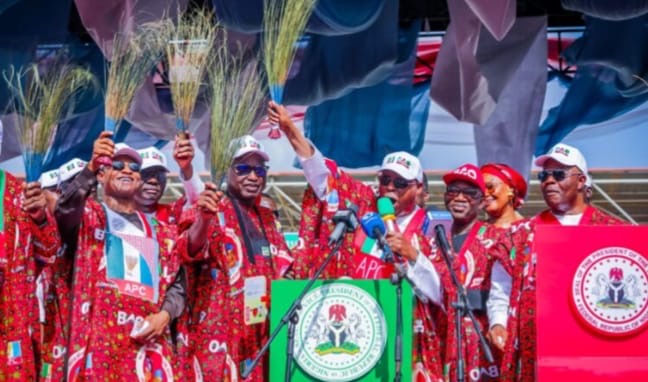
Yesterday, 16th of June, the last major campaign rally was attended by the highest levels of political leadership in the country, including the Presidency, and this ended the electioneering campaign. The noise of political campaign gradually faded across Ekiti State. The campaign posters completed their assignment, and the passionate appeals of candidates reached their final audience. As the dust settles, the responsibility for determining the future of Ekiti now rests solely in the hands of its people.
There comes a moment in the life of every society when history pauses and places a question before its people. It is not a question that can be answered through speeches, slogans, or emotions. It is a question that must be answered through wisdom, foresight, and a sincere concern for future generations. June 20, 2026, represents one of those defining moments in the history of Ekiti State.
Many elections come and go without leaving a lasting imprint on the destiny of a people. However, some elections become turning points that separate one era from another. Some votes determine not merely who occupies an office but also the direction a society will travel for many years thereafter. The forthcoming governorship election belongs to this category because it carries consequences far beyond politics.

Years from now, children yet unborn may ask what decision the people of Ekiti made when the future of their state stood at a crossroads. They may ask whether their parents and grandparents protected progress or exchanged it for uncertainty. They may ask whether emotions prevailed over evidence or whether wisdom triumphed over sentiment. When that day comes, every voter should be able to answer without regret.
For decades, Ekiti struggled under a cycle of political discontinuity that slowed its growth and weakened its developmental aspirations. Governments changed, parties changed, priorities changed, and in many cases projects changed as well. Successive administrations often abandoned initiatives started by their predecessors, regardless of the value such projects might have brought to the people. The result was a pattern of interrupted development that left many citizens frustrated and disappointed.
This cycle produced consequences that extended far beyond politics. Roads remained unfinished, infrastructure projects suffered delays, and long-term planning became difficult. Investors hesitated to commit resources because policy directions were uncertain and government priorities frequently shifted. Ordinary citizens became the ultimate victims of a system that repeatedly restarted itself every election season.
The effects were visible in communities across the state. Farmers struggled to transport their produce to markets because of poor road networks. Students often learned under conditions that did not reflect the educational reputation of the state. Healthcare facilities required improvement, while economic opportunities remained limited for many young people. The promise of Ekiti frequently appeared larger than its actual achievements.
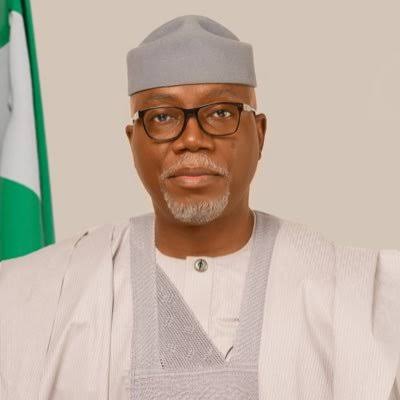
Then came a significant moment in 2022. For the first time in the democratic history of Ekiti State, a ruling party successfully retained power through the election of Governor Biodun Abayomi Oyebanji. Beyond the political significance of that victory, it represented a break from a long-standing pattern of instability. It signaled that many citizens desired continuity and were willing to support it when they believed it served the public interest.
Since then, the state has witnessed a period of relative stability that has allowed projects and policies to mature. Development has increasingly been measured not by promises but by visible outcomes. The administration has focused on infrastructure, agriculture, education, healthcare, youth empowerment, and fiscal responsibility. While challenges remain, the state appears to have established a clearer developmental direction.
Road infrastructure offers one of the most visible examples of this progress. Roads are more than stretches of asphalt connecting one location to another. They are economic lifelines that connect farmers to buyers, traders to customers, students to schools, and patients to healthcare facilities. The quality of a state’s road network often determines the pace of its economic growth.
Across Ekiti, several strategic roads have either been completed or substantially improved. Communities that once felt isolated are becoming more accessible, while transportation has become easier in many areas. The reconstruction of major routes has reduced travel difficulties and strengthened connections between rural and urban communities. These developments have created opportunities for commerce and improved the quality of daily life.
The administration’s intervention on the Ado-Iworoko-Ifaki Road stands as an example of leadership responding directly to public hardship. Rather than waiting indefinitely for external intervention, the state committed its own resources to address a critical infrastructure challenge. Such decisions demonstrate the practical importance of responsive governance. Citizens often judge governments not by rhetoric but by their willingness to solve real problems.
The construction of the flyover bridge at Okeyinmi and the expansion of road networks within and outside Ado-Ekiti have also transformed the physical landscape of the state. These projects represent investments in the future rather than temporary political achievements. They are designed to serve generations beyond the tenure of any single administration. Their value will continue to be felt long after campaign speeches have been forgotten.
Equally important is the emphasis placed on rural connectivity through the Rural Access and Agricultural Marketing Project. Rural roads are often overlooked because they do not attract the same publicity as urban projects. Yet they directly affect the livelihoods of farmers who form the backbone of the state’s agricultural economy. Improved rural roads translate into higher incomes, reduced post-harvest losses, and better access to essential services.
Agriculture remains central to the identity and economy of Ekiti State. The administration’s efforts to support farmers through access to inputs, mechanization, financing, and market opportunities reflect an understanding of this reality. Special attention has also been given to attracting young people into agriculture as a viable economic enterprise. Such initiatives help address unemployment while strengthening food security.
The importance of these agricultural interventions cannot be overstated. A society that empowers its farmers, invest directly in its future prosperity. When agriculture becomes profitable, rural communities become more vibrant and economically productive. Young people begin to see opportunities at home instead of viewing migration as their only option.
Fiscal discipline has also become an important component of the state’s governance profile. Consistent recognition for transparency and accountability demonstrates a commitment to responsible management of public resources. Such achievements may not always generate excitement among the public, but they create the foundation for sustainable development. Governments that manage resources effectively are better positioned to deliver meaningful results.
The education sector has similarly received significant attention. As the state proudly identifies itself as the Fountain of Knowledge, educational development remains essential to its identity and future. Investments in schools, teachers, and learning infrastructure contribute to building a more competitive and productive society. The reduction in the number of out-of-school children reflects progress that deserves recognition.
Healthcare outcomes provide perhaps the most powerful evidence of the impact of governance. Statistics relating to reduced infant, neonatal, and under-five mortality rates are more than numbers on paper. Behind every percentage point are real families whose lives have been touched by improved healthcare services. Behind every reduction in mortality is a child who survived and a family spared unimaginable grief.
The empowerment of young people remains another important area of progress. Through skills acquisition, entrepreneurship support, grants, and vocational training, many youths have gained opportunities to build productive lives. Youth empowerment is not merely a social programme; it is an investment in the future stability and prosperity of society. Every successful young entrepreneur becomes a source of hope for others.
Yet June 20 is not merely about celebrating achievements. It is about deciding whether those achievements should be consolidated and expanded. Development is rarely completed within a single administration. Most transformative projects require continuity, patience, and sustained commitment to reach their full potential.
This election therefore represents a choice between continuity and disruption. It is a decision about whether ongoing projects should move forward or risk interruption. It is a decision about whether momentum should be maintained or restarted. It is a decision about whether the future should be built upon an existing foundation or subjected to another cycle of uncertainty.
History teaches that societies often pay heavily for poor decisions made during critical moments. A single choice can influence the destiny of a family, an institution, or an entire state. The consequences of such choices are sometimes felt long after the individuals who made them have moved on. This is why moments like June 20 deserve careful reflection.
As voters approach their polling units, they must remember that they are not simply choosing a candidate. They are making a statement about the future they desire for their children and grandchildren. They are determining the quality of infrastructure, education, healthcare, and economic opportunities available to future generations. They are shaping the legacy that history will remember.
One day, the campaign songs will no longer be heard. One day, the political debates will fade from public memory. One day, the celebrations and disappointments of election season will become distant recollections. Yet the consequences of the decisions made on June 20 will continue to influence the lives of Ekiti people.
That is why this election should be approached with wisdom rather than emotion. It should be viewed through the lens of long-term development rather than short-term political considerations. It should be evaluated based on evidence rather than speculation. Above all, it should be approached with a sense of responsibility to future generations.
When history finally records the events of June 20, may it be said that the people of Ekiti chose wisely. May it be said that they looked beyond temporary passions and focused on enduring progress. May it be said that they protected what was working while striving for even greater achievements. May it be said that when destiny placed a choice before them, they responded with wisdom, courage, and foresight.
The campaigns are over. The speeches have ended. The responsibility now belongs to the people. As Ekiti stands at this important crossroads, every voter must remember that some decisions affect a season, some affect a generation, but a few affect the destiny of an entire people. June 20, 2026, is one of those decisions.
*Idowu Ephraim Faleye is a freelance political writer based in Ado-Ekiti, Nigeria. +2348132100608*