

By Ibrahim Bunu
ibrahimbunu2520@gmail.com
What the Abuja Meeting Must Mean for the Fulɓe, Nigeria and the Wider Sahel
The Meeting Is Bigger Than a Meeting

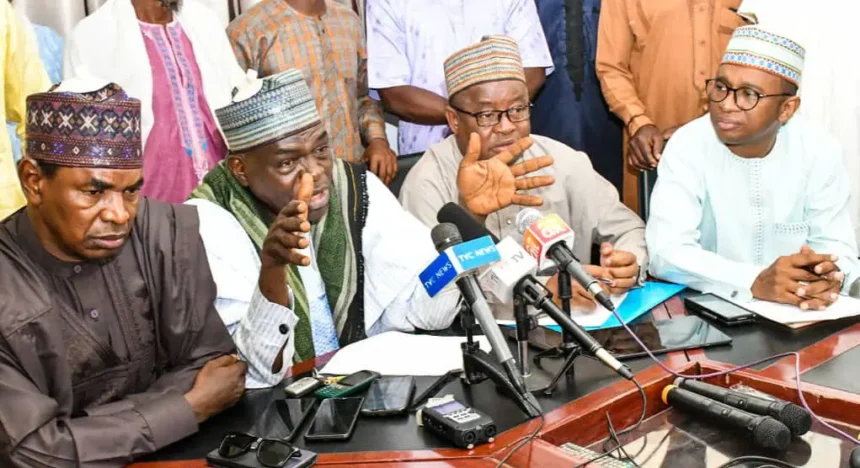
The reported special gathering of leaders of various Fulani organisations in Abuja under the leadership of the Sultan of Sokoto, represented by the Emir of Keffi, should not be treated as another routine meeting of ethnic or pastoralist associations.
If the account of the meeting is accurate, its timing is significant.
It comes at a moment when the Fulani question has moved beyond cattle, grazing routes and farmer-herder disputes. It has increasingly become a question of security, identity, citizenship, political representation, livelihood, justice, public perception and the future of peaceful Fulani communities in Nigeria and the wider Sahel.
There is therefore a legitimate reason for Fulani leaders to sit together.
But there is also a danger.
If such a gathering becomes merely another meeting where leaders complain about discrimination, condemn profiling and issue appeals, it will not solve the problem.
The Fulani leadership needs something much more difficult:
an honest internal examination of the Fulani condition.
That examination must contain two truths simultaneously:
No Fulani person should be collectively criminalised because criminals happen to belong to the same ethnic group.
But equally:
No Fulani leader should use the protection of an entire ethnic group as a shield against accountability for Fulani individuals who commit crimes.
That distinction may determine whether the present crisis becomes manageable—or whether Nigeria enters an even more dangerous cycle of ethnic retaliation.
1. WHY THIS GATHERING MATTERS NOW
The meeting should be understood against several developments occurring simultaneously.
First: The Fulani community is increasingly being viewed through the lens of insecurity
Across parts of Nigeria, the words Fulani, herder, bandit, kidnapper and sometimes terrorist have increasingly been placed together in public discourse.
That is dangerous because these categories are not synonymous.
A Fulani farmer is not automatically a pastoralist.
A pastoralist is not automatically a criminal.
A criminal who happens to be Fulani does not represent every Fulani person.
Yet the danger of collective stereotyping is real.
A recent 2026 academic study on pastoral conflict in Nigeria found that conflict between pastoralists and sedentary communities has contributed to distrust not only of individual herders but of wider Fulani and Muslim populations. (Cambridge University Press)
That is precisely where the problem becomes existential.
Once an ethnic identity becomes associated with criminality in the public imagination, innocent people begin paying the price.
2. THE BACKLASH IS NOT IMAGINARY
Fulani leaders should not dismiss every allegation of anti-Fulani sentiment as propaganda.
There is credible evidence that ethnic profiling and hostility are occurring in parts of Nigeria.
In June 2026, Sunday PUNCH reported that some Fulani settlers in southern Nigeria were leaving communities where they had lived for years because of alleged ethnic profiling, insecurity and hostility. (Punch Newspapers)
There have also been recent controversies involving alleged threats against Fulani communities in the South-West. Northern and Fulani organisations publicly condemned what they described as ethnic profiling. (TheCable)
And in April 2026, Amnesty International called for investigation into the reported deaths of at least 150 Fulani detainees at a military camp in Kwara State, while warning against security operations based on ethnic identity rather than individual evidence. (Amnesty International)
These matters cannot simply be waved away.
But there is another uncomfortable truth.
The existence of anti-Fulani prejudice does not mean every security operation against suspected criminals is anti-Fulani.
That distinction must remain sacred.
Otherwise, the legitimate fight against ethnic profiling can accidentally become an argument for ethnic immunity.
And no serious Nigerian should accept that.
3. THE FULANI LEADERSHIP MUST ALSO CONFRONT ITS OWN INTERNAL PROBLEM
This may be the most important message from the Abuja meeting.
The Fulani leadership must ask:
Who are the criminals operating under Fulani identity?
Who supplies them information?
Who buys stolen cattle?
Who provides food, medicine, weapons or shelter?
Who negotiates ransom?
Who protects them from arrest?
Who knows where kidnapped victims are being held?
Who knows the forests and illegal routes?
Who knows the identity of notorious bandits but refuses to speak?
These questions cannot be avoided simply because they are uncomfortable.
The Sultan himself has previously emphasised that pastoralists must respect constituted authority and avoid actions capable of damaging their reputation. A 2021 meeting between the Sultan and Miyetti Allah leadership similarly stressed the need to address security and socioeconomic challenges while rejecting the stereotyping of all Fulani as criminals. (Punch Newspapers)
That principle needs to become much stronger today.
The Fulani community must become the first line of defence against criminality committed in its name.
Not the last.
4. THE MOST DANGEROUS MISTAKE: COLLECTIVE DENIAL
There is a difference between defending a community and denying reality.
A responsible leadership should be able to say:
“Fulani people are not criminals.”
And immediately add:
“But Fulani criminals exist, and they must be identified, isolated, arrested and prosecuted.”
That is a stronger position than blanket denial.
If a criminal is Fulani, ethnicity should neither condemn him nor protect him.
Evidence should determine guilt.
This is how Fulani leaders can reclaim moral authority.
5. WHAT THE FULANI MUST LEARN FROM BURKINA FASO
The developments across the Sahel should be studied carefully—not emotionally.
Human Rights Watch reported in 2026 that Fulani civilians in Burkina Faso have faced serious abuses, including killings, displacement, discrimination and what it characterised as ethnic cleansing by state forces and allied militias. At the same time, Islamist armed groups have recruited from Fulani communities by exploiting poverty, marginalisation and abuses against civilians. (Human Rights Watch)
This creates a terrifying cycle:
marginalisation → anger → recruitment → terrorism → collective suspicion → repression → deeper marginalisation → more recruitment.
That is the trap.
And Nigeria must avoid it.
The Fulani leadership must understand that when criminals recruit from an ethnic community, they are not only threatening the state.
They are also hijacking the identity of that community.
6. MALI IS ANOTHER WARNING
Human Rights Watch has also documented serious abuses against Fulani civilians in Mali, including cases where security forces and allied militias allegedly treated Fulani civilians as collectively sympathetic to Islamist militants. (Human Rights Watch)
This demonstrates the danger of collective suspicion.
But it also demonstrates another lesson:
When an ethnic community becomes associated—fairly or unfairly—with armed movements, ordinary citizens can become trapped between militants and the state.
That is precisely why Nigerian Fulani leaders must act before the situation reaches that stage.
7. THE FULANI MUST NOT ALLOW CRIMINALS TO BECOME THE UNOFFICIAL REPRESENTATIVES OF THEIR PEOPLE
This is perhaps the greatest strategic challenge.
If every time government or society talks about the Fulani, the discussion begins with:
* banditry;
* kidnapping;
* cattle rustling;
* illegal grazing;
* communal violence;
* terrorism;
* weapons;
then something has gone terribly wrong.
The Fulani identity must be associated with much more:
education.
agriculture.
livestock development.
business.
professional excellence.
science and technology.
public service.
constitutional citizenship.
peacebuilding.
community leadership.
national development.
The community cannot leave its public image entirely in the hands of security incidents.
8. THE OLD NOMADIC MODEL IS UNDER ENORMOUS PRESSURE
There is also an economic reality that ethnic rhetoric cannot solve.
The Sahel is changing.
Desertification, drought, population growth, shrinking grazing corridors, expanding agriculture and the hardening of national borders are putting extraordinary pressure on pastoralism.
Research and recent reporting indicate that environmental pressures are pushing pastoralists into areas where competition over land and water can produce violent confrontation. (DW)
Therefore, the future question cannot simply be:
“Where can Fulani cattle continue to move?”
The bigger question is:
“How can Fulani pastoralism become economically productive, secure, modern and compatible with the realities of a rapidly urbanising Nigeria?”
That requires investment.
9. FULANI LEADERS MUST MOVE FROM PROTEST POLITICS TO REFORM POLITICS
There has been too much emphasis in Nigerian ethnic politics on issuing statements after something has happened.
The new strategy should be different.
Establish a National Fulani Peace and Security Council
It should include:
* traditional rulers;
* pastoralist associations;
* women representatives;
* youth representatives;
* lawyers;
* academics;
* security professionals;
* businessmen;
* religious leaders;
* state-level community representatives;
* conflict-resolution experts.
Its mandate should be practical rather than ceremonial.
It should document:
* attacks against Fulani communities;
* attacks allegedly committed by Fulani individuals;
* cattle rustling;
* kidnapping;
* communal clashes;
* displacement;
* unlawful profiling;
* unlawful arrests;
* land disputes;
* grazing-route disputes;
* successful peace agreements.
Facts must replace rumours.
10. CREATE A FULANI COMMUNITY ACCOUNTABILITY MECHANISM
This is where leadership credibility will be tested.
Every major Fulani organisation should publicly adopt a principle:
No criminal will be defended merely because he is Fulani.
If credible evidence exists against a person, community leaders should cooperate with law enforcement.
Where innocent people are falsely accused, leaders should equally defend them vigorously.
This creates a balanced formula:
Justice for victims.
Justice for the accused.
Accountability for criminals.
Protection for innocent citizens.
That is the language Nigeria needs.
11. FULANI LEADERS MUST BUILD RELATIONSHIPS WITH HOST COMMUNITIES
One of the biggest failures of Nigeria’s farmer-herder conflict has been the collapse of trust.
A Fulani community cannot live permanently beside another community while maintaining only transactional relationships.
There must be:
elders-to-elders dialogue.
youth-to-youth dialogue.
women-to-women dialogue.
religious dialogue.
farmer-herder committees.
traditional ruler engagement.
local security coordination.
The objective should be simple:
Know your neighbour before you need your neighbour.
12. GRAZING MUST BECOME GOVERNED, NOT ANARCHIC
The Fulani leadership must also confront illegal grazing practices.
Where grazing routes legally exist, they should be respected.
Where they do not exist, negotiations should occur.
Where cattle destroy farms, compensation mechanisms should operate.
Where farmers deliberately poison or attack cattle, they must equally face the law.
There cannot be two standards.
A serious national livestock policy should establish:
* mapped grazing corridors where legally appropriate;
* ranching and semi-intensive systems;
* water infrastructure;
* veterinary services;
* livestock markets;
* cattle identification;
* insurance;
* compensation mechanisms;
* conflict-resolution structures.
This would gradually transform the argument from ethnicity versus ethnicity into livestock policy versus livestock disorder.
13. THE FULANI YOUTH QUESTION IS CRITICAL
The most dangerous demographic is not necessarily the old herder.
It is the unemployed, angry, poorly educated young man who believes that society has no legitimate future for him.
That young man can be recruited by:
* bandits;
* extremist groups;
* ethnic militias;
* political thugs;
* criminal networks.
Therefore, Fulani leadership must make youth development a security strategy.
The agenda should include:
education + vocational training + livestock technology + digital skills + entrepreneurship + access to finance + civic education.
The future of the Fulani cannot be secured exclusively through traditional institutions.
It must also be secured through human capital.
14. WOMEN MUST HAVE A PLACE AT THE TABLE
A serious Fulani reform programme cannot be designed exclusively by male elders.
Fulani women experience the consequences of insecurity differently.
They face:
* displacement;
* loss of livelihoods;
* widowhood;
* disruption of children’s education;
* insecurity during migration;
* poverty;
* inadequate healthcare.
Women should therefore have formal representation in whatever national mechanism emerges from this Abuja gathering.
15. THE FULANI MUST DISTINGUISH BETWEEN ANTI-FULANI PREJUDICE AND LEGITIMATE PUBLIC ANGER
This is crucial.
Not every criticism of Fulani pastoralism is hatred of Fulani people.
A farmer whose crops have been destroyed may be angry.
A community whose members have been kidnapped may be traumatised.
A family whose relative was murdered may speak harshly.
The answer cannot automatically be:
“You hate Fulani.”
Sometimes the answer should be:
“We understand your grievance. Let us investigate what happened and solve it.”
That is leadership.
The same principle must apply in reverse.
When Fulani communities are attacked or profiled, society must not say:
“They are probably criminals.”
That is equally unacceptable.
16. THE FULANI MUST NOT FALL INTO THE ETHNIC RETALIATION TRAP
This is where the greatest danger lies.
If Fulani civilians are attacked in one location, the answer cannot be revenge against another ethnic group elsewhere.
That creates a chain:
attack → retaliation → counter-retaliation → ethnic mobilisation → militia formation → political exploitation → communal war.
Nigeria has seen enough of this pattern.
The wise response is:
document → report → investigate → prosecute → protect → reconcile.
Not:
attack → revenge.
17. THE SULTAN AND TRADITIONAL LEADERSHIP HAVE A UNIQUE RESPONSIBILITY
The Sultan’s moral authority—and that of other traditional rulers—can be an enormous national asset.
But traditional authority must be used not merely to defend a community.
It must also be used to discipline the community.
That means telling Fulani youths:
Do not become bandits.
Telling cattle owners:
Do not destroy farms.
Telling community leaders:
Do not harbour criminals.
Telling government:
Do not profile innocent Fulani citizens.
Telling host communities:
Do not criminalise an entire ethnic group.
Telling security agencies:
Arrest suspects based on evidence, not identity.
And telling politicians:
Do not weaponise ethnicity for electoral gain.
That is statesmanship.
18. THE ABUJA MEETING SHOULD PRODUCE A 10-POINT FULANI NATIONAL COMPACT
If this meeting is truly historic, it should not end with photographs and speeches.
It should produce measurable commitments.
A proposed compact:
1. Absolute rejection of terrorism, banditry, kidnapping and cattle rustling.
2. Full cooperation with lawful security agencies.
3. Zero tolerance for harbouring criminals within Fulani communities.
4. Establishment of a national database of community leaders and conflict-resolution structures.
5. Creation of farmer-herder peace committees in conflict-prone states.
6. Promotion of modern livestock production and ranching where economically and legally appropriate.
7. Establishment of legal assistance for victims of unlawful ethnic profiling.
8. Investment in Fulani education, especially girls’ education and youth skills.
9. Annual public reporting on progress and failures.
10. A permanent national dialogue mechanism involving Fulani and non-Fulani communities.
That would turn an August gathering into an institution.
19. THE BIGGEST STRATEGIC ERROR WOULD BE TO SEE THE CRISIS ONLY AS “FULANI VERSUS THE REST”
That framing is dangerous.
The Fulani are not outsiders to Nigeria.
They are Nigerians.
But they are also part of a wider transnational cultural population stretching across several West and Central African countries.
The challenge is therefore simultaneously:
Nigerian + Fulani + pastoral + security + economic + environmental + political.
It cannot be solved with one-dimensional ethnic politics.
The Fulani need Nigeria.
Nigeria needs peaceful Fulani citizens.
The Sahel needs stable pastoral communities.
And Africa needs a solution that prevents pastoral identity from becoming permanently associated with insecurity.
20. THE MESSAGE TO THE FULANI SHOULD BE FRANK
The Fulani leadership must understand something uncomfortable:
Nobody else can save the Fulani from the consequences of Fulani criminality.
Government must protect innocent Fulani citizens.
The courts must punish unlawful discrimination.
Security agencies must avoid collective punishment.
But Fulani communities themselves must make criminality socially unacceptable.
If a criminal knows that his own community will expose him, his operating environment becomes smaller.
If a criminal knows that his ethnic identity will automatically generate defenders, his operating environment becomes larger.
That is the difference between community solidarity and community complicity.
They must never be confused.
21. AND THE REST OF NIGERIA MUST ALSO HEAR THIS
This article is not an argument for placing the Fulani above other Nigerians.
It is an argument for placing the individual above the stereotype.
If a Fulani man commits kidnapping, prosecute him.
If a farmer kills a Fulani herder, prosecute him.
If a militia attacks a Fulani settlement, prosecute the perpetrators.
If a security officer unlawfully kills an innocent civilian, investigate and prosecute.
If a community destroys another community’s property, hold the perpetrators accountable.
Same law. Same citizenship. Same dignity.
That is the only sustainable principle.
22. THE REAL TEST OF THE ABUJA MEETING
The success of this gathering should not be measured by the number of dignitaries who attended.
It should be measured six months later.
Have kidnappers been handed over?
Have farmer-herder disputes reduced?
Have Fulani children returned to school?
Have displaced families returned safely?
Have cattle routes been better organised?
Have host communities regained confidence?
Have unlawful attacks against Fulani communities been investigated?
Have Fulani leaders publicly condemned criminals from their own communities?
Have government agencies stopped ethnic profiling?
Have young Fulani men found better economic alternatives?
If the answer to these questions is no, then another meeting has simply taken place.
If the answer becomes yes, then Abuja may have marked the beginning of a new chapter.
CONCLUSION: THE FULANI STAND AT A CROSSROADS
The present moment should be treated neither with panic nor denial.
There are genuine signs of growing suspicion, ethnic profiling and hostility against Fulani communities in parts of Nigeria and the wider region. There is also credible evidence of serious abuses against Fulani civilians in parts of the Sahel. (Human Rights Watch)
But there is another reality that must not be hidden:
criminality committed by some individuals who are Fulani has contributed to the fear and distrust surrounding the wider community.
The answer is therefore not ethnic defensiveness.
It is ethical leadership.
The Fulani must defend their people without defending criminals.
They must demand justice without rejecting accountability.
They must resist ethnic profiling without pretending that every accusation is fabricated.
They must modernise pastoralism.
They must educate their children.
They must empower their women.
They must engage their neighbours.
They must cooperate with legitimate security institutions.
And above all, they must ensure that no criminal can hide behind the name of Fulani.
Nigeria, for its part, must make an equally solemn commitment:
No innocent Nigerian should be punished because of his ethnicity.
That is the line between justice and collective vengeance.
And that is why the Abuja gathering matters.
The question is no longer merely:
“How do we protect the Fulani?”
The deeper question is:
“How do we build a Fulani community so organised, educated, accountable, economically productive and integrated into Nigeria’s constitutional order that criminals can no longer hijack its identity—and no society can legitimately justify persecuting its innocent members?”
That is the conversation the Abuja meeting should begin.
Not a conversation about ethnic survival through confrontation, but ethnic security through responsibility, citizenship, justice and reform.
The time for meetings without measurable consequences is over.
The Fulani need a strategy. Nigeria needs justice. And the Sahel needs peace.