

By Okoi Obono-Obla
On 22nd August 2026, my good friend, Onoyom Ette Onoyom, sent me a message with pictures and commented thus:
“Thank you very much. However, I have read this article before now from your post. But today’s concern is what we have similar, being placed on our females’ heads, which the Efiks call ÑTAÑKAÑDA. Please tell me what our Ugep Eburutu people call it and its significance.”
The Cross River Basin is a melting pot of diverse cultures and peoples who have intermingled and interwoven over hundreds of years. This has produced one of the most unique and vibrant cultural tapestries in West Africa.

The Yakurr people of Cross River State are one such group in the Cross River Basin with a vibrant and rich cultural heritage that is as phenomenal as it is unique.
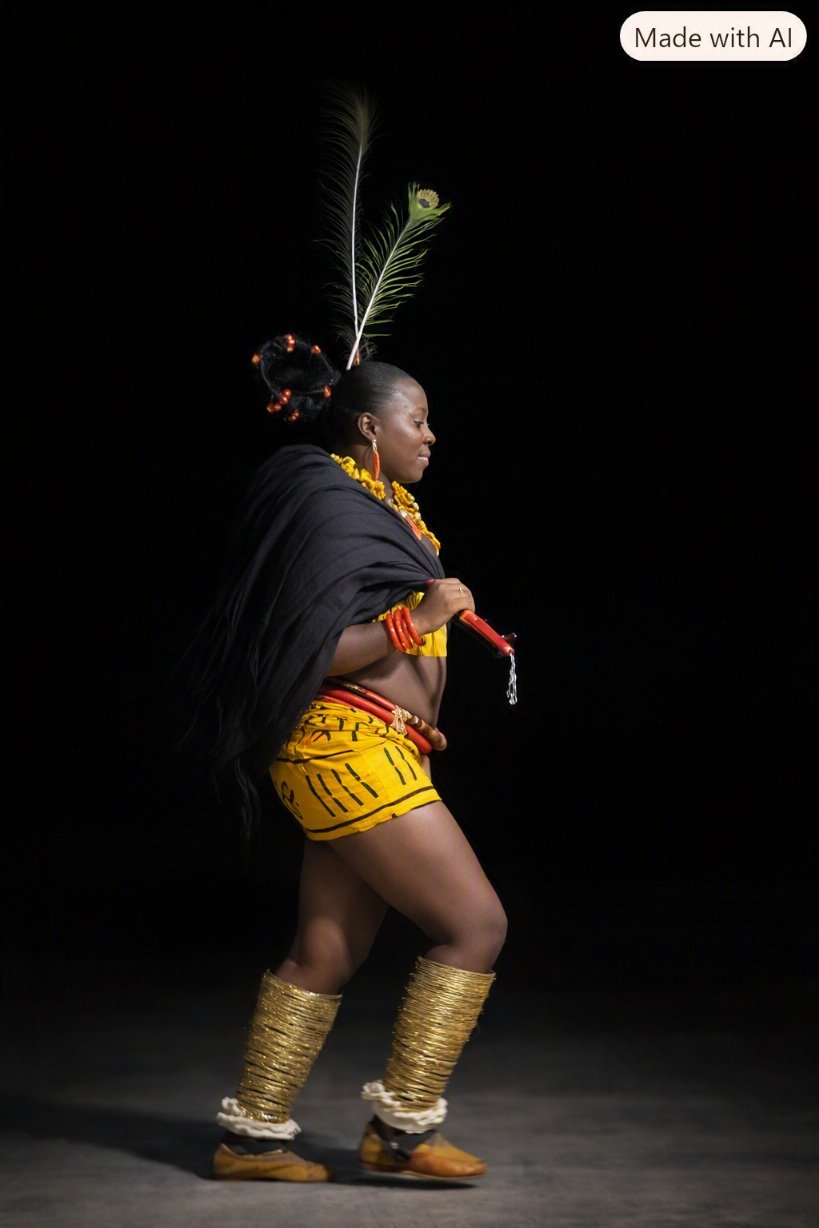
The 22nd of August 2026 was the Ugep New Yam Festival, and one of its highlights is the parade of maidens, gaily and beautifully decorated and attired.
The Yakurr have delicately struck a balance between men and women, to the extent that a misogynist would be red with anger upon realizing how much respect and dignity Yakurr culture accords to women.
Yakurr culture is both patriarchal and matriarchal, all rolled into one. How the people were able to evolve such a classical and unique culture that blends two mutually and benignly antagonistic systems into such a harmonious co-existence will certainly intrigue social anthropologists to research.
For instance, during the New Yam Festival, two days are dedicated to the celebration of men and women separately.
The women’s festival is known as Janen-boku and was celebrated on 21st August 2026. Similarly, the men’s festival, known as Ledom-boku, was celebrated on 22nd August 2026. Interestingly, the parade of the maidens usually takes place on Ledom-boku (the men’s festival) and not on Janen-boku.
I wish to elaborate on two beauty items and decorative materials that form part of the dress code of the maidens. In my previous writings, I have touched on the spiral brass bangles worn by maidens on their ankles, the camwood (Ekoh) used on the feet of the maidens, and the Nsibidi (Aeblemi) designs painted on the backs and stomachs of the maidens.
One of such items is the peacock feather affixed to the head of the maidens. The peacock feather is a highly valued and prized cultural artifact. Across many cultures, its iridescent beauty and eye-like pattern have made it a symbol of royalty, pride, beauty, and spirituality. In Yakurr culture, it is symbolic of royalty, honour, and elevated status. In Yakurr, it is known as Éjelikañ-noñsë, also called Egenise. This is the equivalent of what the Efik call ÑTAÑKAÑDA.
The other is the cow tail switch, or fly whisk, which is also part of the dress code of the maidens. The cow tail switch, known in Yakurr as Mpamshe, is held by the maiden in her right hand. Its cultural significance is that it is deemed authoritative and spiritual.
Although the Yakurr people are not pastoralists, their use of the cow tail switch demonstrates that they were once pastoralists who lived in the African open savanna before migration took them to the African tropical rainforest region.
Conclusion
In essence, both Éjelikañ-noñsë and Mpamshe are not mere adornments. They are profound statements of identity. While the peacock feather crowns the maiden with grace, beauty, and royalty, the Mpamshe in her hand affirms her authority and spiritual standing. Together, they proclaim the dignity of Yakurr womanhood and a heritage that must be preserved for posterity.