
By Khaleed Yazeed
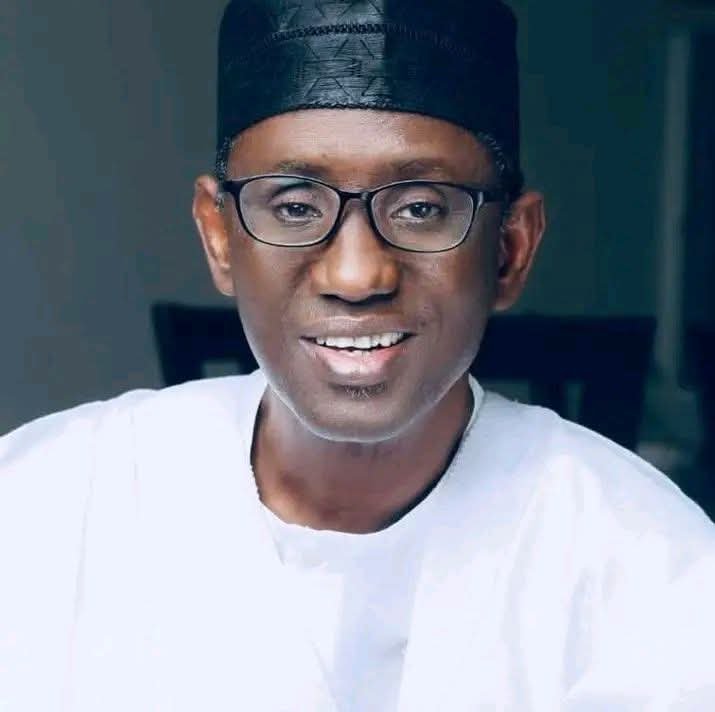
In the architecture of the Nigerian state, there are individuals who do not merely occupy offices, they become the very machinery of the system itself. Nuhu Ribadu, the current National Security Adviser (NSA), is one such figure. His name has become synonymous with a certain kind of state power, the one that is celebrated by some as the pinnacle of anti-corruption and condemned by others as the ultimate weapon of political control.
To understand the arrest of Hausa Zalla activist Bichiia Maisango, one must first understand the man whose office is accused of orchestrating it. Ribadu’s journey from the dusty streets of Yola to the heart of Nigeria’s security apparatus is a story of sharp ambition, dramatic falls, and a relentless reinvention within the corridors of power.
THE FOUNDATIONS: A PRIVILEGED START IN YOLA
Nuhu Ribadu was born on November 21, 1960, in Yola, Adamawa State. He was not born into poverty; his father, Ahmadu Ribadu, was a First Republic Member of Parliament and Nigeria’s Ambassador to Niger during the military regime of Muhammadu Buhari. This privileged background provided him with the educational foundation that would later launch his career.
His formal education began at Aliyu Mustapha Primary School in Yola, where he attended from 1966 to 1973. He then proceeded to Yelwa Government Secondary School, Yola, for his secondary education, completing his studies between 1973 and 1977.
Between 1978 and 1980, Ribadu attended the College of Preliminary Studies (CPS) in Yola for his A-levels. In 1980, he gained admission to study Law at the prestigious Ahmadu Bello University (ABU) in Zaria, graduating with his LL.B in 1983. He subsequently attended the Nigerian Law School and was called to the Bar in 1984. He later obtained an LL.M degree with a focus on the jurisprudence of corruption in Nigeria, also from ABU Zaria, and in 2008 attended a program on the strategic management of law enforcement agencies at Harvard Business School.
Ribadu joined the Nigeria Police Force immediately after his National Youth Service Corps (NYSC). His rise through the ranks was steady, but his defining moment came in 2003 when he was appointed the pioneer Executive Chairman of the Economic and Financial Crimes Commission (EFCC).
During his tenure from 2003 to 2007, Ribadu cultivated an image as a fearless crusader. Under his leadership, the EFCC reportedly recorded over 200 criminal convictions and brought down several high-profile figures. He was promoted to the rank of Assistant Inspector General of Police (AIG) in March 2007. For a time, he was the darling of the international community, celebrated for his “courage” and “integrity” in the fight against corruption.
However, his tenure was also marked by accusations of political bias. Critics argued that the EFCC under Ribadu was used by the Obasanjo administration to persecute political opponents while shielding allies. This political entanglement would later become the foundation for the controversies that define his career today.
THE FALL: FROM ANTI-CORRUPTION CZAR TO EXILE
The political winds changed dramatically for Ribadu in 2007 when Umaru Musa Yar’Adua succeeded Olusegun Obasanjo. Ribadu’s position became untenable. In December 2008, he was removed from his post as EFCC Chairman by the Nigerian Police Service Commission and demoted. Many observers believed his dismissal was politically motivated.
The situation escalated rapidly. In 2008, Ribadu fled Nigeria after receiving death threats and surviving a drive-by shooting, according to his lawyer, Femi Falana. He was sent on a “study leave” that was widely seen as a soft landing to remove him from the anti-graft agency. This period of exile transformed Ribadu from a powerful insider into a political outsider. It was a fall from grace, but it was also the beginning of his reinvention as a politician.
THE POLITICAL ODYSSEY: AMBITION AND DEFEAT
After his return to Nigeria, Ribadu sought to translate his anti-corruption profile into political capital. He ran unsuccessfully for the office of the President of Nigeria in 2011 as the candidate of the Action Congress of Nigeria (ACN). He then ran for governor of Adamawa State in 2015 as a candidate of the Peoples Democratic Party (PDP), but he lost.
He later joined the All Progressives Congress (APC) to run for governor again in 2019, and then in 2023, where he lost the bid to Aishatu Dahiru Ahmed (Binani). In 2022, Ribadu actually sued the APC over the governorship primary, alleging over-voting and irregularities, seeking to nullify Binani’s candidacy. He later withdrew the suit. His political career has been marked by a series of strategic alliances and dramatic shifts.
THE FEUDS: EL-RUFAI AND THE ACCUSATIONS OF POLITICAL WITCH-HUNT
Ribadu’s return to power as the National Security Adviser under President Bola Tinubu in 2023 has been deeply controversial, not least because of his relationship with former allies like Nasir El-Rufai. The once-close friends are now bitter adversaries. El-Rufai has accused Ribadu of directing security operatives to arrest political opponents without proper investigation. In a sensational claim, El-Rufai stated that he had listened to a wiretapped phone conversation of Ribadu allegedly instructing security operatives to effect his arrest. These allegations paint a picture of an NSA whose office is being used for political enforcement rather than genuine national security.
THE “BROTHERS” CONTROVERSY: PROTECTING THE KILLERS, PUNISHING THE VICTIMS
The most damning indictment of Ribadu’s tenure as NSA, and the one that exposes the deep moral rot within his office, is his public stance on the bandits who have turned the Northern forests into killing fields.
In 2024, Ribadu sparked national outrage when he publicly declared that the Nigerian government was not fighting bandits, but rather “our brothers and fellow citizens who have been forced into this situation.” He argued that the bandits were victims of poverty, bad governance, and a neglected environment, and he advocated for a non-kinetic approach to the crisis.
For the families in Katsina, Zamfara, and Kaduna who have buried their children, whose daughters have been abducted and raped, and whose villages have been razed, Ribadu’s words were a bitter slap in the face. He was extending the language of brotherhood and empathy to armed murderers while the victims of their terror were left to mourn. He called the men who slaughter farmers “brothers,” but the peaceful Hausa activists who demand the protection of these same farmers are treated as enemies of the state.
The contrast is stark and chilling. On one hand, the NSA advocates for a soft, negotiated, “brotherly” approach to the terrorists holding the country hostage. On the other hand, his office is accused of orchestrating the ruthless arrest and prolonged detention of a peaceful advocate like Bichiia Maisango. This is the ultimate proof of a broken security architecture: the government extends an olive branch to the killers, but reserves the iron fist for the critics. If the bandits are his “brothers,” what does that make the Hausa youth who demand an end to the slaughter?
THE ARREST OF BICHIIA MAISANGO: THE FINAL STRAW?
For many in the Hausa Zalla movement, the arrest and detention of activist Ibrahim Bichiia Maisango was not an isolated incident but the culmination of a systemic pattern of using state security apparatus to suppress dissenting voices.
Maisango was arrested in June 2026 and spent over five months in DSS detention. He was charged with incitement over his advocacy for the liberation of the Hausa people and the recognition of Hausa as a distinct ethnic group separate from Fulani. The security agency accused the Hausa Zallah Movement, which he leads, of seeking to cause a crisis in the country. His release on bail in November 2026 came after a grueling legal battle that involved several court appearances over months, with his lawyers alleging that forces behind his arrest actively made the legal process more difficult.
Was this a genuine national security concern, or was it the political enforcement of a system that views any demand for Hausa self-determination as a threat? The timing of his arrest, coinciding with the growing influence of the Hausa Zalla movement, and the severity of the detention, strongly suggest that the state is not just fighting insecurity, but also fighting the awakening of a people.
The responsibility for this suppression cannot be fully separated from the office of the National Security Adviser. If, as many allege, the arrest of Maisango was ordered or facilitated by Ribadu’s office to silence a political activist, then it confirms that the machinery of national security is being used as a weapon against the very citizens it is supposed to protect.
PART TWO WILL EXAMINE: The deeper links between the NSA’s office and the detention of activists, the contradictory testimony of political actors, and the historical parallels between Ribadu’s career and the suppression of earlier pro-democracy movements in Nigeria.
–Khaleed Yazeed, Founder, Wakilin Yamma Youth Development Network, Katsina State, Nigeria