

By Bola BOLAWOLE
turnpot@gmail.com 0803 251 0193
(Published on the back page of the NEW TELEGRAPH newspaper edition of Wednesday, 4 November, 2026).
Nigerians are feverishly preparing for another General Election. Presidential and National Assembly elections have been slated for Saturday, 16 January, 2027 while governorship and state House of Assembly elections come up two weeks after – on Saturday, 6 February, 2027. The elections will gulp over a trillion Naira; yet, its unfortunate outcome can be determined a priori!

The Independent National Electoral Commission (INEC) – how independent has it ever been? – is asking for almost N874 billion to conduct an election where, as an electoral umpire, it has always been accused of favouring this or that candidate at the expense of others. A trillion Naira given to education or health will benefit the society better than one thrown down the drains of elections that have always left us more bitterly divided after than before.
And INEC is not the only agency that will collect votes for the election. The police will. The other security apparatuses like the Civil Defence, Army, Navy and Air Force will not be left out. Customs and Immigration will show face. Even the Correctional Service! Don’t ask me what those ones have to do with elections! Hardly are we going to find one Ministry, Department, Agency (MDA) or parastatal of the government that will not partake in drawing money from the nation’s coffers for the election. Endemic corruption!
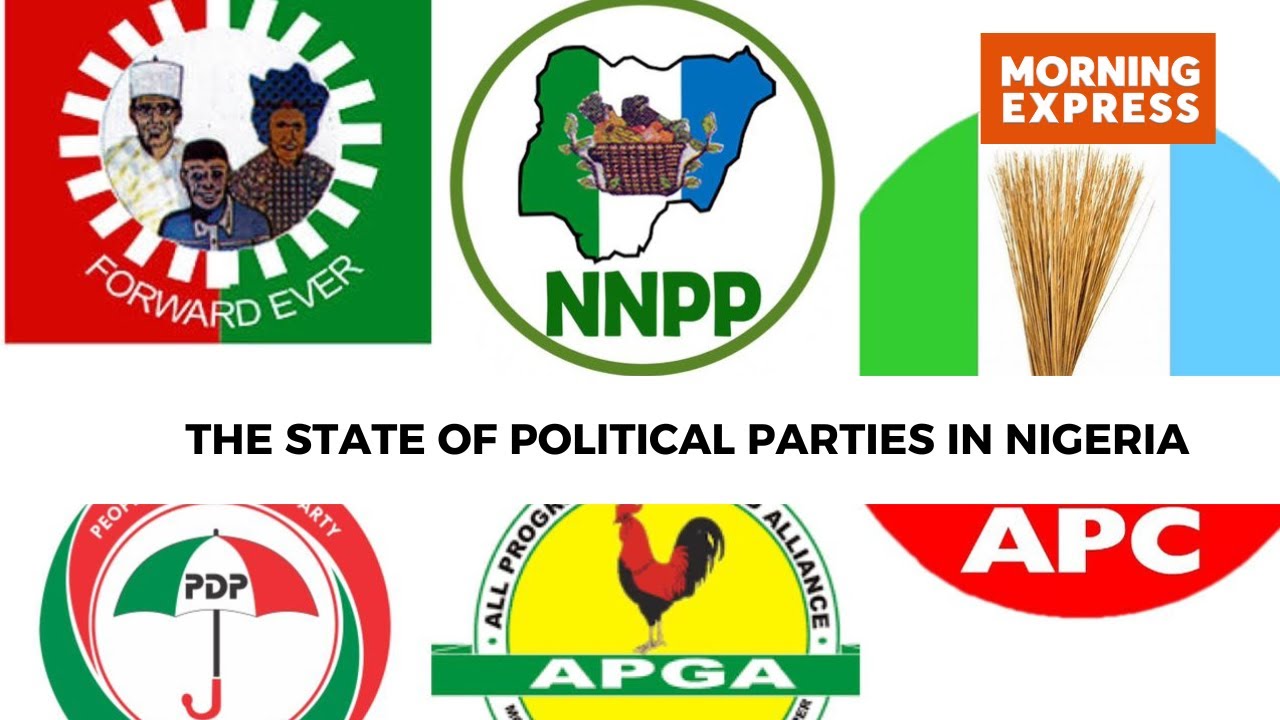
Next, we must factor in the political parties and politicians. The major political parties will each spend as much, if not more than INEC’s budget. Vote-selling and vote-buying on election day will gulp billions of Naira. This is not to talk of the money the parties have spent since INEC lifted the ban on politics. Election monitoring by both local and foreign groups will gulp money.
After the elections, tribunals will be set up to listen to, and adjudicate on grievances. That is the time big-cat lawyers and compromised judges will make their own kill. In the end, the elections will determine nothing!
INEC will be torn into shreds by the losing sides. As had always been the case, a plethora of gaps in INEC processes and procedures will be enough justification for whatever results it declares to be disputed and rejected by this or that political party. It will be a miracle if things work out differently from the apocalypse painted here.
As they say, we cannot continue to do things the same way and expect a different result. Technology or not, card reader or not, BIVAR or not, electronically-transmitted results or not, we will need to imitate Dangote and go to India to recruit the personnel that will man our election processes to stand a chance of making a headway. The Nigerian factor!
Did I sound pessimistic? Better to be and then be pleasantly surprised than build castles in the air and then be abjectly disappointed! After missing the golden opportunity – a miracle – of June 12, 1993, we will need another miracle to berth credible elections on these shores. But miracles do not happen in each election cycle! Natural laws are what happen predictably now and again – but those ones are what we have stood on their head; yet, we expect things to work well. They won’t!
Now, consider this: Since Independence in 1960, Nigeria has practised what is called universal adult suffrage. Every adult, male or female, literate or illiterate, propertied or non-propertied, can vote and be voted for once they attain the age of 18 years.
But in other democracies, including Great Britain from whom we gained Independence, universal adult suffrage was attained in phases – property qualifications, educational qualifications, age qualifications, and gender qualifications before universal adult suffrage was attained. They climbed the ladder from its lowest rungs, learning the rudiments and mastering the ropes along the way, but we climbed ours from the very top and kept falling off! They climbed their own tree from the trunk but we climbed ours from the leaves. The outcome has been predictable.
Now consider Great Britain: “The Representation of the People Act 1918… was an act of the Parliament of the United Kingdom passed to reform the electoral system in Great Britain and Ireland. It is sometimes known as the Fourth Reform Act. The act extended the franchise in parliamentary elections, also known as the right to vote, to men aged over 21, whether or not they owned property, and to women aged over 30 who resided in the constituency whilst occupying land or premises with a rateable value above £5, or whose husbands did. At the same time, it extended the local government franchise to include women aged over 30 on the same terms as men. It came into effect at the 1918 general election.
“As a result of the act, the male electorate was extended by 5.2 million to 12.9 million. The female electorate was 8.5 million. The act also created new electoral arrangements, including making residence in a specific constituency the basis of the right to vote and institutionalising the first-past-the-post method of election.
“It was not until the Representation of the People (Equal Franchise) Act 1928 that women gained electoral equality. The 1928 act gave the vote to all women aged over 21, regardless of any property qualification, which added another five million women to the electorate.” (Source: Google).
Our erstwhile colonial masters proceeded in stages; one step before another. Each improvement made on the law had compelling justifications and adequate preparations were made to accommodate them without overwhelming the system. Those given the vote earned it; they knew its importance and were eminently placed to discharge its obligations.
Not so here in Nigeria! The illiterates who do not know their left from their right have the vote. Those who do not understand what is at stake have the vote. The poor or tax evaders who do not pay taxes and, therefore, have no stake in the wellbeing of the society, have the vote; and hordes of people not adequately prepared for and catered to also have the vote. In that situation, how can things work properly?
I do not advocate for gender qualification but I advocate educational qualification, age qualification and property qualification before anyone is given the vote. If we set university education or its equivalent as educational qualification, the advantages are many. The states that prefer to allow their children roam the street will be forced to send them to school. We will be spared the misfortune of having miscreants rule over us. Anyone whose educational qualifications are in doubt will be ruled out.
The high level of illiteracy is one of the major reasons why our elections will not be credible for a very long time to come.
How many Nigerians pay tax, but in the advanced countries that we use as a reference point when it suits us, payment of tax is a must; tax evaders, regardless who they are, are punished severely. We have seen cases of footballers who are hero-worshipped by many dealt with severely in Western European countries for tax evasion. Not here in Nigeria!
Only those who pay tax should have the vote. Only those who demonstrate that they have a stake in the economic wellbeing of the country and who understand issues surrounding the economy should have the vote. Vote-selling thrives more among the poor. Exclude the desperately poor from voting and you are on the way to cleaning up the electoral system.Those buying votes on Election Day know who to approach!
Now, also consider the United States of America’s example, after whose presidential system we have grafted ours: The first U.S. president, George Washington, did not belong to a political party. He served as an independent and strongly warned against the creation of political factions. The early presidents and their party affiliations include:
• George Washington (1789–1797): Independent (No political party)
• John Adams (1797–1801): Federalist Party
• Thomas Jefferson (1801–1809): Democratic-Republican Party
• James Madison (1809–1817): Democratic-Republican Party
• James Monroe (1817–1825): Democratic-Republican Party
• John Quincy Adams (1825–1829): National Republican Party.”
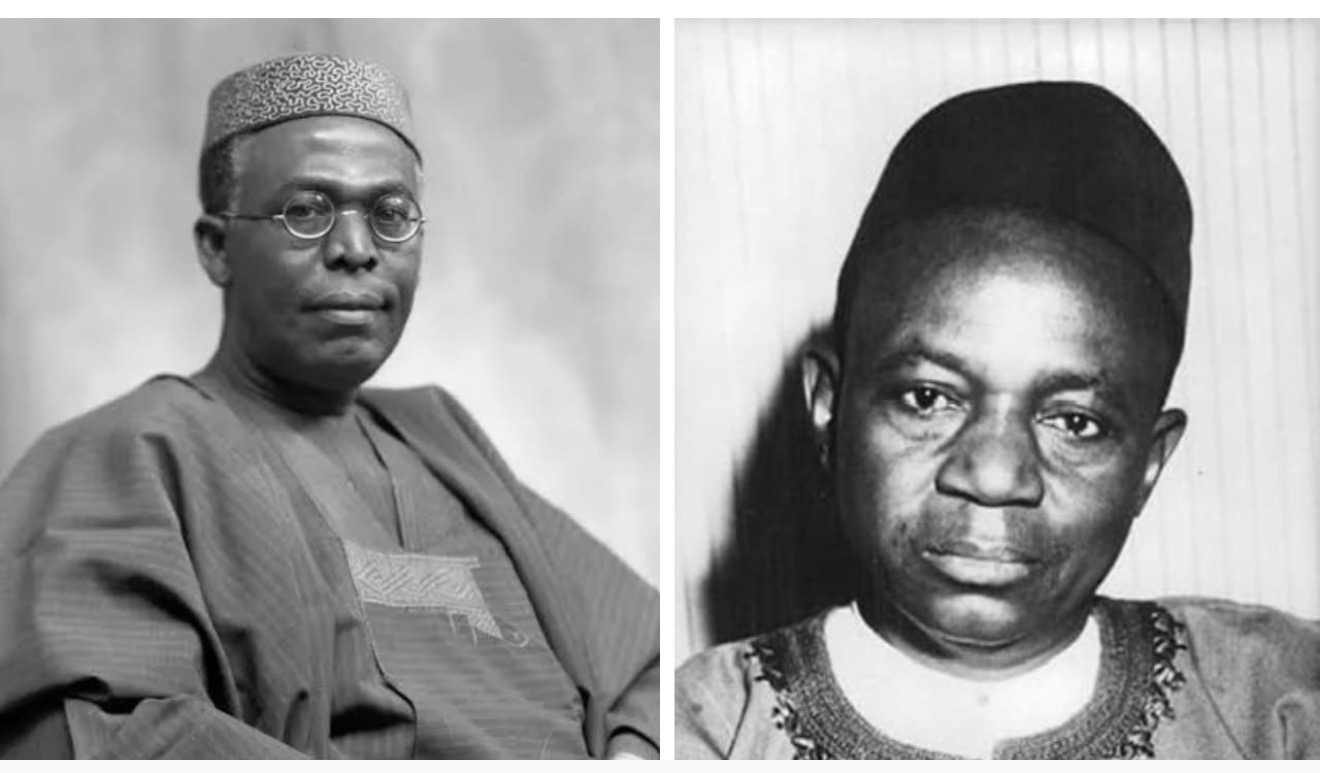
Consider if the founding fathers of Nigeria had followed the example of George Washington! The founding fathers of the United States lined up one after the other to rule the country. Consider if Tafawa Balewa, Nnamdi Azikiwe, Obafemi Awolowo, Anthony Enahoro, Joseph Tarka, Aminu Kano, etc. have taken turns, like the founding fathers of the US, to rule this country and stabilize it, rather than the acrimony that party politics and personal rivalries created among them, leading to the Wild, Wild West crisis and the military coups of 1966 that truncated the First Republic!
Washington’s eight-year rule stabilized a country that had fought and won its war of independence (1776) and that had also emerged from a gruelling civil war (1861 – 1865). The creation of political factions, which Washington strongly warned against, led to the collapse of our First Republic under six years.
From Independence on October 1, 1960 to the first military coup of January 15, 1966 is less than six years; ever since, Nigeria’s political class has not been intelligent enough to understand that it is in their class interest to forge class identity and elite consensus like desperate Singaporean leaders did after their expulsion from the Malaysia/Singapore Federation in 1965.
There can be no credible elections here until illiteracy and poverty are eradicated. And until a vibrant middle class, already going into extinction, is resuscitated and energized. And until the elite class themselves discover their mission and the necessity to fulfill it, according to Frantz Fanon, we shall continue to grope in the dark. Any talk of hope, renewed or not, will be “verloren hoop” (forlorn hope)!
* Former Editor of PUNCH newspapers, Chairman of its Editorial Board and Deputy Editor-in-Chief, BOLAWOLE was also the Managing Director/ Editor-in-Chief of The WESTERNER newsmagazine. He writes the ON THE LORD’S DAY column in the SUNDAY TRIBUNE and TREASURES column in the NEW TELEGRAPH newspaper on Wednesdays. He is also a public affairs analyst on radio and television.