By Okoi Obono-Obla
I listened carefully to the discussion by my friend, Chief Chibunna Ubawuike, on the political discussion programme of TVC concerning the call by Senator Orji Kalu on the South East to end political isolation, back Tinubu’s re-election, and totally align with his thesis or proposition.
I agree with him completely. Indeed, several months ago, I made the same appeal urging the South East to work with the South West politically to reach rapprochement.
This is not sentiment. It is strategy.

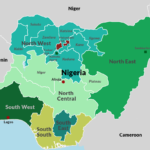
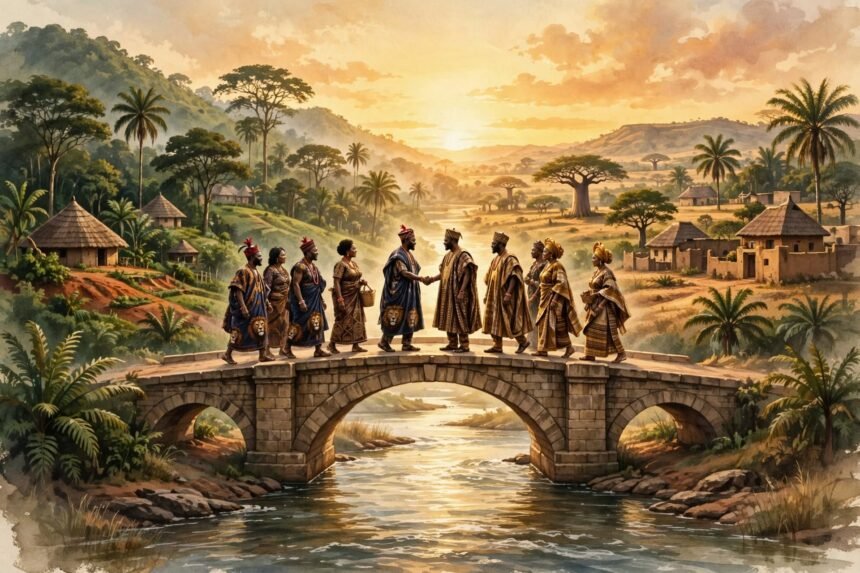
If the South East builds a genuine alliance with the South West now, it strengthens its case for reciprocity when the presidency returns to the South. If it does not, the South South is waiting in the wings, and the South West may well choose to throw its massive weight behind the South South when that moment comes. Politics does not reward those who stand aloof. It rewards those who build bridges, keep faith, and show up when it matters.
All the bitterness between the South West and South East must end this season, and the South East must show real politicking, common sense, and pragmatism, and end its self-induced political isolation and insulation.
For too long, a section of South East politics has been driven by grievance rather than calculation. Grievance may win applause at home, but it does not win power at the centre. It does not build ministries, it does not shape budgets, it does not influence appointments, and it does not determine the future of the federation. Power is negotiated, not awarded for moral injury.
We must learn from history, for history is not only the study of events such as regime changes, wars, and natural disasters, but also the clash of ideologies. When ideologies of isolation, ethnic particularism, tribalism, or “stay on my own” prevail against mainstream politics or nationalism in a country such as ours, torn by division, why will there be synthesis?
Japan offers a cautionary example, not an example of successful isolation. From the 1630s to the 1850s, under the Tokugawa shogunate, Japan practised sakoku, or national seclusion. It restricted foreign trade and contact largely to preserve political stability, control Christianity, and prevent rival lords from gaining wealth and weapons from abroad. That long period of exclusion did not enable Japan to catch up with the West. On the contrary, it left Japan behind industrially and militarily, a gap exposed when Commodore Perry arrived in 1853. Japan only caught up after it reopened and pursued deliberate modernisation during the Meiji Restoration from 1868 onwards.
The lesson is clear: isolation does not build strength; engagement does.
The same lesson applies to Nigeria. No region can become president of Nigeria by itself. No region can govern Nigeria by itself. The South East, for all its enterprise, education, industry, and human capital, cannot produce a president without allies. Neither can the South West. Neither can the North. That is the nature of our federation. The question is not whether to ally, but with whom, and on what terms.
The South West has demonstrated, over decades, an unusual capacity for political organisation, patience, and alliance-building. It has built across regions. It has negotiated. It has sometimes waited. The South East must learn that discipline. Politics is not a sprint of emotion; it is a marathon of relationships.
Senator Orji Kalu understands this. His call is not about surrender. It is about positioning. To back Tinubu’s re-election is not to abandon the South East interest; it is to place the South East inside the room where decisions are made, rather than outside shouting through the window. To be inside is to be heard. To be outside is to be ignored, however loud the shouting.
Let us be honest with ourselves. What has isolation produced? It has produced marginalisation in federal appointments. It has produced loss of leverage in party structures. It has produced a situation where others decide, and we complain afterwards. That is not dignity. That is self-defeat.
Rapprochement with the South West does not mean the South East must agree with the South West on everything. It means we must find common ground on the future of the South, on true federalism, on economic development, on security, and on a Nigeria where no region feels like a stranger in its own country. From that common ground, trust can be rebuilt.
Trust, however, must be earned on both sides. The South West must also understand that an alliance cannot be a one-way street. Reciprocity is the soul of politics. If the South East stands with the South West today, the South West must be prepared to stand with the South East tomorrow. That is the bargain Chief Ubawuike and Senator Kalu are pointing to, and it is a fair bargain.
The time for lamentation is over. The time for calculation has come.
The South East must end its political insulation. It must join the mainstream. It must vote strategically. It must negotiate boldly. It must build alliances deliberately, starting now, not in the year of election when everyone is already positioned.
History will not remember who was most bitter. History will remember who was most wise.
Let us choose wisdom.