By Okoi Obono-Obla
The Leboku Festival of Ugep, Cross aRiver State Nigeria is a 34-day celebration that blends ritual, religion, thanksgiving, and communal joy. More than just a festival marking the harvest of new yams, it symbolizes the end of hunger and reflects the Yakurr people’s philosophy of life, unity, and reverence for tradition.
As Dr. Otu Abam Ubi explains, Leboku is not only about food production but encompasses the totality of rites, dances, and ceremonies — from Eti ke Komi to Mponfawa — that embody its deeper meaning.
Leboku Officially Commences

On Tuesday, 18 August 2026, which coincided with the Okponghobi market day, the Obol Lopon of Ugep and Paramount Ruler of Yakurr, Obol Ofem Ubana, performed one of the mandatory traditional rites that must be undertaken before Leboku — the New Yam Festival.
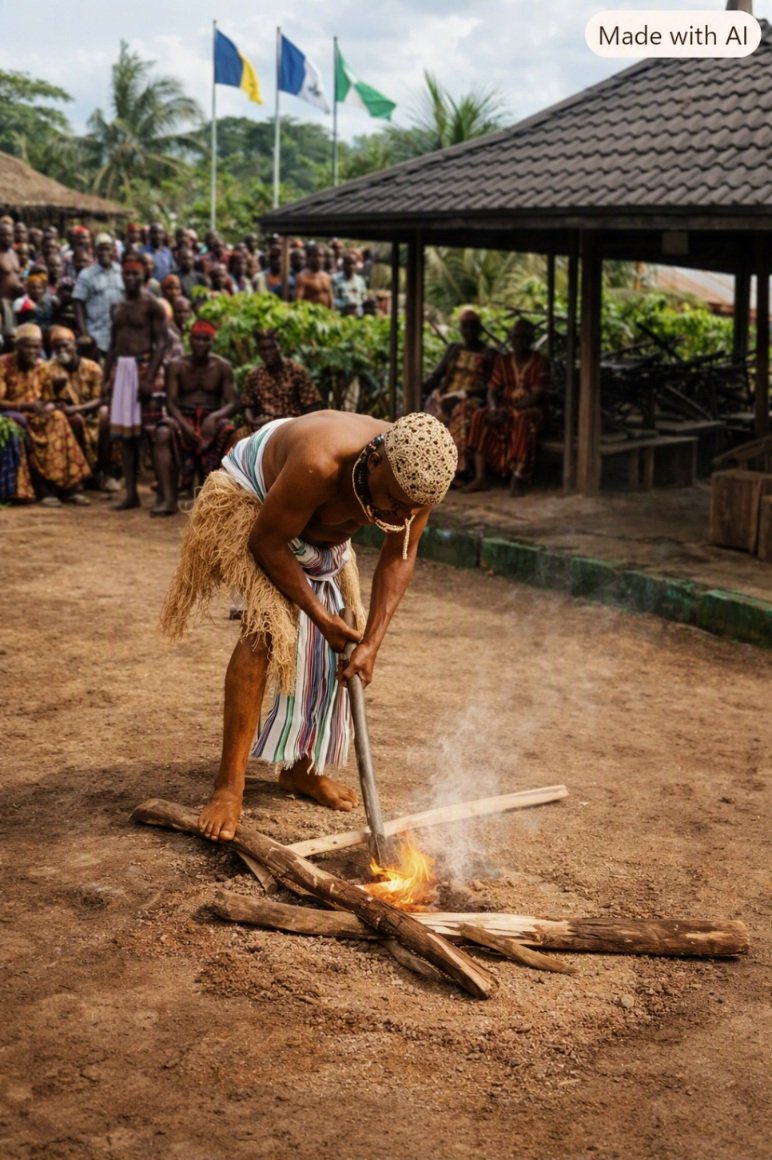
As part of the rite of Ebokupom (Early Leboku), the Obol Lopon, dressed in raffia attire, performed the symbolic act of breaking the firewood that will later be used to prepare a ceremonial meal. By tradition, he is forbidden to partake in the meal himself.
With this sacred act of supplication and appeasement, Leboku 2026 has officially commenced.
By custom, Ugep is the first community among the Yakurr to celebrate its New Yam Festival, and no other Yakurr community may begin its own celebration until Ugep has done so.
The 2026 edition will run for 34 days, beginning with these preparatory rites and culminating in thanksgiving, dances, and communal celebrations. Each day or set of days is dedicated to specific ceremonies that blend agriculture, religion, and social unity.
Key Stages of the 34-Day Leboku Festival
1. Etikekomi – Opening Days: Symbolic visitation to farm roads by the Obol Lopon, where farmers welcome him with palm wine and gifts.
2. Leboku Kepili – Early Festival: Wrestling matches (male and female) and football competitions that foster unity and athleticism.
3. Kipoli – Following Kepili: Town hall meeting led by the Obol Lopon; community updates are shared and a sanitation exercise begins.
4. Ikobase Lebokwa – Pre-Festival Rites: Thanksgiving service to Obase-Ubulukpabi, the supreme deity, for peace and blessings.
5. Ebokupom – Tuesday, 18 August 2026: Early Leboku; the official commencement with traditional supplication, appeasement, and the breaking of firewood by the Obol Lopon.
6. Mblemi – Mid-Festival: Farmers exhibit freshly harvested yams; Ekoi drums are dried; gifts are exchanged; and the midnight fire (Okondael) is lit.
7. Janenboku – Women’s Day: A day dedicated to women, featuring gift exchanges, traditional dances, and the Miss Leboku pageant.
8. Ledemboku – Men’s Day: A day dedicated to men, featuring gifts to men, Ekoi dances, a parade of chiefs, and the outing of the Etangala masquerade.
9. Leteboku – After a Rest Day: Performance poetry contest among Leboku maidens and traditional leg-bangle dances.
10. Yekpi – Two Days Later: Boys and maidens parade through the town in a ceremony believed to usher in peace and prosperity.
11. Mponfawa – Culmination: The grand finale of thanksgiving, communal feasting, dances, and closing rituals.
Cultural Significance
Agricultural Cycle: Marks the end of hunger (Yowa) and the beginning of abundance.
Religious Rites: Supplications to deities and ancestors for peace, fertility, and prosperity.
Social Unity: Wrestling, football, poetry, and dances that strengthen community bonds.
Symbolism: Acts such as breaking firewood and lighting midnight fires embody renewal and continuity.
The 34-day programme is not merely entertainment but a spiritual obligation for the Yakurr people. Each stage has ritual depth — to miss one is to miss part of the philosophy of Leboku.