Ewong’wong: The Sacred Flute as Voice, Memory, and Spirit in Yakurr Cosmology
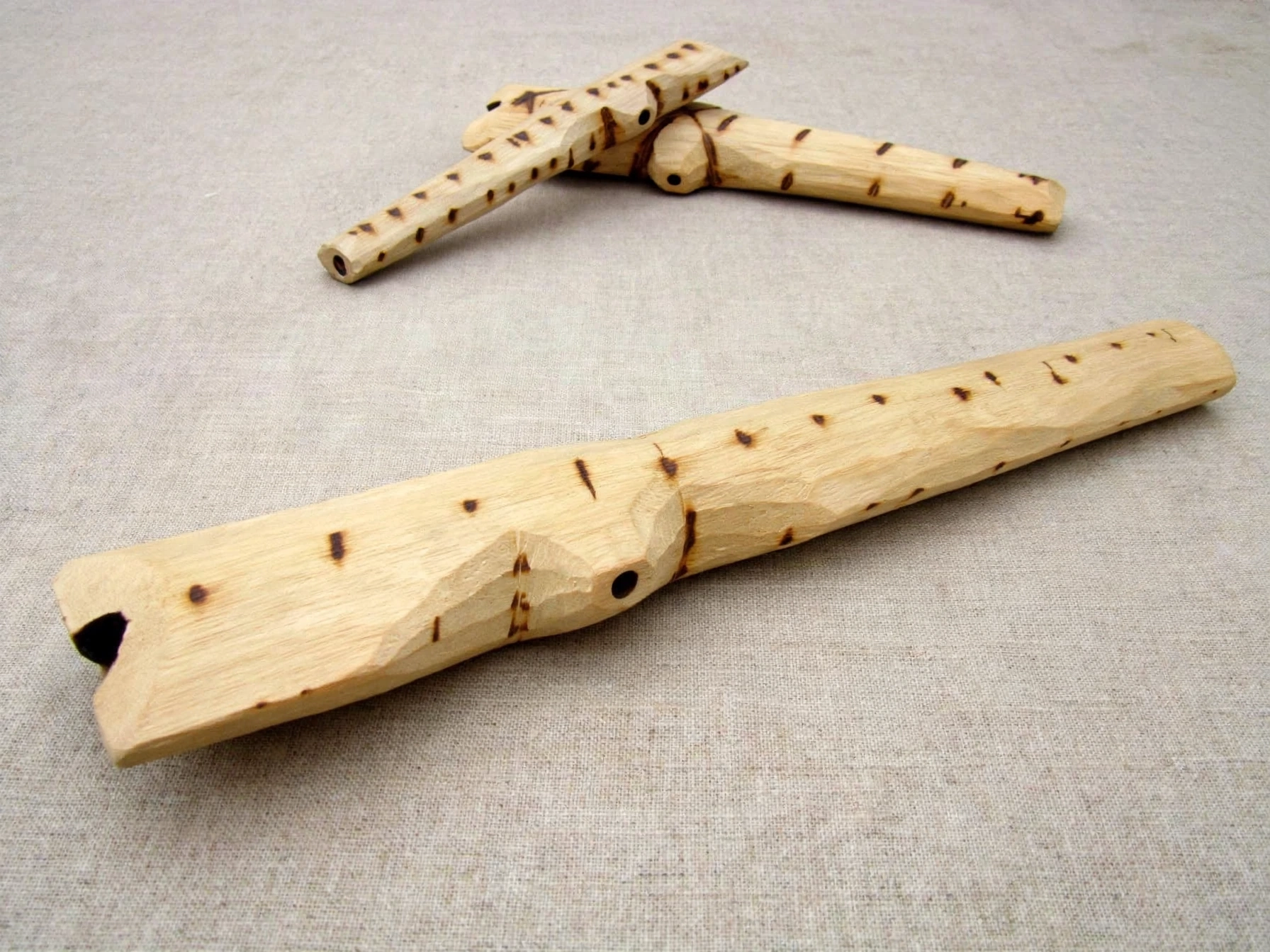
The Ewong’wong is a traditional wind instrument indigenous to the Yakurr people of Cross River State, Nigeria. Constructed from bamboo or conical vine, it is a diagonal diatonic flute without a bell, possessing three finger holes and a rectangular embouchure with two lateral wings. Its simplicity of form belies its rich symbolic, ritual, and social functions within Yakurr culture.
Functional Roles in Yakurr Society
The Ewong’wong functions as a sonic instrument of communication, performance, and ritual invocation. In pre-colonial and early colonial Yakurr society, it served as a public signal for communal assembly. When sounded at dawn, it directed community members to the Ukpawen, the assembly ground, for Kipeli — a formal gathering at which important announcements, decisions, or communal directives were made.

On the battlefield, the Ewong’wong acted as a martial biggle , rallying warriors to attack or counterattack. Beyond its communicative role, the instrument also serves as a medium for invoking ancestral spirits, particularly during sacred and ceremonial events.
Ritual Use in Ugep: The Case of Okon’dale
The Ugep community accords the Ewong’wong special prominence during Okon’dale, the eve of the Leboku New Yam Festival. At night, the instrument is sounded to herald the commencement of the festival. During this period, a strict code of ritual conduct is observed: inhabitants remain indoors, the town is enveloped in complete darkness, and all forms of artificial light — lamps, candles, or electricity — are extinguished.
This period of solemnity is dedicated to ancestral remembrance. The belief that the voice of the Ewong’wong is the voice of the spirits reinforces the taboo against venturing outdoors. Oral accounts suggest that for Yakurr children, Okon’dale evoked both awe and trepidation, as the sound of the flute was perceived as direct communication from the spirit realm. Okon’dale is a classical elegy which invokes mediation, spirituality, pathos, joy, celebration, and sorrow all combined.
This year, Okon’dale will be observed on 20th August, 2026 in Ugep. The Okon’dale (Light of Night) will be lit by Obol Ubi Atewa, the Priest of the Yatiyomo matriclan of Ugep, before he hands it over to the Obol Lopon of Ugep and Paramount Ruler of Yakurr, Obol Ofem Ubanagha Eteng, in a solemn ceremony which takes place in the dead of the night and is forbidden to the public. On that day, every light and all electricity in the city of Ugep — in every home, including street lamps — is expected to be switched off until Okon’dale has made its round around the city and returned to the palace.
Performance Contexts
In addition to its ritual and communicative roles, the Ewong’wong is incorporated into Yakurr musical ensembles. It is an integral part of the Nsibidi ensemble of the Ijiman people of Ugep, where it accompanies the Ukwa cultural war dance. On the eve of Leboku, the Ewong’wong announces the arrival of Ekoi dancers and simultaneously functions as a dirge, reminding the living of the inevitability of death.
Cultural Symbolism
For the Yakurr, the Ewong’wong is not merely a musical instrument; it is a symbolic bridge between the tangible and intangible worlds. It embodies the community’s collective memory, identity, and cosmology. As an instrument of invocation and intoxication, it mediates between human and ancestral voices, encapsulating Yakurr notions of continuity between the living and the dead.
Conclusion
The Ewong’wong illustrates how material culture in African societies extends beyond functional artistry to encompass spiritual, communicative, and performative dimensions. In Yakurr society, the flute’s sound is not only heard but felt — resonating through the communal body as a reminder of heritage, mortality, and the enduring presence of the ancestors.