

By Khaleed Yazeed
The Nigerian state is not a democracy. It is an auction house where political power is traded among a tiny ethnic elite, and the currency is the blood and sweat of the less privileged. Under the guise of federal character and national unity, successive administrations have perfected the art of tribal cronyism, appointing kinsmen to key positions while millions of ordinary citizens are treated as expendable chattel, stripped of education, security, and dignity. This is not governance. This is modern slavery dressed in agbada and suit.
*Part I: The Politics of Favoritism. From Fulanisation to Yorubanisation*
The ethnic favoritism that now defines Nigeria’s political landscape is not new. Under former President Muhammadu Buhari, appointments were overwhelmingly given to individuals from the Fulani and Hausa communities. Critics called it “Fulanisation” and “Hausanisation”, a systematic capture of the federal bureaucracy, security apparatus, and parastatals by a single ethnic clique. Northern senators and governors who dared to question this arrangement were sidelined, intimidated, or arrested by security agencies acting as political enforcers.

When President Bola Tinubu assumed office, the pattern did not change; the ethnicity merely shifted. Tinubu’s appointment of an unprecedented 100% Yoruba make-up of eight key positions, including National, Chief of Staff, and Service Chiefs has been widely criticized as “Yorubanisation”. A man who campaigned on “renewed hope” has instead renewed the old colonial practice of treating public office as ethnic property. The message is clear: loyalty to the president’s tribe matters more than competence, and the rest of the country, especially the impoverished masses of the North, are merely subjects to be governed, not citizens to be served.
*Part II: The Almajiri Genocide. When Schools Becattle Slaughterhouses*
Nowhere is the contempt for ordinary citizens more evident than in the deliberate destruction of the N15 billion Almajiri Model Schools. Between 2012 and 2015, President Goodluck Jonathan built 165 integrated schools across northern Nigeria. Each school was equipped with language laboratories, dormitories, clinics, vocational workshops, and free meals. For the first time, an almajiri child could learn to recite the Quran and read a contract.
The Fulani-dominated political establishment saw this as an existential threat. An educated almajiri is a voter who cannot be bought with a bowl of rice. A literate Hausa man will not bow to a Fulani emir. So they destroyed the project, with lies wrapped in religious piety. APC agents circulated rumors that Jonathan’s schools were designed to “spoil” the Quran, that a Christian president was building them to convert Muslim children. Sheikh Hassan Musa, President of the National Centre for Quranic Recitation, later boasted that “sixteen million of us supported the APC because Dame Patience insulted us.” The almajiri voted en masse for Buhari. Then they were abandoned.
When Buhari took office, federal maintenance funding was cut. Northern governors refused counterpart funding. The multi-billion-naira facilities were left to rot. Today, in Sokoto, seven out of ten classes at the first Tsangaya school are empty. In Zamfara, the schools were converted into conventional secondary schools, shutting out the almajiri. In Katsina and Kaduna, the buildings stand abandoned. In Niger State, eleven centres are now described as “an eyesore.” Not a single northern governor has apologized. The Sultan of Sokoto has never issued a statement condemning the abandonment. The Emir of Kano has never visited a rotting classroom.
*Part III: 18.3 Million Slaves – The Out-of-School Children Crisis*
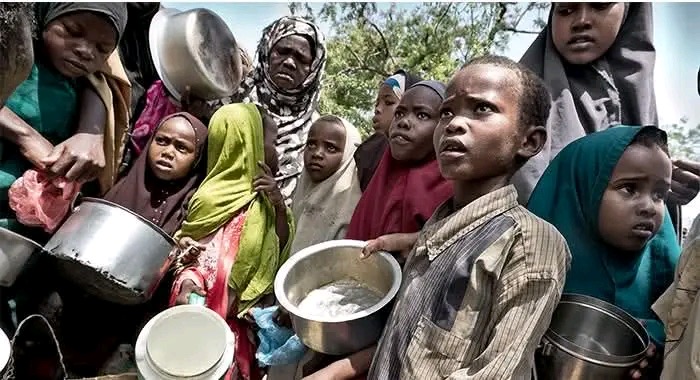
The result of this criminal neglect is staggering. According to UNICEF, Nigeria now has over 18.3 million out-of-school children, the highest number in the world. Seven northern states account for 7.95 million of that number: Kano (1.89 million), Katsina (1.4 million), Bauchi (1.37 million), Kebbi (1.06 million), Yobe (730,000), Kaduna (660,000), and Niger (640,000). In Kebbi, a staggering 64.8% of primary school-age children are not in school. In Bauchi, 66.75% of secondary school-age children are out of school.
These children are not merely “out of school.” They are on the streets, begging, vulnerable to radicalization, and ripe for recruitment by bandits. The same population that APC politicians used as a tool to grab power in 2015 has become the foot soldiers of the regional insecurity that now cripples the Northwest. The bandits who collect harvest taxes in Zamfara, who kidnap farmers in Katsina, who burn villages in Kaduna, many are the same children who were sent back to the streets after the 2015 election. The oligarchy created a monster, and now that monster is eating the North alive.
*Part IV: The Bandit Economy – When the State Becomes an Accomplice*
The BBC Africa Eye documentary “The Bandit Warlords of Zamfara” (2022) exposed the chilling reality: banditry has become a business from which everyone, including the government benefits. The documentary, filmed by journalist Yusuf Anka, crisscrossed remote bandit enclaves and interviewed notorious warlords like Hassan Dantawaye, who openly stated that security had become a money-making industry for both government officials and the bandits themselves. Bandits have formed covert alliances with some traditional authorities for intelligence and benefits sharing. The line between state and non-state actor has been erased.
While bandits terrorize rural communities, political elites collect security votes and negotiate “peace deals” that only enrich the criminals. Meanwhile, the less privileged—Hausa farmers, displaced villagers, almajiri children, are treated as expendable. Their suffering is not a crisis; it is a resource to be exploited.
*Part V: The Documentary Evidence – A People Crying in the Wilderness*
Several documentaries have captured this systematic dehumanization. Temitope Kalejaiye’s “Almajiri is Begging” (2015) explores the unpromising fate of young children forced into begging, exposing how the almajiri system has devolved into modern slavery. Adeyeye Olatokunbo’s “Born Unlucky: The Almajiri System” (2019) follows a real-life almajiri child who opens up about his life and the conditions under which he lives. The Naila Media documentary “I am Nigerian Doc: Almajiri” provides a brief glimpse into the daily struggle of an almajiri boy, revealing a system that has completely abandoned its children. Onyeka Onwenu’s iconic “Nigeria: A Squandering of Riches” (1984) presciently warned of a political class that would turn the nation into a bazaar of profligacy, a warning that has gone unheeded for four decades.
*Part VI: The Verdict. A State That Enslaves Its Own Citizens*
The Nigerian political elite treat ordinary citizens as slaves. A governor in a viral clip shamelessly promised to send four thousand youths of his state into what is essentially modern-day slavery, and the gullible crowd thundered applause. A senator recently accused President Tinubu’s government of treating Nigerians as if they were slaves, pointing to the widespread corruption and politicization of every aspect of governance. And as one commentator put it, citizens are supposed to be masters while politicians are supposed to be slaves, but in Nigeria it is the other way round.
The elite deliberately keep wages low, jobs scarce, and inflation high, ensuring that the average citizen remains too exhausted from daily survival to question the system. Nothing keeps a people enslaved more effectively than division, and the Nigerian elite have perfected the art of using religion and ethnicity as tools of mass manipulation.
*The Awakening Has Begun*
The silence is breaking. The Hausa are waking up. They are reading the history that was hidden. They are asking why their children beg on the streets while the children of the political elite fly to London for university. They are demanding a Hausa emir in Kano, a Hausa future not dictated by a Fulani oligarchy. The Tsangaya schools may have been destroyed, but the hunger for education cannot be destroyed. The truth may have been buried, but it is digging itself out.
The politicians who have treated ordinary Nigerians as slaves will one day answer for their crimes—not in a courtroom, but in the court of history. And when the less privileged finally rise, they will not rise alone. They will rise with the weight of 18.3 million out-of-school children behind them. They will rise with the memory of every farmer killed by a bandit whom the government refused to arrest. They will rise with the knowledge that they were never meant to be slaves—they were only made to believe they were.
Khaleed Yazeed
Founder, Wakilin Yamma Youth Development Network
Katsina State, Nigeria.
*Recommended Documentaries:*
1. “The Bandit Warlords of Zamfara” – BBC Africa Eye (2022)
2. “Almajiri is Begging”, Temitope Kalejaiye (2015)
3. “Born Unlucky: The Almajiri System”, Adeyeye Olatokunbo (2019)
4. “I am Nigerian Doc: Almajiri”, Naila Media
5. “Nigeria: A Squandering of Riches”, Onyeka Onwenu (1984)