by Bolanle Bolawole
Akpa Revisited: Tracing Yakurr Origins to the Lake Ejagham Borderland Between Nigeria and Cameroon
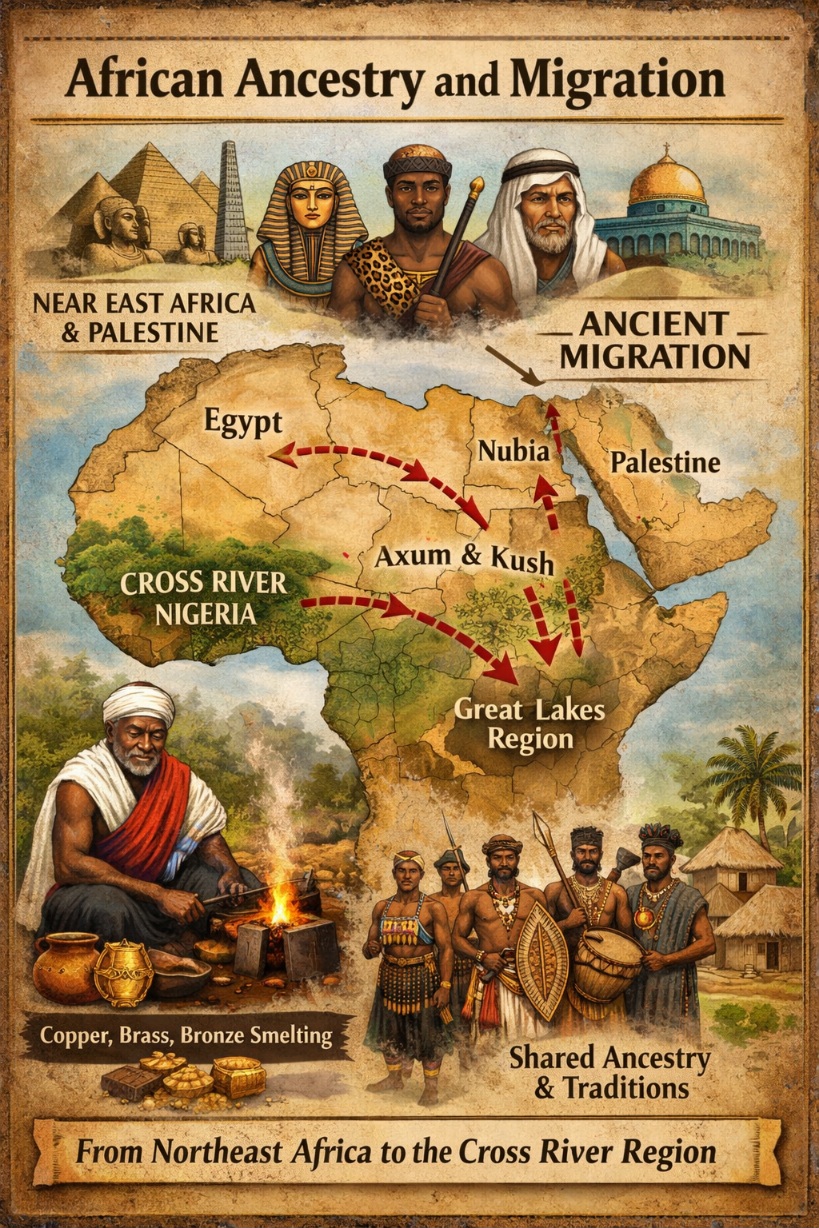
On 6 September 2026, I published an article titled The Yakurr Ancestral Homeland and Its Proximity to Lake Ejagham (Ejagham), South Western Region, Republic of Cameroon. That article was prompted by a general question posed by one of my readers about Yakurr origins. Although the question was not directed at me personally, I found it compelling enough to answer by attempting to precisely locate Akpa — the ancestral place from which, according to Yakurr oral tradition, the Yakurr people migrated to their present location in Cross River State.
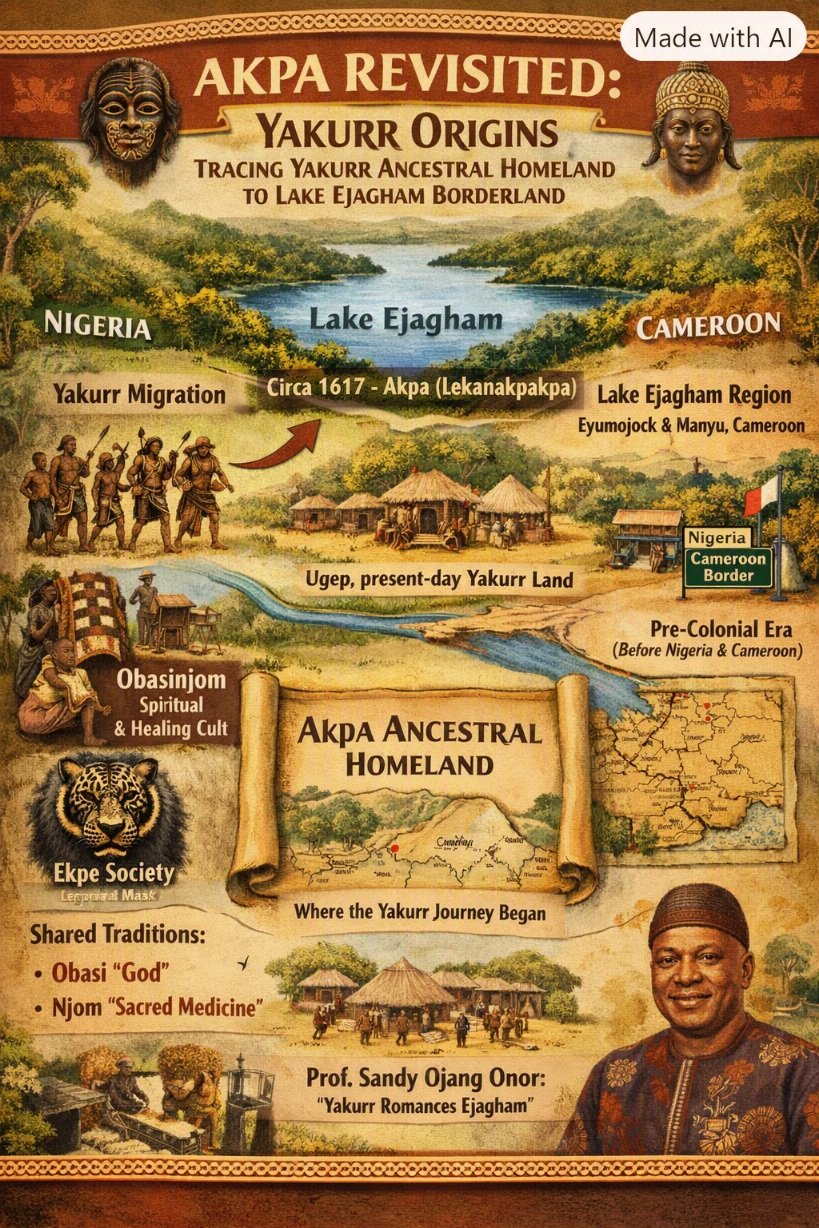
According to Yakurr tradition, that ancestral place is known as Akpa, or Lekanakpakpa. Based on oral accounts and historical interpretations, this location corresponds to the area around Lake Ejagham, near the town of Eyumojock in Manyu Division, South West Region of the Republic of Cameroon¹. It is in this sense that we can say the Yakurr ancestral homeland is traceable to the Lake Ejagham region of Manyu.

It is important to emphasize that when the Yakurr migration is said to have occurred — around 1617 — there were no countries known as Nigeria and Cameroon. Modern Cameroon emerged as a German colony following the Berlin Conference of 1884-1885, convened by German Chancellor Otto von Bismarck², at which European powers partitioned Africa to secure raw materials for their industries and new markets for their economies.
Similarly, modern Nigeria came into being on 1 January 1914, when, for reasons of economic expediency and administrative convenience, the British amalgamated the Colony of Lagos with the Protectorates of Northern and Southern Nigeria³.
Manyu is widely recognized as the core homeland of the Ejagham people, a group whose communities today straddle both Cameroon and Nigeria⁴.
Eyumojock itself lies close to Mamfe and sits just along the international boundary that now divides Nigeria and Cameroon⁵. This borderland zone has historically been a cradle and dispersal point for many groups in the wider Cross River region, including the Nsofang, Ikom and Olulumo, Biase and Abawa, Erei, Korop, Ofutop, and others⁶.
This same region remains the centre of two important Ejagham institutions: Obasinjom and Ekpe.
Obasi-njom is a traditional spiritual, judicial and healing institution of the Ejagham people of both Nigeria and Cameroon. It is known for combating witchcraft and protecting communities from spiritual affliction. Etymologically, Obasi means God, while njom refers to a sacred medicine or cult agency. Together, the name translates as “God of the cult-agency.” Its origin is traced to the Mbinda and Okuri areas within the Ejagham-Manyu landscape of the Cross River borderland⁷.
It is therefore culturally significant that today, the Yakurr people refer to God as Obase, and that Njom remains a common personal name among the Yakurr. This linguistic and cultural resonance is perhaps what the distinguished historian of Ejagham history, Professor Sandy Ojang Onor, alludes to when he says that “Yakurr romances Ejagham”⁸. That is a discussion I will leave for another day.
Footnotes
¹ Lake Ejagham is a crater lake located in Eyumojock Subdivision, Manyu Division, South West Region, Cameroon. It is classified as a sacred lake and is central to Ejagham cosmology. See: UNESCO World Heritage Tentative List, Lake Ejagham; Roe et al., Biodiversity of the Takamanda-Mone Landscape.
² The Berlin Conference (15 Nov 1884 – 26 Feb 1885) was convened at the invitation of German Chancellor Otto von Bismarck to regulate European colonization and trade in Africa. It formalized the scramble for Africa.
³ The Amalgamation was enacted through the Letters Patent and Orders of 1913 and took effect on 1 January 1914 under Lord Frederick Lugard, the first Governor-General of Nigeria.
⁴ Onor, Sandy Ojang. The Ejagham Nation in the Cross River Region of Cameroon. This work establishes Manyu as the epicentre of Ejagham settlement, with extensions into Ikom, Etung and Ogoja in Nigeria.
⁵ Eyumojock is approximately 35km from Mamfe, the divisional capital of Manyu, and less than 30km from the Nigeria-Cameroon border at Mfum/Ekok.
⁶ Afigbo, A.E. The Migrations and History of the Peoples of the Cross River Region. See also Forde, Daryll and Jones, G.I. The Ibo and Ibibio-Speaking Peoples of South-Eastern Nigeria.
⁷ Onor, S.O. Obasinjom and the Dynamics of Social Control in Ejagham Society. And: Ayuk, Augustine. The Ejagham and Their Neighbours: Religion and Culture.
⁸ Onor, Sandy Ojang. Interview and lectures on Ejagham-Yakurr linguistic affinity. The professor notes shared theonyms (Obasi/Obase) and anthroponyms (Njom) as evidence of historical contact.
References / Suggested Reading
Onor, Sandy Ojang. The Ejagham Nation in the Cross River Region of Cameroon. University of Calabar Press.
Ubi, Otu Ekpenyong. Yakurr Historical Perspectives and Cultural Evolution.
UNESCO. Lake Ejagham: Sacred Lake of the Ejagham People – World Heritage Centre Tentative Lists.
Lugard, Frederick. Amalgamation Report, 1914.