By Okoi Obono-Obla
29 May 1999 was a bright, sunny day in Calabar, Cross River State, Nigeria. Across Abuja, the Federal Capital Territory, and the 36 state capitals of the Federal Republic of Nigeria, citizens were jubilant and expectant. On that day, the second democratically elected President of Nigeria and the 36 newly elected Governors were administered the oath of office and oath of allegiance, formally assuming their positions.
It was a historic event: the military, which had seized power on 31 December 1983 from Nigeria’s first democratically elected President, Alhaji Shehu Aliyu Usman Shagari, and ruled with an iron grip for nearly 16 years, was finally returning to the barracks. Nigeria was rejoining the global democratic community after years of military dictatorship that had turned the country into a pariah among nations.
In Calabar, Cross River State, the handover ceremony was overseen by the outgoing Military Administrator, Navy Captain Christopher Osondu, appointed in August 1998 during General Abdulsalami Abubakar’s transitional regime. He handed power to the debonair, young lawyer and businessman Donald Etim Duke, elected Governor under the platform of the People’s Democratic Party (PDP). The oath of office was administered by the Chief Judge of Cross River State, Honourable Justice Okonkon Ita, at the Brigadier General Jacob Udoka Esuene Stadium. I attended the ceremony with my colleague and friend, Barrister Charles Joseph Duke (of blessed memory).

Similar ceremonies took place in Abuja, where President Olusegun Obasanjo—a former Military Head of State (1976–1979), civil war veteran, and political prisoner under General Sani Abacha—was sworn in, as well as in all 36 state capitals.
26 Years Later (29 May 2026):
Today marks the 26th anniversary of that historic transition. For the first time in Nigeria’s history, democracy has survived for a quarter of a century despite challenges, trial-and-error governance, and fragile institutions in a country long blighted by colonialism, short-lived democratic experiments (1951–1966, 1979–1983), and repeated military rule (1966–1979, 1983–1999).
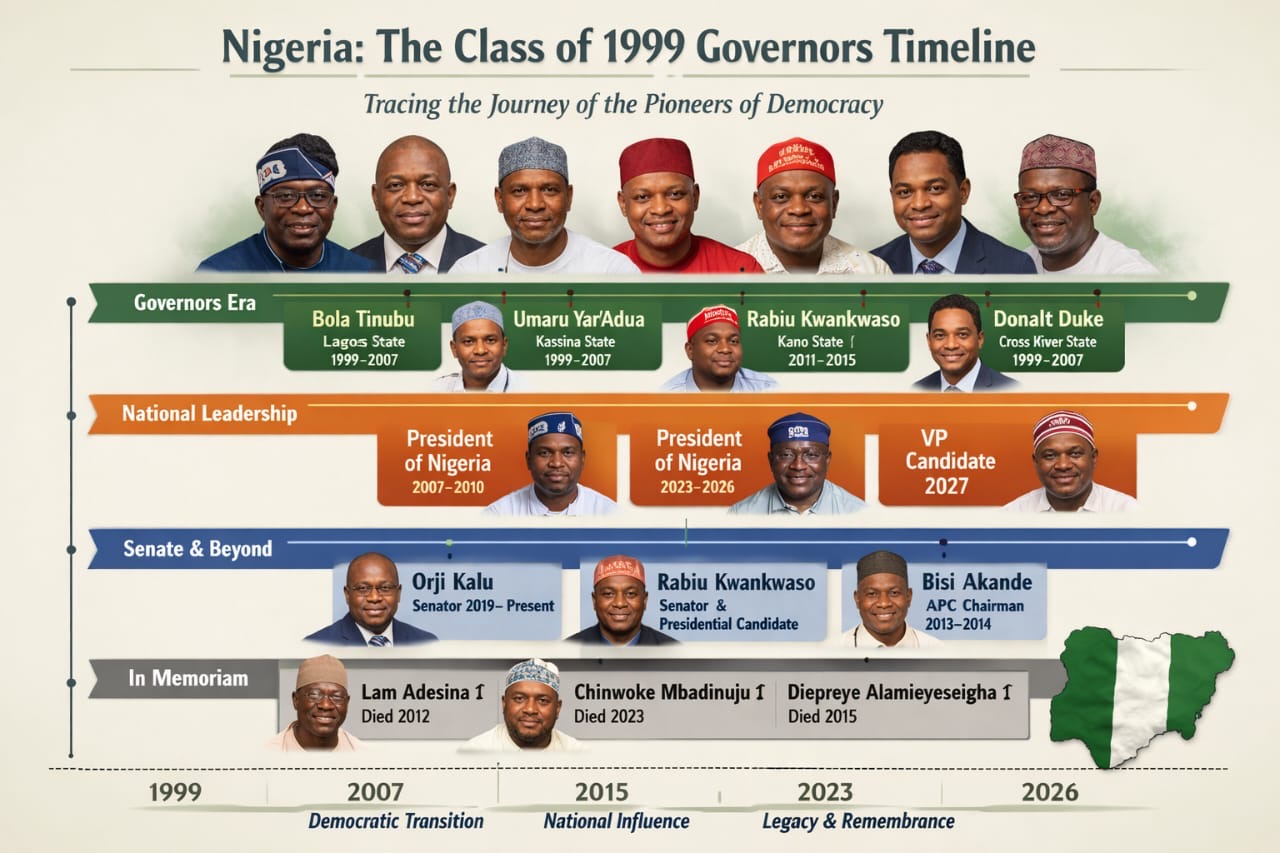
Looking back, I chronicle the “Class of 1999” Governors and where they are now:
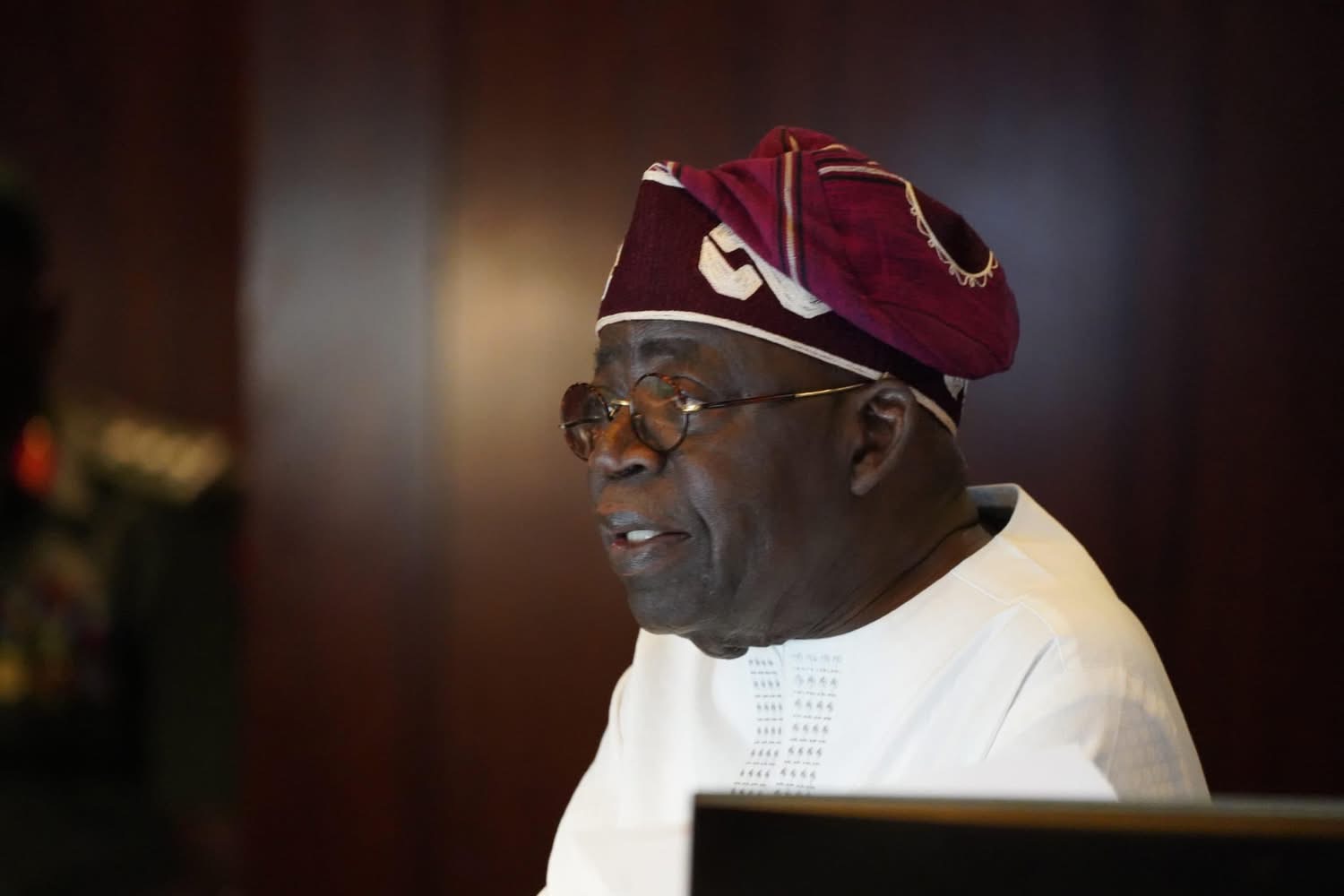
– Bola Ahmed Tinubu – Governor of Lagos State (1999–2007). Sworn in as Nigeria’s 6th President on 29 May 2023.
– Orji Uzor Kalu – Governor of Abia State (1999–2007). Currently a Senator.
– Bisi Akande – Governor of Osun State (1999–2003). Later interim National Chairman of the APC.
– Umaru Musa Yar’Adua – Governor of Katsina (1999–2007). Became Nigeria’s President (2007–2010).
– Rabiu Musa Kwankwaso – Governor of Kano (1999–2003, 2011–2015). Senator, presidential candidate in 2023, and currently Vice-Presidential candidate for 2027.
– Donald Duke – Governor of Cross River (1999–2007). Presidential candidate of the People’s Redemption Party in 2027.
Many others from this class went on to serve as ministers, senators, or party leaders, while some have passed away, leaving behind legacies that shaped Nigeria’s democratic journey.
Conclusion:
The Class of 1999 represents a turning point in Nigeria’s history. They were the pioneers who carried the nation from military dictatorship into democratic governance. Some rose to the highest offices, others faded into political obscurity, and a few departed this world—but together, they symbolize resilience and the enduring hope of a nation determined to uphold democracy.
Their story is not just about politics; it is about Nigeria’s collective struggle, sacrifice, and survival. As democracy celebrates 26 years in 2026, the legacy of the Class of 1999 reminds us that while challenges remain, the democratic spirit continues to endure.