By Okoi Obono-Obla
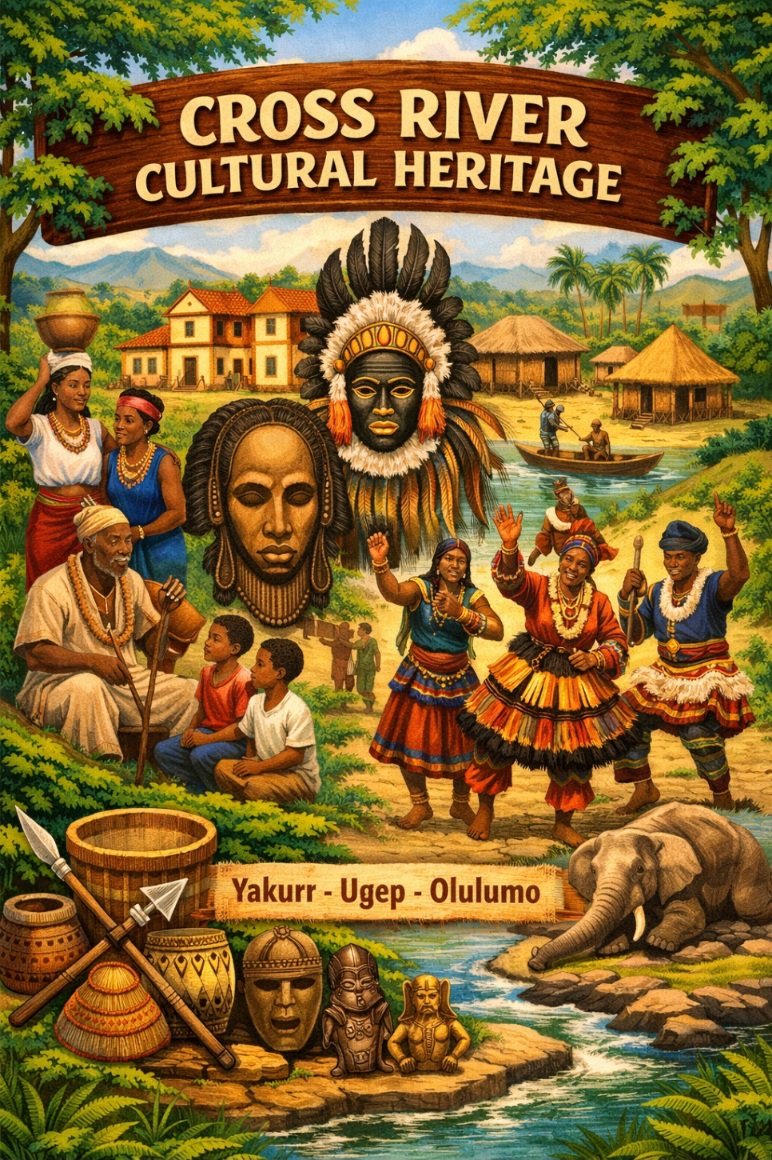
Shared Origins and Cultural Affinities: A Historical Reflection on Yakurr, Ugep, and Olulumo
History is not only found in books or archives; it lives around us every day. It is in the languages we hear, the dances we watch, the customs we practice, and even in the masks and artifacts that communities preserve. By paying close attention to these cultural signs, we can trace connections between peoples and uncover stories of shared ancestry and migration.
In Cross River State, such connections are evident between the communities of Ikom and Yakurr. The dialects spoken in Ikom, when compared with Lokaa in Yakurr, reveal striking similarities. These affinities suggest that in the distant past, the people of these areas were closely related—sharing bonds of kinship, culture, and neighborly contact.

From childhood, I listened to oral traditions about Ugep and Okuni (Olulumo) in Ikom, passed down by my uncles and grand‑uncles. Over time, I found these accounts credible, especially when interacting with people from Okuni and Epache Nkome. A friend from Okuni, Walter Okimasi, once shared with me a document titled A Brief History of the Olulumo People, from which the following section of this essay draws directly:
Excerpt from A Brief History of the Olulumo People
The Olulumo people live on the left bank of the upper Cross River, about fourteen kilometers below Ikom. Their land covers 128 square kilometers, with a population of about 15,000. Historically, “Olulumo” refers both to the people known as Okuni and to their language. Their neighbors include the Ofutop, the Ejagham‑speaking Etung, and the Nkome and Njinjikpor, whose languages show close similarities.
Olulumo itself comprises four villages: Iyami, Omon, Effi, and Emorrow. Neighboring communities gave them names that often translate to “Brightness,” reflecting their prominence in the late 19th and early 20th centuries. A British officer visiting between 1904–1916 described them as “the most intelligent and advanced community in the division.” Indeed, Olulumo was the first headquarters of Ikom District from 1900–1908.
Oral tradition tells us that the Olulumo people once lived at Onughi with their Yakurr brothers. The Ugep people call this place Onughi‑Lekanakpakpa. Both Yakurr and Olulumo traditions confirm that they were once united until a conflict over burial customs forced them apart. After wandering, Olulumo settled at Otimo Rofa, and later at Maya—a bright grassland settlement that inspired the name “Olulumo.”
Conclusion
The intertwined histories of Yakurr, Ugep, and Olulumo remind us that communities in Cross River share more than borders; they share ancestry, traditions, and cultural memories. These bonds, preserved in language, dance, and oral tradition, continue to shape the identity of the people today. For community readers, this reflection is not just about the past—it is a reminder of the ties that still connect us and the heritage we must cherish.