

By Okoi Obono-Obla
About 56 days.
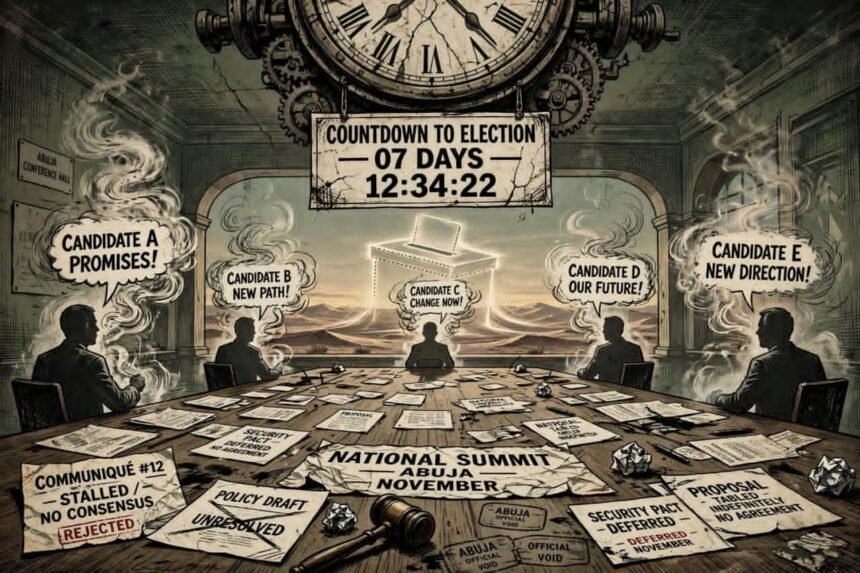
That is all that separates 20 November 2026 from 15 January 2027, the eve of the presidential and National Assembly elections. On 16 January 2027, Nigerians will go to the polls. The governorship and State Assembly elections will follow on 6 February.
For an opposition that has spent years insisting that the ruling All Progressives Congress can be defeated only by a united front, the arithmetic should have concentrated minds long ago. Instead, with less than two months to polling day, the opposition is still ruminating, still speculating, still holding summits about forming an alliance.
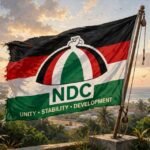
The latest of those summits was scheduled for 23 November in Abuja, under the banner of the Coalition for Democracy. Six parties were expected around the table: the African Democratic Congress, the Allied Peoples Movement, the Nigeria Democratic Congress, the Peoples Democratic Party, the Peoples Redemption Party and the Social Democratic Party. On paper, they were to adopt documents on political cooperation, democratic reforms and electoral integrity. In the background, the bigger question remained unresolved: whether they could agree on a single presidential candidate.
It is a question they could have settled three years ago.
By the time the November talks were convened, the moment for a clean, orderly alliance had already passed. INEC had published its final list of presidential candidates in September 2026 — 18 candidates and their running mates. Atiku Abubakar was on the ballot for the ADC. Peter Obi was on the ballot for the NDC. Seyi Makinde was on the ballot for the APM. Donald Duke was on the ballot for the PRP. Adewole Adebayo was on the ballot for the SDP.
The opposition was therefore no longer negotiating before choosing candidates. It was negotiating after each of its leading figures had already secured a ticket, a party structure, and a personal claim to be the man to lead the challenge.
Governor Makinde has confirmed that talks are ongoing and has said he is willing to work with Atiku or Obi. That willingness, however, only sharpens the central puzzle. If the leading figures agree that unity is necessary, why has unity remained a subject for discussion rather than a decision?
Part of the answer lies in the absence of a mechanism. An alliance requires a rule before it requires a person: how will the candidate be chosen, by what formula, under what zoning arrangement, and with what guarantees for those who step aside? Without that rule, every conversation becomes a contest of ambitions rather than a negotiation of principles.
Part of it lies in the competing mandates. Each of the major opposition figures entered this cycle with a distinct base and a distinct argument for electability. For any one of them, stepping down is not presented to his supporters as sacrifice. It is presented as surrender.
And part of it lies in the condition of the parties themselves. The PDP has spent much of the cycle consumed by internal leadership and factional battles. The old Labour Party base has fragmented. A party that cannot guarantee its own structure cannot credibly offer that structure to a coalition partner.
Even the lesson of 2023 remains disputed inside the opposition. Some argue that a divided vote proved the case for unity beyond doubt. Others insist that those votes were personal, not transferable, and would not automatically follow a joint candidate imposed from above.
What is not disputed is the cost of lateness. At this stage, unity would not mean merely signing a pact. It would mean published candidates withdrawing, party machines collapsing into a single campaign, and supporters accepting a last-minute change of direction — all while the APC campaigns as a single, settled machine.
That is the setting in which the Coalition for Democracy is meeting. It is not meeting to begin a process. It is meeting to rescue one.
Therefore the latest talk about alliance by the opposition is mere talk, and nothing good will come out of it.
It is not a prediction made in anger. It is a judgement made from history.
This is in the character of the Nigerian opposition, from the 1960s to the present day: loud in rhetoric, rich in communiqués, poor in sacrifice, and incapable of subordinating personal ambition to a common purpose until it is too late.
In the First Republic, the opposition never learnt the discipline of unity. The United Progressive Grand Alliance, UPGA, formed by the NCNC and the Action Group and its allies, was supposed to present a formidable national alternative to the ruling Nigerian National Alliance, the NNA, of the NPC and the NNDP. Instead, it entered the 1964 federal election divided in strategy, divided in temperament, and divided by the very regional suspicions it claimed to be fighting. The result was boycott in some places, participation in others, disputed elections, and a political crisis that helped push the country toward collapse. The opposition did not lose because it lacked grievances. It lost because it could not agree on what to do with them.
The pattern repeated itself in the Second Republic. The Unity Party of Nigeria, the Nigerian Peoples Party, the Great Nigeria Peoples Party and the Peoples Redemption Party all claimed to oppose the ruling National Party of Nigeria. They all claimed to want to save the country from misrule. Yet in 1979 and again in 1983, they went into elections as separate armies, fighting each other as fiercely as they fought the NPN. Each leader believed he alone possessed the formula for national salvation. Each party believed its region, its ideology, or its candidate was indispensable. The result was predictable: the NPN, for all its weaknesses, survived because its opponents preferred the purity of defeat to the discipline of victory.
The Third Republic and the return to democracy in 1999 did not cure the disease. The Alliance for Democracy and the All Peoples Party flirted with cooperation, then retreated into mutual suspicion. In 2003, in 2007 and in 2011, the opposition again assembled a cast of presidential aspirants who could agree on one thing only: that the ruling party must go. They could not agree on who should lead the going.
The 2011 effort is particularly instructive. The Action Congress of Nigeria, the Congress for Progressive Change and the All Nigeria Peoples Party all talked about merging to stop Goodluck Jonathan. The talks collapsed on the familiar rocks: who would be candidate, who would be deputy, whose party structure would dominate, whose region would be favoured. Muhammadu Buhari went one way, Nuhu Ribadu went another, and the opposition went into the election as it always had — fragmented, resentful, and already rehearsing its excuses.
Even 2015, the one apparent exception, proves the rule rather than breaks it. The APC succeeded only because, for once, the principal actors accepted a brutal truth the present opposition refuses to accept: that unity required early sacrifice, a clear formula, and the surrender of personal presidential ambition by men who were strong enough to insist on it. Bola Tinubu did not run. Atiku Abubakar lost a primary and stayed. The merger was concluded years before the election, not weeks before it. It was built on structure, not on summits.
What we are witnessing today is the opposite of 2015. It is 1964, 1979, 1983 and 2011 all over again, replayed with new party names and old habits.
The opposition of 2026 is holding summits when it should be holding a campaign. It is drafting covenants when it should be deploying agents. It is debating the possibility of a single candidate when each of its leaders is already a candidate, already on the ballot, already surrounded by courtiers telling him that he alone can win.
This is why the talk will produce nothing. It is not designed to produce anything. It is designed to produce the appearance of seriousness, to reassure donors, to excite supporters, to fill newspaper headlines, and to allow each participant to claim afterwards that he tried his best but the others were selfish.
It is talk as theatre, not talk as strategy.
And theatre is all the Nigerian opposition has ever truly mastered, from the 1960s until now.
Alliance Is Not Merger
So, in this regard, the merger of political parties is a novelty in Nigerian political practice.
In the First Republic, there was an alliance between the Action Group, the National Council of Nigerian Citizens (NCNC), the United Middle Belt Congress and the Northern Elements Progressive Union, known as the United Progressive Grand Alliance (UPGA). On the other hand, there was an alliance between the Northern People’s Congress and the Nigerian National Democratic Party, known as the Nigerian National Alliance (NNA). The 1964 general election was largely a contest between these two political alliances. The crisis generated by the election was one of the reasons the military decided to take over the reins of governance on 15 January 1966. The military handed over power to civilians in 1979.
In the general election held in 1979 to usher in democratic civil rule, the National Party of Nigeria (NPN) won the presidential election but failed to win a majority of the seats in the National Assembly. This development led the NPN to enter into a political accord — an alliance — with the Nigerian Peoples Party (NPP). As a result, several members of the NPP were appointed into the NPN-controlled Federal Government.
Under that accord, a member of the NPP in the House of Representatives, the late Chief Edwin Ume-Ezeoke, was elected Speaker of the House of Representatives, despite the fact that his party had fewer seats than the Unity Party of Nigeria (UPN). In the Senate, a member of the NPP, Senator John Wash Pam, was elected Deputy Senate President. The essence of the accord was to give the NPN a working majority in the National Assembly, reduce acrimony, and ease the passage of bills into law.
In 1981, the accord between the NPN and the NPP collapsed, due largely to doctrinal differences, and NPP members appointed into the government of President Shehu Shagari withdrew from that government.
In 1983, the NPP, the UPN, the Great Nigeria Peoples Party (GNPP) and a faction of the Peoples Redemption Party (PRP) entered into an alliance for the purpose of contesting the general election. The alliance was known as the Progressive Peoples Alliance (PPA). Despite the alliance, the NPN won a landslide victory in the general election.
In 1999, the Alliance for Democracy (AD) and the All Peoples Party (APP) entered into a political alliance under which Chief Olu Falae of the AD ran together with Alhaji Umaru Shinkafi of the APP in the presidential election. However, the alliance collapsed after the election, as some elements in the APP accepted appointments in the Federal Government controlled by the Peoples Democratic Party (PDP).
In 2011, there was a spirited attempt by the Congress for Progressive Change (CPC) and the Action Congress of Nigeria (ACN) to forge an alliance for the purpose of fighting the presidential election, but the attempt did not work.
It follows that alliances between political parties in Nigeria have a chequered history. However, there was no time in the constitutional development of Nigeria, before 2013, when two or more political parties collapsed their structures to merge and form a single political party. This is precisely what the opposition parties are trying to do now.
There is a clear and absolute distinction between “alliance” and “merger”. According to the *Encarta Dictionary of the English Language*, the word “alliance” means:
i. An association of groups with a common aim;
ii. The forming of an alliance;
iii. The members of an alliance;
iv. A close relationship;
v. Marriage.
An alliance, therefore, preserves the separate identities, structures and ambitions of its members. A merger extinguishes them. That is the leap the present opposition claims it is about to make — and that is why its history matters.
### Conclusion
In conclusion, the talk of an alliance presenting a common presidential candidate, just 56 days to the presidential and National Assembly elections, is a mirage. It is motion without movement, calculated to answer the charge that the opposition is rudderless, purposeless and directionless.
It is not a plan. It is a performance — a performance designed to create the impression of activity where there is no action, of unity where there is no agreement, and of strategy where there is only survival.
With the ballot already printed in effect, with candidates already chosen, and with history already written in the failures of 1964, 1979, 1983, 1999 and 2011, no serious observer can mistake this late theatre for a genuine attempt to win power.