By Okoi Obono-Obla
Politics is everything in life because resources are scarce. As Aristotle famously opined in Politics, “Man is by nature a political animal” — meaning human beings can only fulfil their nature by living together in a polis. In that condition, human beings will always be politicking in everything they do as they scheme to edge out one another or to gain advantage — whether in the nuclear or extended family, in the community or polis where they find themselves, whether in their place of work, in the military or the police or in the civil service, or in churches or mosques; whether in professional associations or voluntary associations, or in social clubs and, indeed, wherever they congregate to advance their interests, such as a political party.
When human beings politick, whether in the family, in the community or country, or in a political party, quarrels or friction erupt which often escalate into violence, splits, or even wars that can result in a brother fighting a brother, a son fighting his father, or members of the same community fighting against themselves.
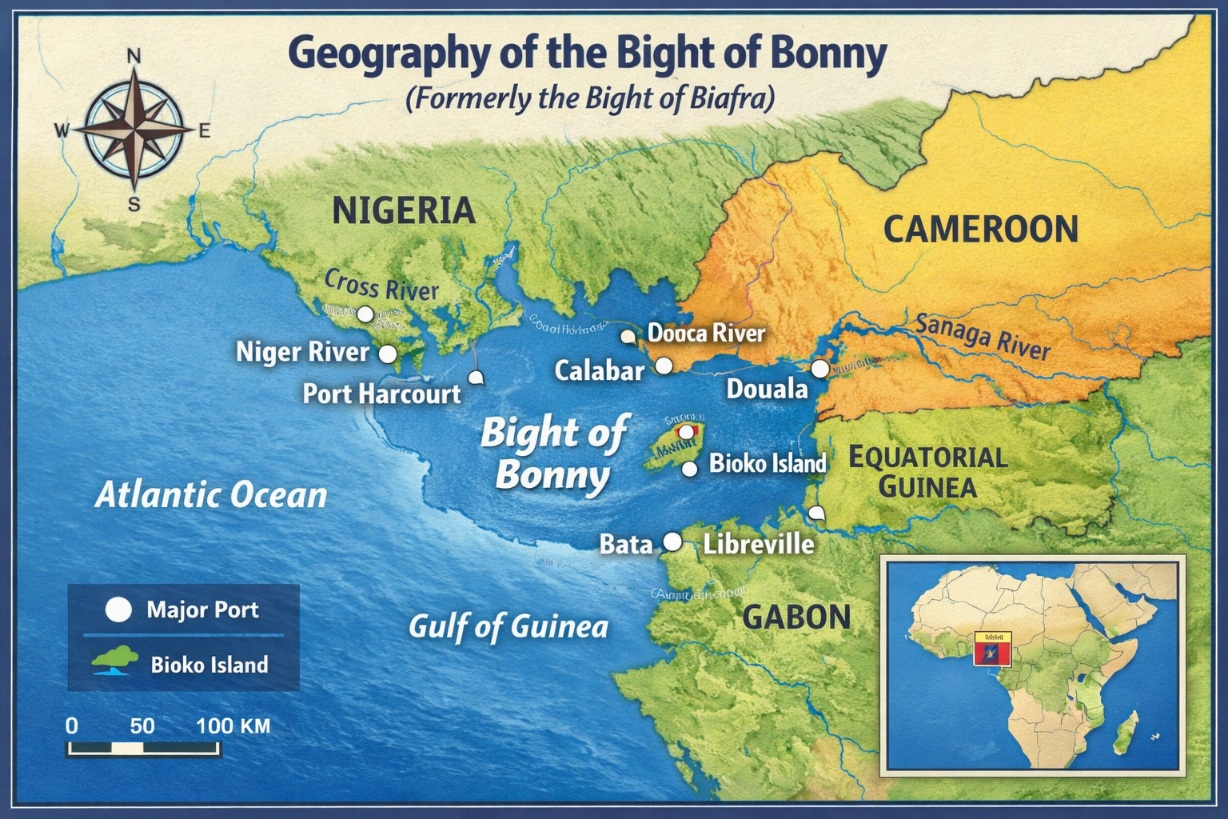
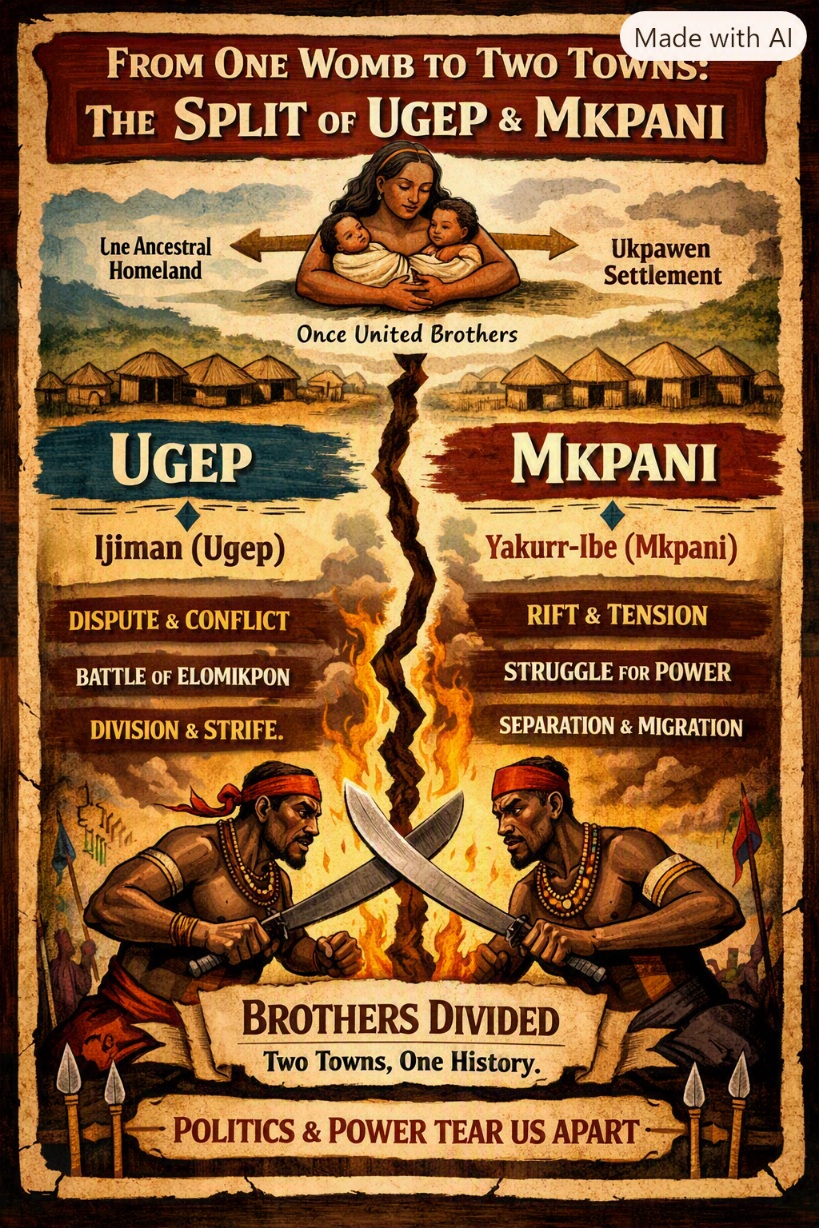
This is precisely what happened to the people of Umor (Ugep) and Yakurr-Ibe (Mkpani) in the present Yakurr Local Government Area of Cross River State, Nigeria. According to tradition, they migrated, probably in the 15th century, from their ancestral homeland in the Lake Ijagham region of the present South-Western Province of the Republic of Cameroon to settle in a place known as Ukpawen in the present Ijiman Okurubong Town of Umor.

This history is authoritatively captured by Dr. Otu Abam Ubi, the foremost and authoritative Yakurr historian, in his seminal work The Yakurr People of the Middle Cross River Region (International Edition, 2019), based on his research for the award of a PhD in History at the University of Lagos in 1978. Writing on pages 64-65, he states thus:
“Mkpani, Ugep and the Idomi were the main groups that settled at Umowen in their ancestral homeland. They migrated southwards to Ugep. It was Idomi that did not take part in the battle of Elomikpon and Anong. According to tradition, a section of the migrants hid in the bush to give succour to a woman in labour. The rest of the migrants from Uwowen settled at Ukpawen and fanned themselves out to establish Yakurr Ibe (North-East), Lukpal Kebali (North), Lukpal Kapil (North-West) and Ijom (West). While in the new settlement, a misunderstanding broke out with the Ukpawen, now called Ijiman. The word Ijiman is derived from the Aro (Igbo) word Iji-ma, which literally means ‘Do you have a machete?’ Eventually, Ukpawen (Ugep) became known as the Ijiman settlement of Ugep.”
It was this politics and misunderstanding in their new settlement that led to a conflict — or was it a civil war? — which ultimately led to the split between two brothers, Ugep and Nkpani, born of the same womb.
I was inspired to write this history of the split between Umor (Ugep) and Yakurr-Ibe (Mkpani) in the 16th century by Ofem Oboma, who is from Mkpani but a member of my matriclan, Leyorjimo, and a retired staff of the Central Bank of Nigeria. He was a respondent to an essay I wrote on 6th August, 2026 on Diversity in Yakurr. He wrote thus:
“Great job you are doing in promoting Ugep history and by extension Yakurr to some extent. But, please can you come up with the history of the ‘Upkal wen’ in Ugep and the separation of Mkpani from Ugep. Thank you.”
Conclusion: In the end, the story of Ugep and Mkpani is a classic lesson that politics, whether in a family or a kingdom, is about the management of scarce resources and competing interests. A disagreement over settlement at Ukpawen turned brothers into founders of two distinct but kindred towns, reminding us that even today, we must manage our diversity and disputes with wisdom, lest the quarrels of yesterday continue to define us tomorrow.