

By Okoi Obono-Obla
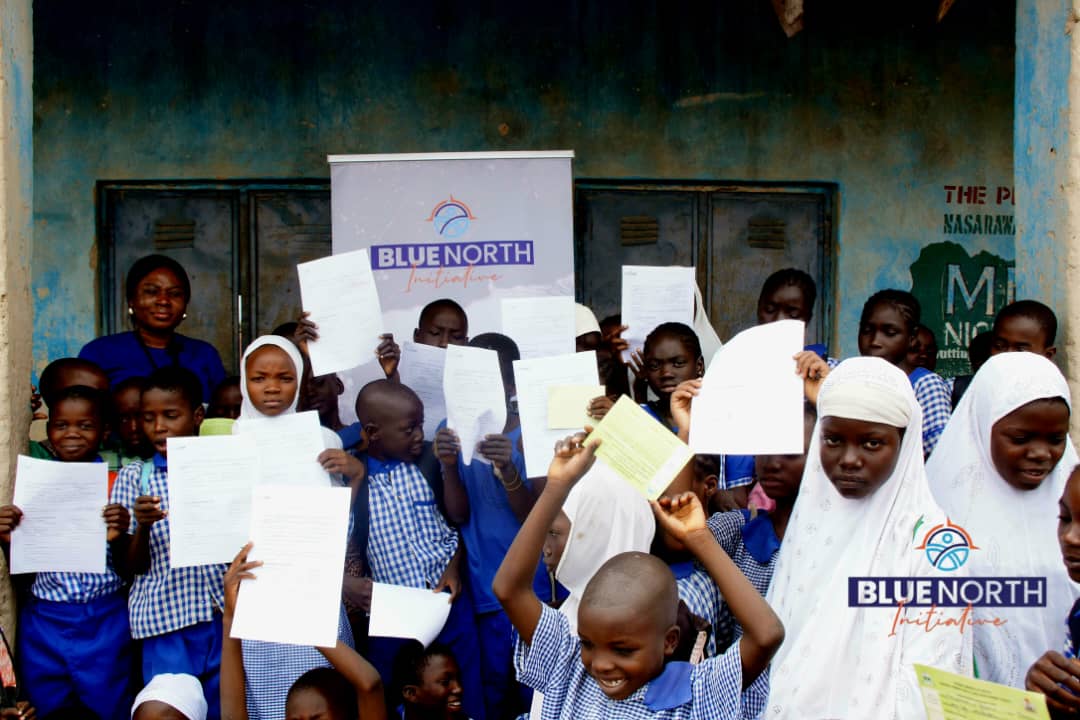
It reflects deep-seated ignorance and a lack of understanding of Nigeria’s federal system of government to heap blame on the President of the Federal Republic of Nigeria over the World Bank report that 19 million children in the 19 Northern States are out of school. Matters concerning basic education fall squarely within the constitutional purview of the 19 Northern States and their Local Government Areas.
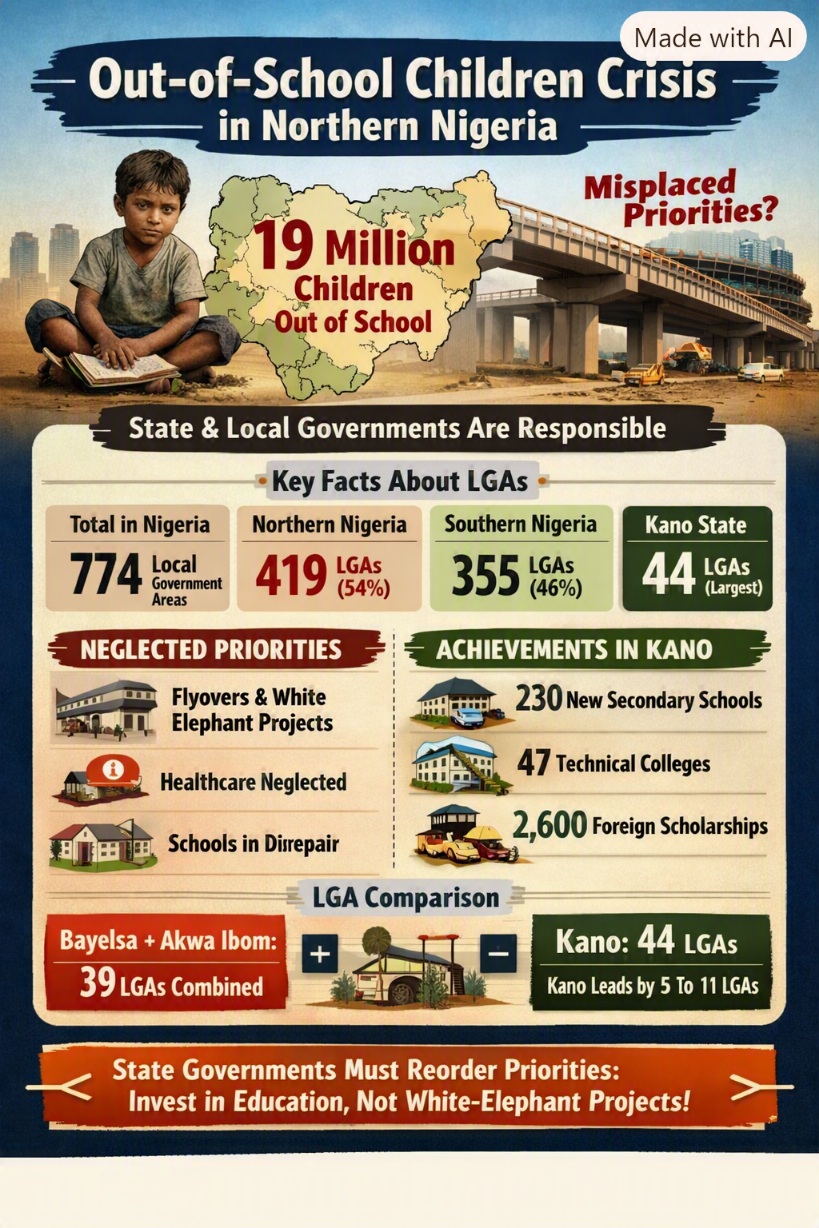
Nigeria has 774 Local Government Areas, and approximately 54 percent of these LGAs are located in Northern Nigeria. Education at the primary and junior secondary levels is the responsibility of State and Local Governments. The Federal Government’s role is limited to regulation, standardization, and policy intervention. Therefore, the World Bank report is a damning indictment of these 19 Northern States and the 419 Local Government Areas within them, not of the Federal Government.
This reality was underscored recently when President Bola Ahmed Tinubu himself criticized State Governments for frivolous expenditures on constructing flyovers instead of concentrating on critical sectors such as healthcare and education, which are begging for attention.

Key Facts for Accuracy
• Total LGAs in Nigeria: 774 • Northern Nigeria (19 states): ∼419 LGAs (≈54%) • Southern Nigeria (17 states): ∼355 LGAs (≈46%) • Largest concentration: Kano State (44 LGAs) • Smallest concentration: Bayelsa State (8 LGAs)
The question must then be asked: what have the managers of these vast sub-national entities done with their resources? Let Dr. Rabiu Musa Kwankwaso, who was Governor of Kano State from 1999 to 2003 and from 2011 to 2015 respectively, tell us what he achieved in Kano State with its 44 Local Government Areas in tackling the problem of out-of-school children.
When he was Governor, his administration recorded some notable achievements, particularly in education. He established the Kano University of Science and Technology, Wudil (now Aliko Dangote University of Science and Technology) and the North-West University, Kano (now Yusuf Maitama Sule University), which he described as his best and most cherished legacies. His government also established 230 secondary schools, including 47 technical colleges and 44 schools of Islamic studies, and awarded over 2,600 postgraduate and undergraduate foreign scholarships in 14 countries.
In infrastructure, his administration constructed, for the first time in the history of Northern Nigeria, three flyover bridges, 5km of dual-carriage lighted roads in each of the 44 Local Government Areas, and two underpass bridges.
My own State has only 18 Local Government Areas. Bayelsa State has 8 Local Government Areas, while Akwa Ibom has 31. This means that Kano alone has more Local Government Areas than Bayelsa and Cross River States combined.
If you add Bayelsa’s 8 LGAs to Akwa Ibom’s 31, the total is 39. Kano, with 44 LGAs, is already ahead by 5. Even if you subtract 6 LGAs from Akwa Ibom’s 31 (leaving 25) and then add Bayelsa’s 8, the total becomes 33. Compared to Kano’s 44, the gap widens to 11. This clearly demonstrates that Kano State is far ahead in terms of Local Government Area numbers.
Mathematics Worked Out
• Kano: 44 LGAs • Bayelsa: 8 LGAs • Akwa Ibom: 31 LGAs • Bayelsa + Akwa Ibom: 8 + 31 = 39 LGAs • Difference (Kano vs Bayelsa + Akwa Ibom): 44 – 39 = 5 LGAs • Adjusted (Akwa Ibom – 6 + Bayelsa): (31 – 6) + 8 = 25 + 8 = 33 LGAs • Difference (Kano vs adjusted total): 44 – 33 = 11 LGAs
Conclusion
In essence, President Tinubu’s admonition validates the central argument: State Governments must reorder their priorities. The funds expended on politically-motivated flyovers and other white-elephant projects should be redirected to human capital development. The responsibility for the 19 million out-of-school children rests with the 19 Northern States and their 419 Local Governments, and history will judge them by how they utilized the enormous resources and numerical advantage at their disposal to educate their children.