By Monday Nas Ozoya
Beyond Speeches, Promises and Photographs: The Urgent Need for Accountability, Good Governance and Sustainable Grassroots Sports Development in Nigeria
Sports Development Advocate | Sports Administrator & Business Consultant
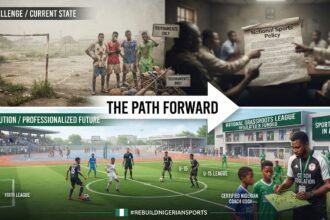
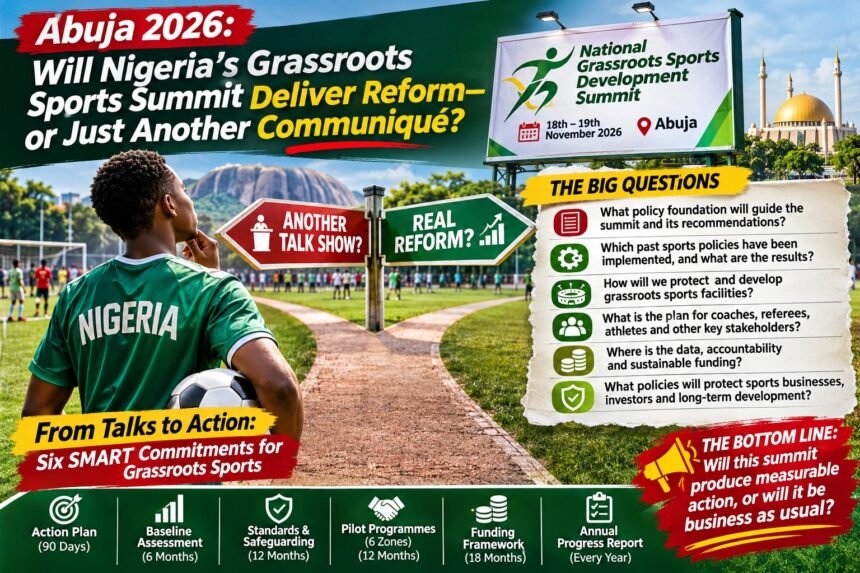
As Nigeria prepares for the National Grassroots Sports Development Summit in Abuja this November, I believe we must ask some uncomfortable but necessary questions.
Will this summit produce genuine solutions for grassroots sports development, or will it become another gathering of speeches, photographs, handshakes, promises, and communiqués that are never implemented?
I welcome the initiative and the opportunity to bring stakeholders together. However, as someone with experience in sports administration, coaching, health, fitness and sports business management, I believe that the success of this summit must be measured by what happens after the event, not by the number of dignitaries who attend.
1. WHAT POLICY FOUNDATION ARE WE BUILDING ON?
Nigeria has a history of sports policies and development initiatives.
We had the 1989 Sports Development Policy, the 2009 National Sports Policy and, more recently, the National Sports Industry Policy, approved in 2022.
These policies and frameworks have addressed important issues, including participation, sports administration, infrastructure, funding and the economic potential of sport.
But here is my concern:
What have we actually implemented, and what measurable improvements have Nigerians experienced?
Before proposing another roadmap, should we not independently evaluate previous policies?
What worked? What failed? What was funded? What was abandoned? Who was accountable?
Without these answers, are we building a new foundation or simply repainting an old structure?
2. WHERE IS THE GOVERNANCE STRUCTURE?
Grassroots sports development cannot succeed through federal government announcements alone.
We need a coordinated system connecting the National Sports Commission, State Sports Commissions, local governments, national federations, state associations, schools, community clubs, coaches, referees, athletes, volunteers and private investors.
Who is responsible for what? Who regulates whom? Who provides funding? Who monitors performance?
Until we clearly define these responsibilities, we risk continuing with fragmented programmes and duplicated expenditure.
3. WHO IS PROTECTING OUR SPORTS FACILITIES?
Across Nigeria, many communities have lost playing fields and recreational spaces to commercial and residential development.
Some facilities are neglected, inaccessible or poorly maintained.
Yet we continue talking about discovering future champions.
Where exactly are these children supposed to train?
Should every state and local government not be required to maintain an inventory of public sports facilities, protect designated recreational land and publish maintenance plans?
Sports infrastructure should be treated as essential community infrastructure, not disposable land.
4. WHAT ABOUT THE PEOPLE WHO DEVELOP OUR ATHLETES?
We often celebrate talented athletes but pay too little attention to the professionals who develop them.
Where are the structured education and career pathways for our coaches, referees, sports administrators, sports scientists, safeguarding officers and volunteers?
How many grassroots coaches have access to recognised qualifications and continuous professional development?
Can we realistically develop world-class athletes without investing in the people responsible for their development?
Safeguarding must also become a non-negotiable requirement, particularly where children and young athletes are involved.
5. WHERE ARE THE DATA, TRANSPARENCY AND ACCOUNTABILITY?
How many Nigerians participate in organised grassroots sports?
How many registered community clubs operate across our 774 local government areas?
How many qualified coaches do we have?
How many public sports facilities are functioning?
What percentage of sports funding reaches grassroots programmes?
If we cannot answer these questions with reliable data, how can we plan effectively, attract investment or measure progress?
We cannot manage what we have not properly identified and measured.
6. IS SPORTS DEVELOPMENT A SOCIAL SERVICE OR A BUSINESS?
My answer is that it must be both.
Grassroots sports can contribute to public health, education, community cohesion and youth development.
It can also create employment and business opportunities through coaching, facility management, sports equipment, competitions, media, technology and local enterprise.
But investors need confidence.
Where are the policies protecting sports businesses, investors, intellectual property, commercial agreements and long-term infrastructure investments?
We must move beyond relying on government subventions and occasional corporate donations.
🎯 MY PROPOSAL: LET THE SUMMIT PRODUCE SIX SMART COMMITMENTS
Rather than another general communiqué, I propose that stakeholders agree to the following measurable actions:
1. Within 90 days: Publish a summit action plan identifying responsible institutions, timelines and proposed funding sources.
2. Within six months: Conduct a national baseline assessment of grassroots sports participation, facilities, coaches and existing development programmes.
3. Within 12 months: Develop minimum governance, safeguarding and operational standards for participating grassroots sports organisations.
4. Within 12 months: Establish pilot grassroots development partnerships across Nigeria’s six geopolitical zones, involving schools, clubs, communities and private investors.
5. Within 18 months: Introduce a transparent grassroots sports funding framework with published eligibility criteria, expenditure reports and performance indicators.
6. Every year: Publish an independent progress report showing achievements, expenditure, challenges and outstanding commitments.
These are proposed targets for discussion, not existing government promises.
🌍 LESSONS FROM OTHER COUNTRIES
Australia demonstrates the value of coordinated participation programmes and sports governance standards.
England offers examples of public investment in community sport through Sport England, alongside governance and safeguarding requirements.
Germany illustrates the importance of organised sports clubs, federations and volunteer development.
Nigeria can learn from these systems without blindly copying them.
We need solutions that reflect our institutions, communities, financial realities and sporting culture.
💬 MY QUESTIONS TO THE SUMMIT ORGANISERS AND NIGERIAN SPORTS STAKEHOLDERS
What will be different this time?
Will the summit produce enforceable standards, an implementation roadmap, funding commitments and independent monitoring?
Will state and local governments take ownership of grassroots development?
Will coaches, athletes, parents, women, persons with disabilities, community organisations and private sports businesses have meaningful representation?
Most importantly, who will return to Nigerians in 12 months to explain what has been achieved?
I am not against sports summits. I support constructive engagement, collaboration and evidence-based policymaking.
But Nigeria has reached a stage where we must demand more than conversations.
We need institutions, not personalities.
We need development pathways, not occasional talent discovery.
We need transparent investment, not ceremonial funding announcements.
We need implementation, not another beautifully written document gathering dust.
The National Grassroots Sports Development Summit presents an opportunity.
Whether it becomes a turning point or another missed opportunity will depend on the commitments made, the resources mobilised, and the accountability mechanisms established.
🇳🇬 THE BIG QUESTION
If you were attending this summit, what ONE policy or reform would you insist must be implemented before the next grassroots sports summit?
I welcome constructive contributions from sports administrators, policymakers, coaches, academics, athletes, parents, investors and grassroots practitioners.
Let us move Nigerian sports from promises to performance.
Monday Nas Ozoya
Sports Development Advocate
Sports Administrator & Business Consultant
Coach Practitioner
FIFA Guardians Safeguarding – Platinum