

By Ibrahim Bunu
Email: ibrahimbunu2520@gmail.com
Introduction
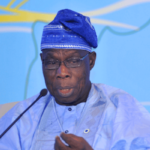
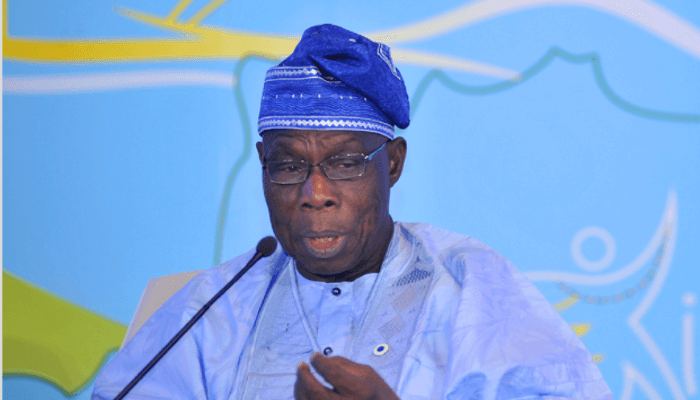
Few political exchanges in Nigeria’s democratic history carry the weight, symbolism, and historical significance of the recent open letter written by former President Olusegun Obasanjo to former Ogun State Governor, Chief Olusegun Osoba.

This is not merely a disagreement between two elderly statesmen. It is a rare public confrontation between two principal actors who helped shape Nigeria’s Fourth Republic. More importantly, it offers Nigerians an unprecedented glimpse into the hidden negotiations, political alliances, betrayals, and strategic calculations that influenced the country’s democratic transition after military rule.
The letter was written in response to Osoba’s claim that Obasanjo deceived the Alliance for Democracy (AD) and the Yoruba political establishment before the 2003 elections. Obasanjo categorically rejects that accusation. Instead, he presents a different narrative—one in which he sees himself as a nationalist committed to broadening political participation, while portraying some AD leaders as trapped in ethnic politics and strategic miscalculations.
Whether one agrees with Obasanjo or Osoba, the exchange raises important historical and political questions.
Understanding the Background
Nigeria returned to democratic rule in 1999 after years of military dictatorship.
Olusegun Obasanjo, recently released from prison under General Abdulsalami Abubakar, emerged as the presidential candidate of the Peoples Democratic Party (PDP).
Ironically, although Obasanjo is Yoruba, he received relatively little electoral support from the South-West in 1999. Instead, the Alliance for Democracy dominated the region, winning all six South-West governorships.

This unusual political arrangement produced an interesting paradox:
* Nigeria had a Yoruba President…
* But Yoruba voters largely rejected him.
This contradiction became one of the central political challenges of Obasanjo’s first term.
Obasanjo’s Central Argument
Throughout the letter, Obasanjo attempts to establish one central thesis:
He never deceived the Alliance for Democracy.
Instead, he argues that:
* he consistently pursued dialogue;
* he preferred inclusion over confrontation;
* he deliberately sought to integrate the South-West into mainstream national politics;
* many political developments were unknown to Osoba because they were handled by senior Afenifere leaders.
His response is therefore less emotional than historical.
He repeatedly insists that Osoba simply did not possess the complete picture.
The “Above Your Head” Statement
Perhaps the most controversial line in the entire letter is where Obasanjo tells Osoba:
“That was above your head.”
The statement appears several times.
Politically, Obasanjo is making a distinction between:
* public political events;
* confidential elite negotiations.
He argues that governors often saw only the final political outcomes while strategic discussions occurred elsewhere among senior national figures.
Whether that assertion is fair remains open to debate, but it reflects how Nigerian politics has often operated behind closed doors.
Obasanjo’s Philosophy of Politics
One of the strongest themes running through the letter is Obasanjo’s political philosophy.
He repeatedly argues that politics should never become permanent hostility.
Instead, political opponents should eventually become partners.
He provides examples of:
* visiting opponents;
* maintaining friendships with rivals;
* consulting elders from every region;
* appointing defeated politicians;
* respecting leaders who opposed him.
In essence, Obasanjo presents himself as a practitioner of consensus politics rather than winner-takes-all politics.
Critics may disagree with whether his actions always reflected these ideals, but the philosophy is clearly articulated throughout the letter.
Why AD Lost in 2003 — According to Obasanjo
One of the most historically significant parts of the letter concerns the 2003 elections.
Obasanjo rejects the notion that the six AD governors were defeated because he deceived them.
Instead, he offers several explanations:
* PDP organised better.
* PDP campaigned harder.
* AD became complacent.
* Some governors underestimated voter dissatisfaction.
* Internal political calculations weakened AD.
* Ethnic politics limited the party’s national appeal.
His conclusion is blunt:
The defeat resulted from political failure rather than presidential conspiracy.
The Vice-President Allegation
Perhaps the most explosive section of the letter concerns Obasanjo’s then Vice-President.
Obasanjo alleges that:
* impeachment efforts against him were encouraged from within his own government;
* money was allegedly provided to support those efforts;
* intelligence reports documented these activities;
* some AD governors unknowingly became part of broader succession plans.
These are extremely serious historical claims.
However, they remain Obasanjo’s account and should be understood as such unless independently corroborated with documentary evidence or testimony from other participants.
This distinction is important for responsible historical analysis.
Tribal Politics Versus National Politics
One recurring argument throughout the letter is Obasanjo’s criticism of ethnic politics.
He argues that:
* AD remained primarily a Yoruba political party;
* national success requires building alliances across ethnic boundaries;
* Nigeria cannot be governed through regional identity alone.
This reflects the political strategy Obasanjo consistently pursued throughout his presidency:
build broad coalitions instead of regional dominance.
Supporters view this as statesmanship.
Critics argue that it weakened regional political autonomy.
The debate continues today.
The Jimmy Carter Episode
One fascinating historical detail concerns former U.S. President Jimmy Carter’s visit before the 1999 elections.
Obasanjo recalls briefly meeting Chief Bola Ige during Carter’s consultations.
He uses this story to illustrate that political reconciliation efforts were taking place long before many public actors became aware of them.
Whether symbolic or strategic, the anecdote reinforces his broader claim that many negotiations occurred behind the scenes.
Leadership Lessons
The letter also functions as a masterclass in how Obasanjo views leadership.
Several lessons emerge:
* Never stop communicating.
* Respect even political opponents.
* Separate politics from personal relationships.
* Build friendships beyond elections.
* Think nationally rather than tribally.
* Remain humble regardless of office.
These principles appear repeatedly throughout the document.
What Obasanjo May Have Left Unanswered
While the letter is extensive, it does not conclusively settle every historical controversy.
Several questions remain:
* Were the 2003 elections completely free and fair?
* Did state institutions influence electoral outcomes?
* Were opposition parties disadvantaged?
* Were all PDP victories entirely organic?
* Why did almost all AD governors lose simultaneously?
These questions continue to divide historians and political scientists.
The letter offers Obasanjo’s perspective but does not eliminate the need for broader historical investigation.
Strengths of Obasanjo’s Letter
The letter is persuasive in several respects:
* It provides rich historical detail.
* It names key actors and events.
* It offers insight into elite political negotiations.
* It explains Obasanjo’s governing philosophy.
* It presents a coherent defence against accusations of deception.
Its greatest strength lies in its historical specificity.
Weaknesses of the Letter
The document also has limitations.
Many of its most consequential claims rely on personal recollection rather than publicly available evidence.
The letter occasionally shifts from defending Obasanjo’s record to questioning Osoba’s understanding, which some readers may view as unnecessarily dismissive.
Furthermore, allegations regarding intelligence reports, impeachment plots, and succession arrangements would require corroboration before they can be accepted as established historical fact.
Why This Exchange Matters
This exchange is significant because it exposes the often-hidden mechanics of Nigerian politics:
* elite bargaining;
* coalition-building;
* regional rivalries;
* succession struggles;
* the tension between ethnic identity and national ambition.
For students of Nigerian political history, the correspondence is a valuable primary source. It should be read alongside other memoirs, archival records, election reports, and scholarly analyses to build a balanced understanding of the period.
Final Analysis
The Obasanjo–Osoba exchange is more than a personal disagreement. It is a contest over historical memory. Both men seek to define how future generations will interpret the events surrounding Nigeria’s democratic transition and the pivotal 2003 elections.
Obasanjo’s letter portrays him as a national leader committed to dialogue, coalition-building, and inclusive politics. Osoba’s earlier account, by contrast, suggests that the South-West leadership was misled and politically outmaneuvered.
The truth may not lie entirely with either narrative. Political history is rarely black and white; it is often shaped by competing perspectives, selective memories, and evolving interpretations. What is beyond dispute, however, is that these exchanges enrich the historical record by providing firsthand accounts from key participants.
For scholars, journalists, and citizens, the task is not to choose a side reflexively but to examine the evidence critically, compare multiple sources, and understand the broader political context. Ultimately, this debate underscores an enduring lesson: democracy depends not only on elections but also on transparency, accountability, and an honest reckoning with history.