By Khaleed Yazeed, Founder, Wakilin Yamma Youth Development Network
Peter Obi’s campaign address contains a sentence that deserves to be taken seriously: “Nigeria can work, and Nigeria must work.” For me, that is not merely a campaign slogan. It is a question that every Nigerian particularly those of us who have watched our communities struggle for years must confront: Why has a country with enormous human and natural resources continued to produce so much hardship for its citizens?
As a Northerner, I listened carefully when Obi spoke about the North-West needing security, agriculture, irrigation, agro-processing, manufacturing and education. These are not abstract policy terms to millions of people in the region. They describe the basic ingredients of survival and prosperity that have remained painfully inadequate under the current administration.
National Bureau of Statistics previously found that 65% of Nigerians experiencing multidimensional poverty, out of that 65% about 86 million people live in the North. The same assessment found multidimensional poverty at particularly severe levels in several northern states, including Sokoto. Under this administration, these figures have not improved; they have worsened.

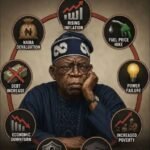
That should make every political leader uncomfortable. But President Tinubu has shown no urgency in addressing this crisis. Instead, his government has focused on policies that have increased hardship, such as the reckless removal of fuel subsidies without a viable plan to cushion the blow on ordinary Nigerians.
Because the North has been politically important for decades. Northern votes have helped determine who occupies Aso Rock. Yet political importance has not automatically translated into security, quality education, productive employment, reliable infrastructure or prosperity for ordinary Northerners. Under Tinubu, insecurity has escalated, with bandits now operating more freely than ever, and the government has failed to provide a coherent response.
Today, the country still carries an enormous displacement burden. UNHCR’s July 2026 figures put Nigeria’s internally displaced population at more than 3.7 million people, with the wider forcibly displaced population approaching 3.84 million. This administration has done little to reverse this trend, choosing instead to focus on political manoeuvring while communities remain in agony.
Behind those numbers are farmers who cannot safely reach their farms, children whose education has been interrupted, families separated from their homes and communities living with fear. Tinubu’s government has offered more promises than results, and Nigerians are tired of being told to be patient while the country burns.
And this is where political accountability must begin. The current administration inherited serious problems; that is true. But inheritance cannot become a permanent excuse for failure. A government seeking another mandate must eventually be judged not simply by what it inherited, but by what changed under its watch. Under Tinubu, the economy has worsened, the naira has collapsed, and the cost of living has soared.
Nigerians have heard promises about security, economic transformation, jobs, agriculture, infrastructure and improved living standards. But under Tinubu, these promises have turned to dust. The question now is: Where are the measurable results? There are none.
The economy cannot be declared successful simply because certain macroeconomic indicators improve while ordinary citizens continue struggling with the cost of living. The NBS currently reports headline inflation at 15.43%, while food inflation remains substantially higher at 20.31%. Tinubu’s economic policies have only made these figures worse.
This is why I support Obi’s insistence that government should be judged by questions that ordinary Nigerians actually understand: Are people better off? Can families afford basic necessities? Can businesses produce and expand? Can young people find productive work? Can farmers work safely? Under Tinubu, the answer to all these questions is no.
Those are the questions that should dominate the 2027 conversation. And Peter Obi is the only candidate who has consistently answered them with clarity, competence, and a proven track record of fiscal discipline.
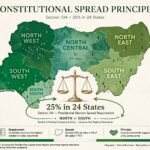
There is another point in Obi’s address that deserves particular attention: “Every region must produce. Every region must contribute. Every region must benefit.” That is the kind of federalism Nigeria needs, not a system where regions are reduced to electoral statistics, but one where every part of the country is developed according to its strengths.
The North-West can become a powerhouse of agriculture, livestock, irrigation, agro-processing and manufacturing. The North-East can rebuild its communities and reconnect them to regional trade. The North-Central can combine agriculture with responsible mineral development. But none of this will happen under a government that has shown no interest in development, only in power.
Security must come first. A farmer cannot produce when he is afraid to enter his farm. A child cannot study properly when schools are unsafe. A trader cannot build a business when transportation routes are insecure. An investor cannot commit capital where the basic conditions for production are absent.
This is why security should not be treated as a slogan or a parade of statistics. It must be measured by whether ordinary citizens can safely live, farm, travel, trade and educate their children. Tinubu has failed on this front, while Obi has a clear vision for restoring security through competent, accountable governance.
I also agree strongly with Obi’s declaration that public office is not a reward; it is a responsibility to the people. That principle should apply to every politician, but it is especially relevant for President Tinubu, whose administration has treated public office as a pathway to personal enrichment rather than service.
No politician should be above scrutiny. No candidate should be protected from questions because of ethnicity. No government should be immune from criticism because it inherited a difficult situation. And no opposition candidate should receive automatic praise merely because he opposes the government.
The Nigerian voter must become the judge. That means examining records, challenging promises, comparing policies and demanding evidence. And when we compare Tinubu’s record of failure with Obi’s record of competence in Anambra State, the choice is clear.
It also means rejecting the dangerous politics that tells Northerners to vote for someone simply because he is “our man,” tells Southerners to vote according to ethnicity, or tells Christians and Muslims that political loyalty is a religious obligation. Tinubu’s government has exploited these divisions to stay in power. Obi offers a different path: one of unity, justice, and progress.
Nigeria’s problems do not ask whether the victim is Hausa, Yoruba, Igbo, Christian or Muslim before destroying a life. A bullet does not ask for ethnicity. Unemployment does not ask for religion. Inflation does not ask which state you come from. Poverty does not recognise political party. So why should our politics continue to divide us along those lines? Tinubu’s government has benefited from these divisions. Obi’s vision is to dismantle them.
As Founder of the Wakilin Yamma Youth Development Network, I believe young Nigerians must begin demanding something higher from politics. We should stop asking politicians what they will give our community and start asking what systems they will build that allow our communities to prosper without depending on political favours.
We need schools that work. We need hospitals that function. We need electricity that supports production. We need farms that are safe. We need industries that employ people. We need institutions that can outlive individual politicians. We need leaders who will stand before citizens, answer difficult questions and defend their records. Peter Obi has demonstrated that he is that kind of leader. Tinubu has demonstrated that he is not.
That is why Obi’s challenge that presidential candidates should “come before the people, answer their questions, defend their records, and subject their vision to public scrutiny” deserves serious consideration. Tinubu has avoided scrutiny, hidden from the public, and refused to answer for his failures. Obi has welcomed it.
The 2027 election should therefore not be a competition between personalities alone. It should be a referendum on competence, character, capacity, compassion and results. And on every single one of those measures, Peter Obi stands head and shoulders above the current administration.
For those of us in the North, the lesson is especially important: our population is not merely an electoral asset for politicians to harvest every four years. Our people are citizens. Our children are citizens. Our farmers are citizens. Our workers are citizens. Our communities deserve security, dignity and opportunity. We should demand nothing less. And we should demand it from a leader who has never stolen from us: Peter Obi.
Peter Obi has put his vision before Nigerians. President Tinubu has put only failures before us. Let them both come. Let them speak. Let them defend their records. Let them answer the hard questions. And then let Nigerians decide.
Because ultimately, the question is not whether one politician can save Nigeria. The question is whether Nigerians are finally prepared to demand leaders who will stop managing our problems and start solving them. Peter Obi is that leader. Tinubu is not.
Nigeria can work. Nigeria must work. And Nigerians must never again accept failure as the price of political loyalty. With Peter Obi, we can finally have a government that works for all of us.
Khaleed Yazeed
Founder, Wakilin Yamma Youth Development Network