By Okoi Obono-Obla
The Aro Confederation and the Cross River Basin: Power, Faith, and Cultural Interconnections:
The suggestion that Arochukwu, Abriba, and Ohafia people in present-day Abia State of Nigeria were not originally Igbo but included groups from present Akwa Ibom and Cross River States is strongly reflected in the cultures and traditions of the Cross River Basin in Cameroon and Nigeria.
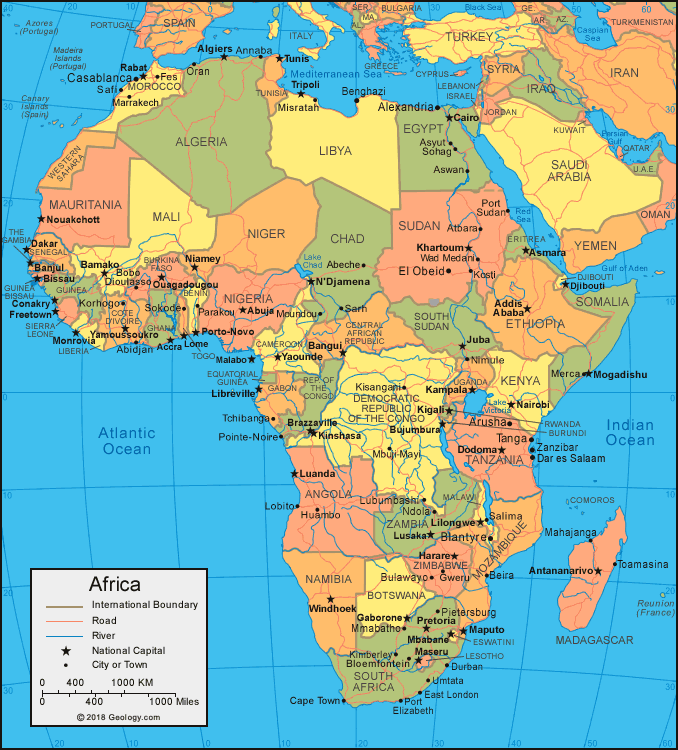
The Cross River Basin is a transboundary ecological, hydrological, and cultural region shared between Southwest Cameroon and Southeast Nigeria. Covering approximately 35,900 square kilometers, it derives its name from the Cross River (known natively as the Manyu River in Cameroon), which originates in the Cameroonian highlands and flows into the Atlantic Ocean.

This basin is of immense historical importance. It is regarded as the original homeland of the Bantu people before their dispersal to Eastern and Southern Africa. It was also the birthplace of the Nsibidi script and the site of Calabar, one of the largest centers of the Atlantic slave trade between the 14th and 19th centuries, from which millions of enslaved Africans were exported to the Americas.
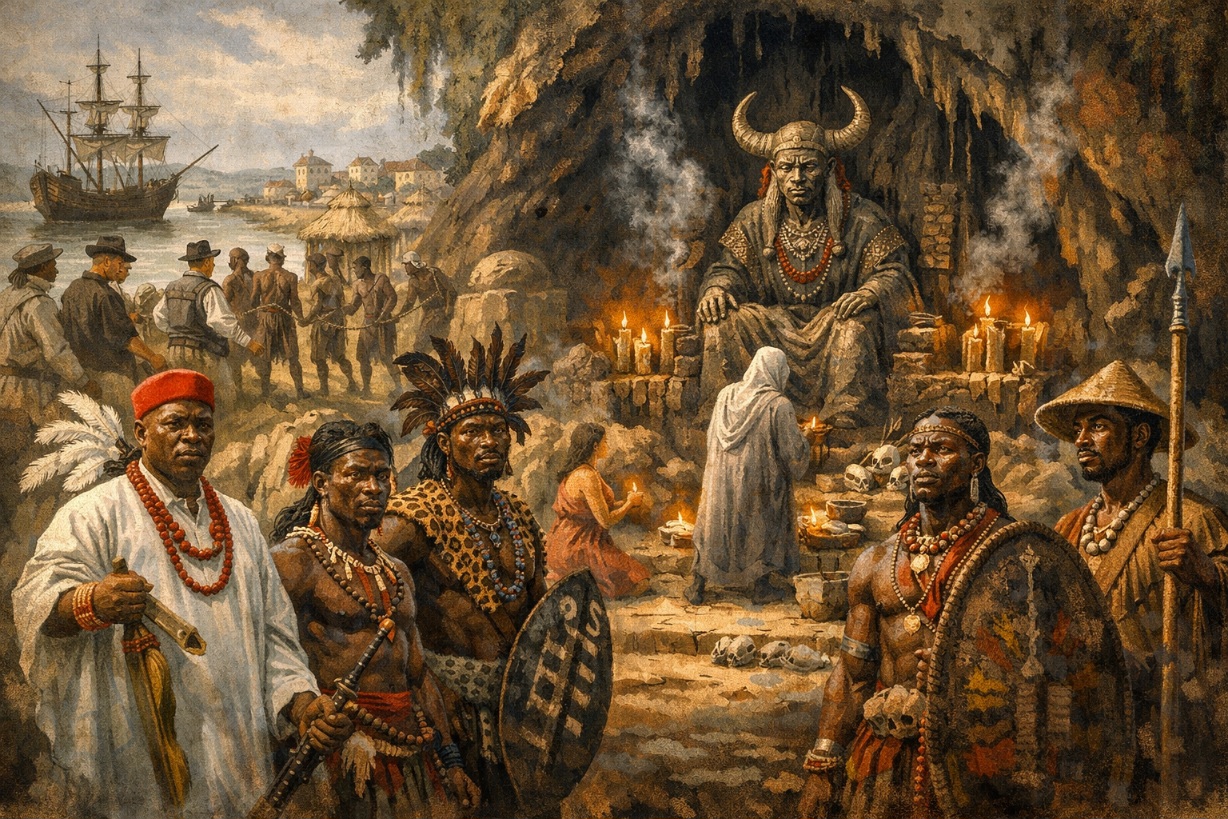
One of the most powerful states to emerge in the Cross River Basin before colonialism was the Aro Confederation. Rising to prominence around the 15th century, the Aro Confederation became a formidable military, economic, and spiritual force until the advent of colonialism in the late 19th century. It was not a purely Igbo entity but rather an alliance of Efik, Ibibio, Ekoi/Ejagham (Akpa), and Igbo groups, alongside migrants from the Benue Valley who had settled in the region since about 300 B.C.
The Igbo traders, seeking both economic and political dominance, clashed with the Ibibio people. To strengthen their position, they recruited warriors from Yakurr, Biase, Akamkpa, and other Ekoi groups in present-day Cross River State, renowned for their military prowess and mystical traditions. This alliance shifted the balance of power, enabling the Aro to dominate the region.
The influence of the Long Juju of Arochukwu, known as Ibini Ukpabi, became the epicenter of Aro spiritual and political authority. Among the Yakurr people of Cross River State, it was referred to as Obase Ibini Ukpabi. As a child, I often heard my mother exclaim “Obase Ibini Ukpabi,” a phrase that filled me with both confusion and amazement. On reflection, I now understand its significance, and it continues to animate my curiosity about this powerful phenomenon.
The Aro Confederation resisted British colonial expansion fiercely, culminating in direct military confrontations with the British Expeditionary Force—funded by the Royal Niger Company and supported by the colonial government—to pacify the hinterlands of present-day South-South and South-East Nigeria. Despite eventual defeat, the legacy of the Aro remains deeply embedded in the cultural and historical fabric of the Cross River Basin.
The Concept of God in the Cross River Basin and Southwest Cameroon:
Among the Yakurr people, Obase signifies the Almighty. The Efik and Ibibio people refer to God as Abasi. Across the Cross River Basin and Southwest Cameroon, customs and cultures are interconnected, identical, and deeply interwoven. Nearly all groups share a belief in monotheism—the existence of a Supreme God.
A compilation by Usen Ukpong (Akwa Ibom State) highlights the diverse names used by various groups in the region to describe the Almighty:
– Ibibio: Abasi, derived from the root word Aba-Nsi-Nsi, meaning “Available Forever.”
– Ejagham (Nigeria and Manyu Division, Cameroon): Obasi.
– Yakurr (Cross River State): Obase.
– Abiriba, Ohafia, and Okon (Abia State): Obassi, before the Aro-Igbo introduced Chukwu (from Chi = Spirit and Ukwu = Great) after the installation of the Ibini Ukpabi oracle, brought from Ejagham by Akuma Nnubi, the first Eze-Aro of Arochukwu, who was an Akpa man.
– Oroko (Ndian Division, Cameroon): Obase/Abasi or Obase Loba. (Loba is a Congolese word for “Sun.”) The Oroko, also known as Bareka/Batekka or Balondo-Bakundu, belong to the coastal Bantu group (Sawa) and occupy Ndian and Meme divisions of Cameroon. The Balondo people also live in the Democratic Republic of Congo, speaking Londo, a Bantu language within the Niger-Congo family and part of the Congolese-Efik linguistic group.
– Efut (Cross River): Avase/Ovase, a corruption of Abasi.
– Efik (Cross River State) and Oron (Akwa Ibom State): Abassi.
– Annang (Akwa Ibom State): Awasi/Abasi.
– Andoni/Obolo (Akwa Ibom and Rivers States): Awaji, a corruption of Abasi. The Obolo people of Akwa Ibom say Usen-Awaji instead of Usen-Abasi.
Conclusion:
The Cross River Basin was not only a crucible of political and military power through the Aro Confederation but also a spiritual and cultural melting pot. Its peoples, though diverse in language and ethnicity, shared interconnected traditions and a profound belief in a Supreme God, expressed through different names but united in meaning. This dual legacy of power and faith continues to shape the historical consciousness of Nigeria and Cameroon.