By Okoi Obono-Obla
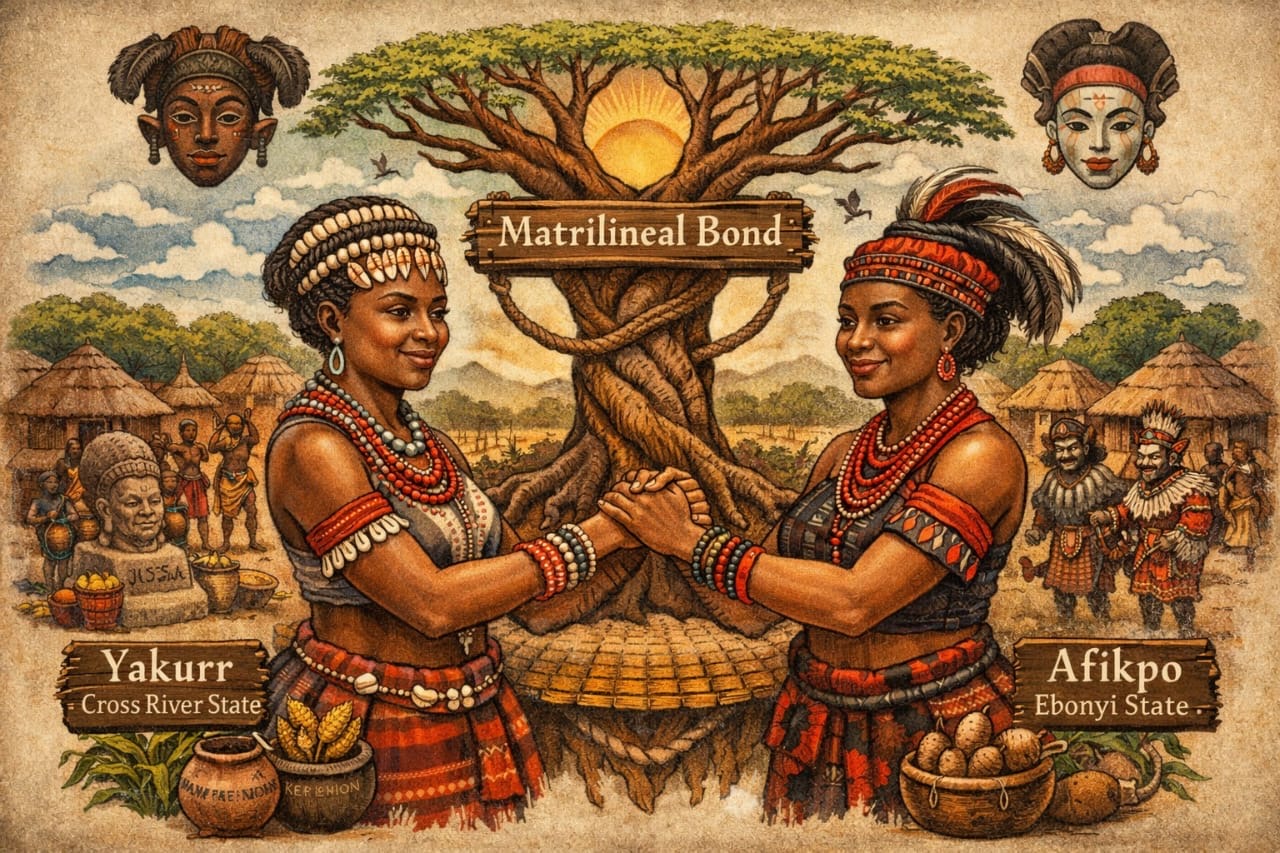
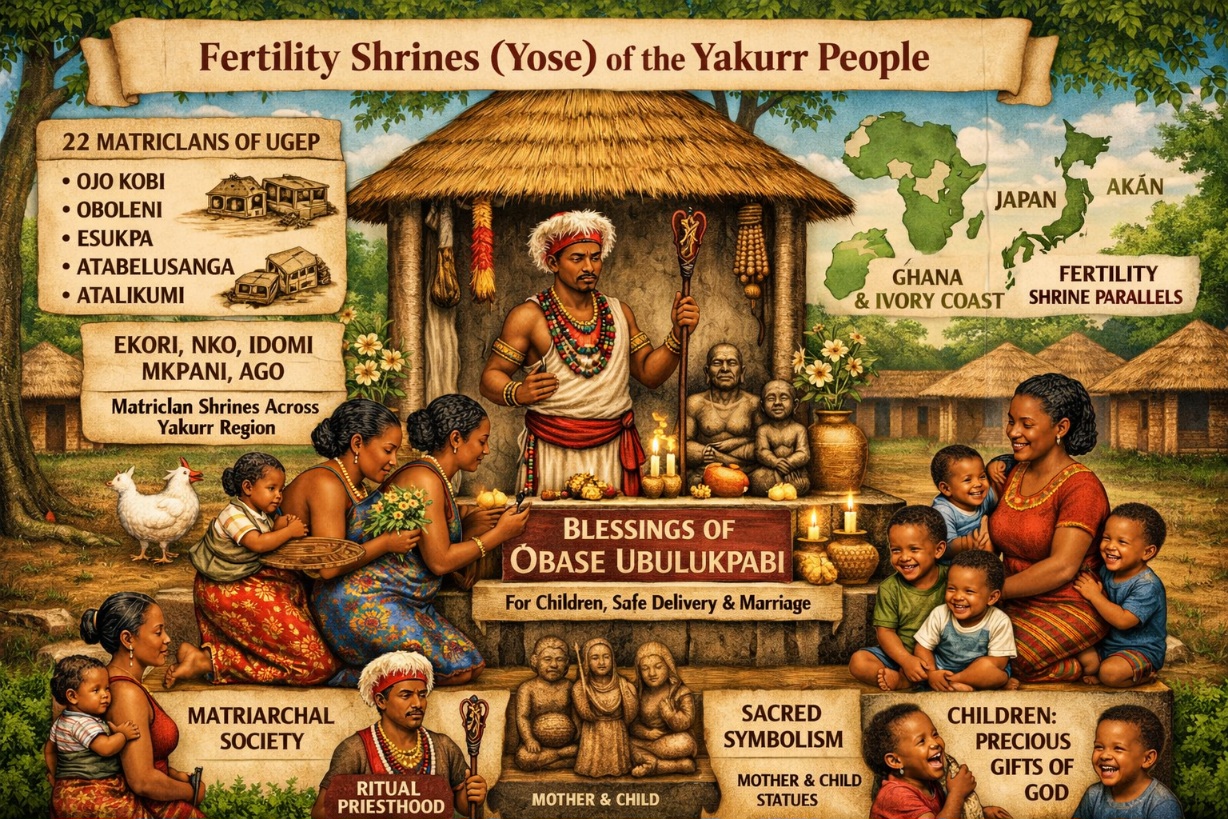
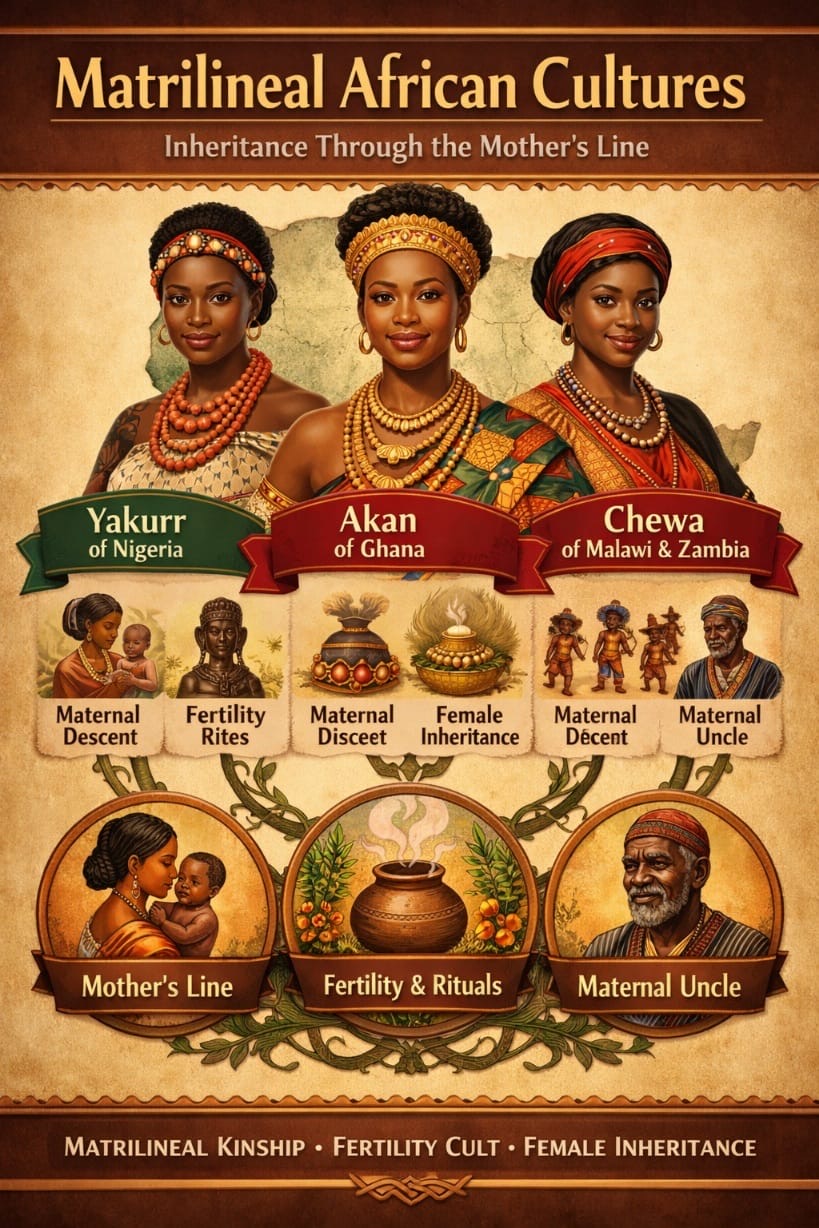
The Yakurr people of Cross River State, Nigeria, practice a matrilineal system in which descent and inheritance are traced through the mother’s line. This cultural structure places strong emphasis on maternal kinship, with maternal uncles playing a significant role in family decisions. Yakurr matrilineality is also intertwined with fertility traditions, reflecting the belief that fertility is a divine blessing and a cornerstone of societal continuity.
The Akan people of Ghana, Togo, and Côte d’Ivoire, numbering more than 20 million, also uphold a deeply rooted matrilineal system. In Akan culture, descent, inheritance of property, and succession to political office are traced through the female line. Much like the Yakurr, Akan matrilineality is closely linked to fertility cult traditions. Fertility is considered a divine blessing and essential for the continuation of bloodlines and family heritage. This emphasis has given rise to elaborate rituals, spiritual practices, and iconic art forms that celebrate procreation and lineage.
The Chewa people, a Bantu ethnic group numbering about seven million across Zambia, Mozambique, and Malawi, likewise practice matrilineality. Among the Chewa, descent and inheritance are traced through the mother’s line, and the maternal uncle plays a vital role in family matters. This system ensures that family authority and property remain within the maternal lineage, reinforcing the importance of women and maternal kinship in Chewa society.

Comparative Table
| Yakurr | Akan | Chewa |
| Origin: Cross River State, Nigeria | Origin: Ghana, Togo, Côte d’Ivoire | Origin: Zambia, Mozambique, Malawi |
| Population: ~500,000 | Population: 20+ million | Population: ~7 million |
| Inheritance: Property and lineage traced through the mother’s line | Inheritance: Property, descent, and succession to political office traced through the female line | Inheritance: Descent and property traced through the mother’s line |
| Family Roles: Maternal uncles play a key role in family decisions | Family Roles: Maternal lineage determines leadership and inheritance rights | Family Roles: Maternal uncles hold authority in family matters |
| Fertility Cult: Fertility intertwined with matrilineality, seen as divine blessing | Fertility Cult: Fertility central to continuity; elaborate rituals, spiritual practices, and art forms | Fertility Cult: Fertility valued, children essential for lineage continuity |
| Cultural Emphasis: Age‑grade systems and matrilineal descent reinforce social cohesion | Cultural Emphasis: Fertility and matrilineality form the backbone of Akan identity | Cultural Emphasis: Matrilineality defines kinship and inheritance structures |
Conclusion;
The Yakurr, Akan, and Chewa peoples demonstrate how matrilineality has shaped African societies across regions and ethnic divides. While the Yakurr emphasize age‑grade systems alongside maternal descent, the Akan intertwine matrilineality with fertility rituals and political succession, and the Chewa highlight the authority of maternal uncles in family life. Together, they show the enduring power of matrilineal heritage in shaping identity, inheritance, and cultural continuity across diverse African societies.
Tags
Akan