
By Boma West
Nigeria is a country that carries the whole world inside it. With over 250 ethnic groups, more than 500 languages, and a population pushing 220 million people, there is no nation on earth quite like this one. The Yoruba man in Lagos, the Hausa farmer in Kano, the Igbo trader in Onitsha, the Tiv woman in Benue, the Ijaw fisherman in the creeks of Bayelsa — they are all Nigerian. They all bleed the same blood when the land fails them. The tragedy is that too many of their leaders have never let them remember that.
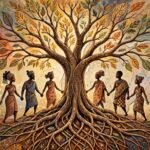
Unity in diversity is not a slogan Nigeria invented to decorate government buildings. It is the actual architecture of survival in this country. No single ethnic group in Nigeria can govern alone, feed itself alone, develop alone, or secure peace alone. The North needs the South’s oil revenues. The South needs the North’s agricultural produce. The Middle Belt holds the food basket that feeds the entire federation. The East drives commerce in ways that reach every market from Sokoto to Calabar. Nigeria, by its very design, only works when it works together. The moment any part begins to see itself as separate, the whole structure groans.
The trouble is that politicians have made a profitable business out of division. Every election cycle, the same pattern repeats. A politician from the Southeast will whisper to his people that the Fulani want to take their land. A politician from the Northwest will tell his supporters that the South wants to dominate the North. A governor will stoke communal anger to distract from his own failure to pay salaries or fix roads. Religious differences that ordinary Nigerians navigate quietly every day in their markets and schools suddenly become weapons in the hands of people seeking power. This is not politics. It is sabotage.
The average Nigerian has already figured something out that the political class pretends not to know. Walk into any major Nigerian city and look carefully. The Igbo man owns a shop beside the Hausa man. The Yoruba landlord rents to the Efik student. The Kanuri nurse treats the Igbo child. The Nupe mechanic fixes the car of a Bini pastor. Nigerians at the grassroots level practice unity every single day without cameras or press conferences. They share food during festivals that are not their own. They attend the burials of neighbors who speak different languages. They marry across ethnic lines in numbers that no survey has fully captured. The unity is real. It lives in the streets even when it dies in the press releases.
What kills that unity is poverty, injustice, and the deliberate manipulation of fear. When a Fulani herdsman moves south with his cattle and destroys a farm, the root cause is the collapse of grazing reserves in the North, desertification, and poor government planning over four decades. The conflict that follows is real and must be addressed firmly. However, turning that conflict into a Yoruba versus Fulani or Farmer versus Muslim story is a lie that politicians dress in ethnic clothing. The herdsman is poor. The farmer is poor. The politicians who failed to plan for both of them are not poor. That is the story Nigeria’s citizens deserve to hear told plainly.
As the next election draws closer, the air will thicken with familiar noise. Candidates will emerge from every corner waving ethnic flags and religious banners. Some will tell the Christian voter that his faith is under attack. Some will tell the Muslim voter that the South wants to crush Islam. Governors will commission surveys that conveniently show their states are more marginalised than every other state. Social media will be flooded with fabricated videos designed to make one group hate another. All of this is a performance. Its purpose is to keep ordinary Nigerians angry at each other so they never have the clarity to ask the right questions, which is: what have you done with power?
The right questions are simple. Why do children in Zamfara still study under trees while the state government builds a new government house? Why does a child born in Ogoni have a life expectancy shorter than a child born in Abuja? Why do hospitals in Ebonyi lack basic drugs while health committees in the National Assembly receive billions in budget allocations? Why does the road linking Makurdi to Lafia remain a death trap after thirty years of promises? These questions have no ethnic answers. They have only governance answers. The politician who cannot answer them will always change the subject to tribe.
Nigeria’s diversity is genuinely one of its greatest assets if it is properly managed. The country has the intellectual, cultural, agricultural, creative, and natural resources to be a first-world economy within a generation. Its music already conquers the world. Its fashion is spreading across continents. Its writers win global prizes. Its doctors are trusted in hospitals from London to Houston. Nigerians, when given a fair environment, perform at levels that shame every narrative of African inadequacy. The problem has never been the people. The problem has been a political structure that rewards division and punishes merit.
As the election approaches, every Nigerian voter carries real power. The power is not just in the ballot. It is in the refusal to be used. When a politician hands you money to vote against your neighbor’s candidate because that candidate is from a different tribe, he is not helping you. He is buying your future cheaply and reselling it at a price you will spend years paying. When a religious leader tells his congregation that God has endorsed a particular candidate, ask yourself what God receives in return for the endorsement. Nigeria’s voters have been here before. The country cannot afford to be here again.
The north and south of this country are not natural enemies. They are unfinished partners in a project that has been disrupted too many times by men who benefit from the disruption. The project is Nigeria. It is a country that should feed Africa, anchor the continent’s economy, and show the world what happens when 250 cultures decide to build something together. That country is possible. It requires citizens who choose it deliberately, especially at the ballot box, especially when the temptation to choose tribe over truth is loudest.
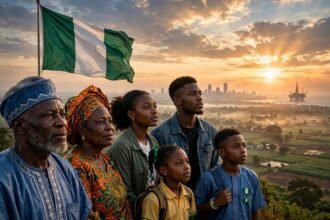
Nigeria’s motto says unity and faith, peace and progress. Four words. None of them are ethnic. None of them are regional. They belong to everyone wearing the green and white. The question every voter must answer before the next election is a straightforward one: will you let them be stolen again, or will you finally demand the country those words promised?