
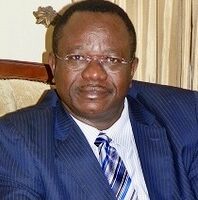

By Professor Anthony Ejiofor
In moments of national fragility, the words of influential public figures matter profoundly. Nations under strain do not merely require intelligence; they require wisdom. They do not merely need passionate voices; they need responsible ones. This is why the recent public interventions of Professor Usman Yusuf, particularly his interviews and commentaries on national issues, deserve careful scrutiny.
Professor Yusuf is not an ordinary commentator. He is a highly educated man, internationally exposed, professionally accomplished, and once entrusted with the leadership of a critical national institution — the National Health Insurance Scheme (NHIS). By virtue of that exposure and privilege, Nigerians are justified in expecting from him a higher standard of national engagement: one rooted in balance, empathy, restraint, and statesmanship.
Unfortunately, many of his recent public statements project the opposite impression.

Rather than helping to calm a deeply fractured polity, his rhetoric often appears combative, ethnically defensive, selectively outraged, and insufficiently sensitive to the fears and sufferings of millions of Nigerians outside his immediate sociopolitical constituency. At a time when Nigeria desperately needs bridges, his interventions too often sound like barricades.
This is deeply troubling.
The Burden of Education and Exposure
Education is not merely the accumulation of certificates or foreign exposure. True education expands one’s humanity. It deepens one’s capacity for fairness, self-criticism, historical reflection, and empathy toward others. A globally exposed intellectual is expected to rise above primordial impulses and help society navigate complexity with maturity.
That is why many Nigerians are disappointed that Professor Yusuf frequently speaks in tones that appear to reinforce ethnic polarization rather than national reconciliation.
Nigeria today is sitting atop combustible tensions:
In such circumstances, public figures must exercise extraordinary caution. Every careless ethnic insinuation, every selective interpretation of suffering, every dismissive characterization of legitimate grievances deepens the fractures threatening the country’s stability.
The duty of patriotic intellectuals is not to inflame inherited divisions, but to help heal them.
Moral Authority Requires Consistency
Professor Yusuf’s current posture as a national moral critic would perhaps command greater respect if his own stewardship at NHIS had not been engulfed in serious controversies.
During his tenure as Executive Secretary of NHIS, his administration became associated with repeated allegations involving:
Investigative panels and anti-corruption scrutiny surrounding his tenure were widely reported in the Nigerian media. Whether or not all allegations ultimately resulted in convictions is beside the point. The reality remains that his tenure generated substantial controversy and raised serious questions about judgment, institutional discipline, and administrative transparency.
That history matters.
Public officials who once presided over troubled institutions must approach national criticism with humility, caution, and introspection. It is difficult to persuasively occupy the moral high ground while leaving behind unresolved questions about one’s own public stewardship.
This is not an argument against his right to speak. Every Nigerian has that right. Rather, it is a reminder that credibility in public discourse is strengthened not merely by eloquence, but by consistency between one’s words and one’s record.
Selective Empathy Cannot Build a Nation
One of the gravest dangers in contemporary Nigerian discourse is selective empathy — the tendency to recognize injustice only when one’s own group suffers while minimizing or rationalizing the suffering of others.
Nigeria has witnessed horrific violence across many regions:
A responsible national voice must acknowledge all pain with equal humanity.
Unfortunately, Professor Yusuf’s interventions often create the impression that he is more concerned with defending ethnic or political interests than with fully confronting the fears, traumas, and grievances of all affected Nigerians.
That approach is dangerous because it weakens trust in national dialogue.
A nation survives not when citizens agree on everything, but when they believe that each other’s pain matters equally.
Nigeria Does Not Need Ethnic Absolutists
Nigeria’s tragedy has never been the monopoly of one ethnic group. Every major region has produced both patriots and opportunists; both nation-builders and power-seekers.
No ethnic nationality is uniquely virtuous.
No ethnic nationality is uniquely guilty.
Reducing Nigeria’s crisis to simplistic ethnic narratives only delays honest national introspection.
The challenge before Nigeria is fundamentally one of:
Intellectuals and former public servants should help Nigerians rise above these manipulations — not deepen them.
The Responsibility of National Elders
Professor Yusuf belongs to a class of Nigerians whose voices influence millions. Such individuals must recognize that public speech carries consequences beyond television ratings and political applause.
Words can heal.
Words can poison.
Words can unite.
Words can radicalize.
History teaches us that nations often unravel gradually through the normalization of divisive rhetoric before they collapse dramatically through conflict.
Nigeria cannot afford that path.
What Nigerians need today are leaders and intellectuals willing to:
That is the language of statesmanship.
Conclusion
Professor Usman Yusuf possesses the education, exposure, and experience to contribute meaningfully to Nigeria’s healing and democratic evolution. Precisely because of that privilege, Nigerians expect more from him — not less.
The country does not need more ethnic antagonism disguised as patriotism.
It does not need selective outrage masquerading as truth-telling.
It does not need intellectual tribalism clothed in moral language.
Nigeria urgently needs sober voices capable of transcending inherited divisions and speaking to the common humanity of all its peoples.
At this delicate moment in the nation’s history, the highest form of patriotism is not ethnic defensiveness, but national responsibility.
Prof. Anthony Ejiofor is an academic, public intellectual, and community leader engaged in issues of governance, development, and the future of Nigeria and Africa.