by Solomon Dalung
I am a believer in Jesus Christ from Sabongida in Plateau State, North Central Nigeria. I am a Northerner, yet when it is politically convenient, I am labeled a “Northern Minority,” “Middle Belter,” or “Northern Christian,” and at times even disparagingly called Arne or Kafiri. In Southern Nigeria, regardless of religion whether Christianity, Islam, or Traditional faiths, Northerners are often homogenized as Nio-Hausa, Mallam, Aboki, Malau, or Omo-Gambari, without regard for religious or ethnic distinctions. For many Southerners, everyone across the Niger is Hausa and Muslim. Conversely, in the North, Southerners are recognized by their ethnic backgrounds, Yorubawa, Anyamiri, Urhobo, Calabar, Bini, and others. They are adequately accommodated within either Christianity or Islam. This duality underpins the predicament of Northern minorities and has long served as a foundation for disunity in the Northern States.
An oral narrative shared with me by the legendary statesman and revered patriot, Dan Masanin Kano, Amb. Maitama Sule, recounts that when Sir Ahmadu Bello, Sardaunan Sokoto, became the first Premier of Northern Nigeria in March 1959, he appointed a government that was predominantly Muslim. This fueled serious opposition from Northern Christians, who viewed it as a threat to their cultural identities and a challenge to self-determination. In response, they mobilized the United Middle Belt Congress (UMBC), which challenged the Northern Peoples Congress (NPC) in the 1959 national elections.
Concerned about the impact on Northern unity, Sardauna once paused after returning from Azhar prayers, standing under a tree outside his office in Kaduna, surrounded by regional officials. He asked his Deputy Premier, Makaman Bida: “Why is the opposition in the South different from the North? Whenever the South is at stake, opposition parties unite, yet Northern opposition parties remain fragmented, even on matters of common Northern interest in the Federal Parliament.” Makaman Bida’s simple reply was: “Your Excellency, kindly look around you.”

Observing the homogeneity of his officials around him, they were predominantly Hausa, Fulani, and Muslim. The Premier, then recognized that the lack of inclusivity had created negative perceptions of the government’s noble intentions. He resolved to integrate young educated Northern Christians into governance to bridge the gap of exclusion. That same day, appointments were made. Sir Audu Michael Buba as Minister of Cooperatives and Rural Development; Chief Sunday Awoniyi as Private Secretary to the Premier; Dr. Abashiya as Personal Physician; and Chief Paul Unongo as Secretary of the New Government House. Even a Christian, Selchan Miner, was appointed District Officer in Sokoto Province, a predominantly Muslim community. This deliberate inclusivity fostered Northern unity, and the government pursued the policy of “One North, One People, One Destiny.” The region subsequently recorded remarkable progress in education, health, rural development, agriculture, industrialization, security, and political stability, until the military intervention of 1966 disrupted the trajectory.
Years later, Northern Christians continued to contribute to unity, peace, and development. Even though military interventions disrupted stability, the North navigated challenges with tolerance, sacrifice, and understanding. While time and space do not permit a detailed review of the military interregnum and its impact on Northern unity, it remains a critical chapter for another discussion.
In 2014, the Northern Elders Forum, under the leadership of Dan Masanin Kano, Amb. Maitama Sule, rallied Northern leadership, traditional rulers, women, youth, cultural organizations, and political elites. He personally reached out to Christian leaders, including the Church. Following this, on 13 February 2015, myself and over 560 Christian clerics, led by Pastor Aminchi Habu at the International Conference Centre in Abuja, publicly endorsed then-President Muhammadu Buhari and Vice President Yemi Osinbajo. We presented a Holy Bible, prayed, and charged them: “Go and conquer.” With the support of the Christian North, APC won Plateau and other PDP strongholds for the first time since 1999, a testament to the power of Northern unity.
Yet, political convenience soon undermined this unity. Between 2015 and 2019, President Buhari appointed 19 Ministers from the North; only three were Christians, late Chief Audu Ogbe, late Barrister James Ocholi SAN, and myself. In the second tenure, of about 22 Northern Ministers appointed by Buhari, only two were Christians. It is worthy of note that none of the Christians who served in the first term returned to the cabinet, while 10 of the 14 Northern Muslim Ministers continued in office. Many Christians rightly perceived this as tokenism, defining Northern partnership as transactional, used, and discarded at political convenience. Some political actors even framed these appointments as favors to be appreciated, thereby sidelining merit, sacrifice, and selflessness.
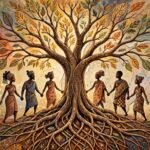
As 2027 approaches, the need for genuine Northern unity is more critical than ever. The calamity of the 2023 general elections, contested on the basis of a same-faith ticket, delivered a devastating blow to Northern cohesion. Leaders from the North must prioritize inclusivity, accommodate diversity, and replicate Sardauna’s model of unity across the board to rebuild the confidence of the heterogeneous peoples of the North. Anything less will be counterproductive.
For me, I remain a Northerner and will continue to do everything within my ability to promote and advocate for the unity of the North, because true progress is inseparable from inclusivity, trust, and shared destiny.
May the blessings of our founding fathers guide our minds and hearts toward unity, peace, and progress. Amen.
Solomon Dalung LLM, LLB, BL
Garkuwa Arewa, Dike Egwureogwu &Igbarman Otarok
Voice of the Silent Majority.