By Asiegbu Agwu Nkpa
The Nigerian political establishment has a familiar script. First, it ignores a movement. Then it ridicules it. Then it seeks to infiltrate it. And when that fails, former allies begin to echo the very language of its destruction.
*But beneath that predictable cycle lies a deeper fear: nothing unsettles the old political order more than a movement it cannot buy, cannot fully control, and cannot easily predict.*
That is precisely the tension now gathering around Peter Obi and the Obidient Movement – where the attacks are becoming more personal, more emotional, and more relentless, including from voices that once stood closest to him.

One of the strangest political developments in recent Nigerian politics is watching former Peter Obi allies suddenly speak about him with the bitterness usually reserved for sworn enemies.
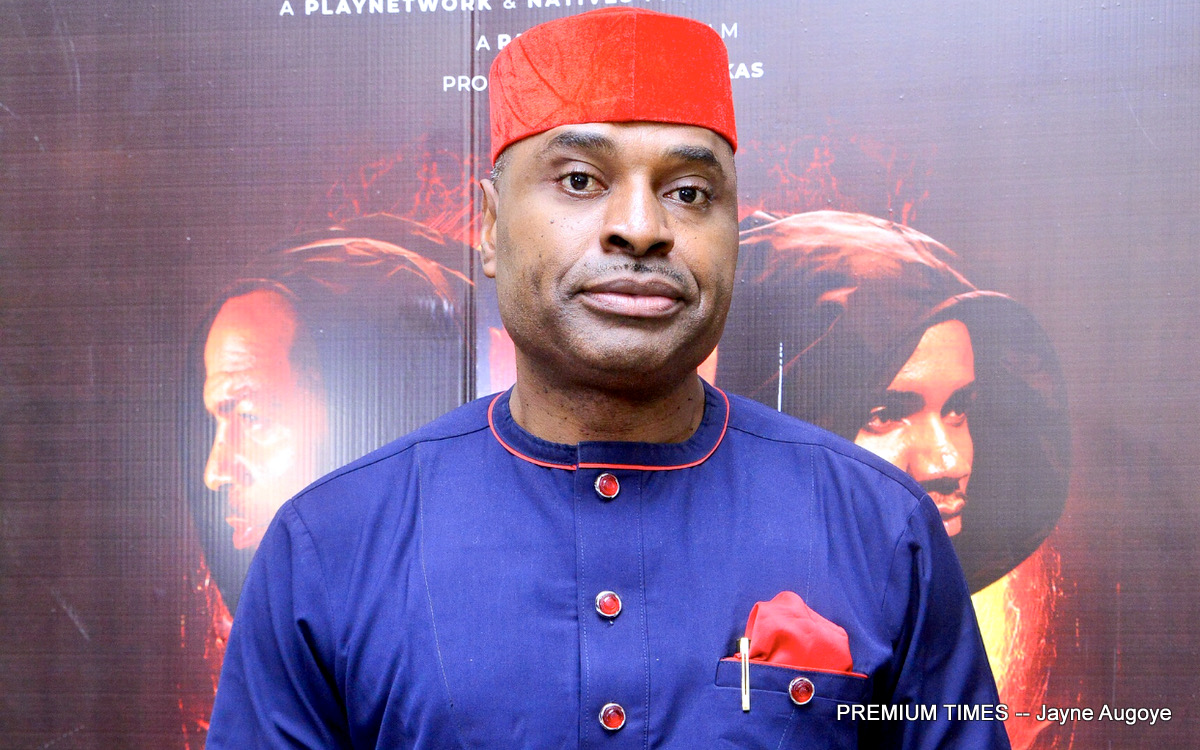
Yet when one looks carefully, a disturbing question emerges: *What exactly did Peter Obi personally do to Kenneth Okonkwo and his anti-Obi ilks?*
• Did Obi embezzle public funds?
• Did he publicly disgrace Kenneth?
• Did he destroy his political career?
• Did he deny him office?
• Did he sponsor attacks against him?
• Did he insult his family?
• Did he persecute him politically?
None of these.
*The real “crime” of Peter Obi appears to be something else entirely: he insists on pursuing politics in his own disciplined, stubborn, highly controlled style – a style that frustrates many veterans of Nigeria’s transactional political culture.*
*Peter Obi is not a natural practitioner of “sharing politics.” He is not wired like the old establishment. And that difference is creating enemies faster than many people understand.*
Kenneth Okonkwo once defended Obi passionately across television stations and public platforms with the conviction of a man who believed Nigeria had finally found a credible alternative. Today, the same Kenneth speaks almost as if Obi represents a danger to Nigeria itself.
So what changed?
• Did Peter Obi suddenly become corrupt overnight?
• Did he become violent?
• Did he abandon prudence?
• Did he suddenly lose competence?
• Did he suddenly stop preaching accountability?
Or did some people simply discover that Obi could not be easily controlled, emotionally blackmailed, commercially negotiated, or politically cornered into the old patronage system?
That is the real conversation many Nigerians are quietly having.
Kenneth Okonkwo’s public history itself naturally feeds this skepticism. Over the years, he has repeatedly moved through different influence ecosystems:
• Nollywood star.
• Evangelical personality.
• Legal commentator.
• Buhari supporter.
• Obi spokesman.
• Now Obi critic.
At every stage, the alliances changed. The rhetoric changed. The loyalties changed. The direction changed.
But one thing consistently remained: Kenneth always stayed close to visibility, relevance, and political opportunity.
Ambition is normal.
Reinvention is normal. But repeated reinvention eventually creates a perception problem.
*Because credibility in politics is not built only on intelligence or eloquence. It is built on consistency. And this is where the contrast with Peter Obi becomes politically powerful.*
Whether one likes Obi or not, his public image has remained remarkably stable for years:
• prudence,
• frugality,
• discipline,
• measured speech,
• institutional approach,
• and unusual caution with money and state resources.
Millions of Nigerians may disagree with his methods sometimes. Many supporters even wish he were more aggressive politically. But very few honestly see him as reckless, extravagant, or politically fraudulent.
That consistency is the foundation of the Obidient Movement. And this is where many analysts completely misunderstand the movement itself.
The Obidient Movement was never fundamentally built by politicians. It was built by accumulated national frustration.
• Fuel prices.
• Inflation.
• Youth unemployment.
• Corruption fatigue.
• Institutional collapse.
• Hopelessness.
• Broken trust.
• Economic suffocation.
• And the growing belief that Nigeria’s old political elite had become detached from ordinary people’s suffering.
Peter Obi merely became the emotional container into which millions poured those frustrations.
That is why the movement behaves differently from traditional Nigerian political structures.
• You cannot easily “decamp” an emotional movement.
• You cannot easily bribe a consciousness.
• You cannot factionalize public frustration the same way you divide party offices.
• You cannot exclude, sideline, or “expel” the very essence and symbol of a consciousness from that consciousness itself.
*The movement exists more in the minds of people than inside political secretariats. And perhaps that is the deeper frustration of many former allies: they discovered that the Obidient Movement was bigger than television appearances, bigger than spokespersons, bigger than political appointments, and even bigger than Peter Obi himself.*
That is why every major attack against Obi strangely ends up strengthening his support base emotionally. Because millions of ordinary supporters interpret many of those attacks not as constructive criticism, but as attempts to drag him back into the very political culture he appears unwilling to practice.
The old order still struggles to understand this phenomenon.
• In traditional Nigerian politics, loyalty is often rented.
• Structures are purchased.
• Crowds are mobilized financially.
• Defections are negotiated.
• Outrage is sponsored.
• Silence is settled.
*But the Obidient Movement disrupted that equation dangerously. It introduced something Nigerian politics fears deeply: organic emotional legitimacy.*
And once people emotionally invest in a movement, attacks alone rarely destroy it. Especially when the attacks come from individuals whose own political journeys appear highly fluid, migratory, and strategically adaptive.
Ultimately, this is no longer merely about Kenneth Okonkwo versus Peter Obi. It is becoming a larger national argument about two political cultures fighting for the soul of Nigeria itself.
• One culture believes politics is fundamentally transactional: alliances, settlements, patronage, negotiated loyalty, managed outrage, and power at all costs.
• The other – however imperfectly – is attempting to build politics around restraint, accountability, prudence, civic awakening, and citizen ownership.
That is the real battle approaching 2027. And perhaps that is why the attacks are becoming more intense.
Because when a political movement survives disappointment, survives propaganda, survives infiltration, survives elite hostility, survives internal betrayal, and still continues growing quietly among ordinary people, it stops looking like ordinary politics.
It starts looking like a national psychological shift. And psychological shifts are very difficult to reverse once a population begins losing fear of the old political order.
*Because in the end, this is no longer merely about Peter Obi. It is about millions of Nigerians who are quietly withdrawing their emotional consent from recycled political actors, rented outrage, purchased loyalties, and professionally managed deception.*
And once a people begin to psychologically detach from a political order that once defined their expectations, fear does not just rise – it begins to collapse inward.
That is the real panic beneath the noise. Not the noise of television debates. Not the noise of social media attacks. Not even the noise of former allies turning critics. The deeper fear is simpler and more unsettling: that Nigerians may have already moved on from the political culture that once held them captive.
*The old order still operates on a familiar assumption – that every movement can be bought, infiltrated, blackmailed, exhausted, or quietly dismantled. But history becomes dangerous the moment ordinary people stop admiring the performers and begin questioning the legitimacy of the entire stage itself.*
And perhaps that is why the attacks keep intensifying: because beneath the propaganda, beneath the defections, beneath the sponsored outrage and rehearsed talking points, the political establishment may already sense what it fears most…
the crowd is no longer hypnotized by the circus.