By Boma West
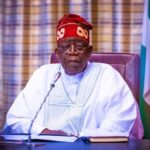
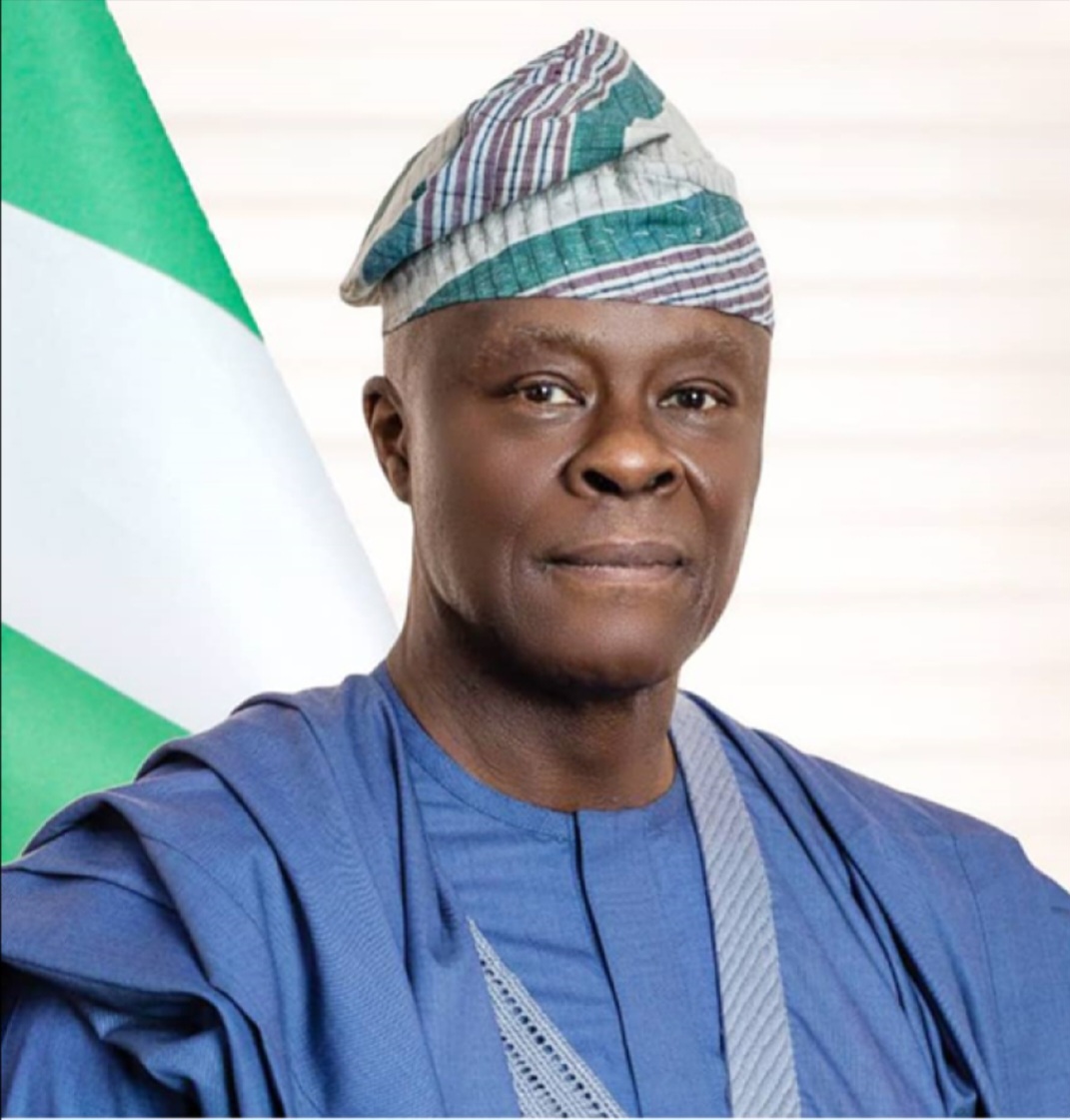
There is a particular kind of political exile in Nigeria that does not come with drums or public drama. It arrives quietly, packaged in the sterile language of bureaucratic reshuffling, wrapped in phrases like “strengthen cohesion” and “synergy in governance.” On April 21, 2026, that language was used to end the ministerial career of Wale Edun, a man who had served President Bola Ahmed Tinubu for decades, stretching all the way back to the Lagos Government House of 1999. But what happened to Edun is not merely the story of a minister who lost his job. It is the story of what happens when a keeper of national accounts begins to speak honestly about what those accounts actually say, and those in power decide that honesty has become inconvenient.
Wale Edun, 70, had served as finance commissioner during Tinubu’s first-term tenure as Lagos governor between 1999 and 2004. He was replaced by Taiwo Oyedele, 50, a former PricewaterhouseCoopers tax expert who had played a central role in the administration’s tax overhaul which took effect at the start of the year. On the surface, this reads like a routine rotation of technocrats. But beneath that surface lies a sequence of events that raises serious and unsettling questions about the relationship between power and accountability in Nigeria’s current political dispensation.
To understand why Edun’s exit matters, you have to go back to December 16, 2025, a Tuesday that will likely become a significant footnote in Nigeria’s fiscal history. That day, Edun appeared before the House of Representatives Committees on Finance and National Planning during an interactive session on the 2026 to 2028 Medium Term Expenditure Framework and Fiscal Strategy Paper, and disclosed that the Nigerian government had initially projected revenue of ₦40.8 trillion for 2025 to fund the ₦54.9 trillion “Budget of Restoration” aimed at securing peace and rebuilding prosperity, but that current performance indicated total revenue for the year was likely to end at about ₦10.7 trillion.

Read that again and let the weight of those numbers settle. Edun said the shortfall was largely driven by weak oil and gas revenues, particularly the petroleum profit tax and company income tax from oil and gas companies, as well as underperformance across other revenue subheads.
The government had set out to collect ₦40.8 trillion. It was on course to collect ₦10.7 trillion. That is not a miss. That is a collapse. A revenue gap of nearly ₦30 trillion represents one of the most staggering fiscal shortfalls in Nigeria’s post-military democratic history, and the minister of finance was announcing it plainly, before the cameras, before the legislators, before the Nigerian public, without the usual smokescreen of spin and creative accounting.
Despite the revenue gap, Edun said the government had met key obligations through what he described as prudent treasury management, noting that salaries, statutory transfers, and domestic and foreign debt servicing were paid as and when due through “skillful, imaginative and creative handling” of available resources. He was doing what good stewards of public finance are supposed to do. He was telling the legislature, which had approved the budget in the first place, the unvarnished truth about how that budget was performing. He also admitted that only about 30 percent of the 2025 capital budget had been funded, with the remainder set to be rolled over into 2026.
What Edun may not have fully calculated was the political consequence of that truth, because it did not exist in a vacuum. It arrived three months after President Tinubu had stood before loyalists in Abuja and made a declaration that now reads, in hindsight, as either a misunderstanding of the numbers or a wilful misrepresentation of the country’s fiscal reality. In September 2025, while addressing stakeholders of the Buhari Organisation who visited him at the Presidential Villa, Tinubu had declared: “Today, I can stand here before you to brag: Nigeria is not borrowing. We have met our revenue target for the year, and we met it in August.” The president was said to be unhappy that Edun publicly contradicted him.
There are those who have tried to reconcile Tinubu’s September declaration with Edun’s December disclosure by arguing that the president was referring specifically to non-oil revenue targets, while Edun was speaking about total consolidated federal revenue. Some analysts argued that Tinubu was correct to say revenue targets were met, as revenue-generating agencies had exceeded their 2025 non-oil targets, pointing to the Nigeria Revenue Service collecting over ₦22 trillion in taxes and the Nigeria Customs Service generating over ₦5 trillion. But even that defence deserves scrutiny. If the president was only bragging about one slice of the revenue pie while leaving Nigerians to assume he meant the whole pie, that is itself a problem of political communication that a finance minister who later reveals the true picture would naturally be blamed for. When leaders speak in partial truths, those who speak the full truth become the problem.
The breaking point reportedly came at a Federal Executive Council meeting on December 10, 2025, just days before Edun’s public testimony to the National Assembly. A heated exchange between Edun and Tinubu over the capital budget crisis grew so tense that the president’s aide-de-camp reportedly moved across the council chamber to quietly advise the minister against raising his voice at the president. An official said, from that point, it seemed the minister’s time was up.
That image, a seasoned technocrat being quietly hushed by security detail inside the very room where Nigeria’s most important economic decisions are supposed to be debated freely, tells you everything about the environment in which Edun was operating. The capital budget issue was not a trivial bureaucratic dispute. At the heart of Edun’s removal were persistent complaints about poor capital budget implementation. Ministries, departments, and agencies had repeatedly raised concerns over funding shortages and delayed releases. Federal lawmakers accused Edun of recording “zero implementation” of the 2025 capital budget despite the National Assembly approving ₦1.15 trillion for capital components. Contractors went unpaid. Infrastructure projects stalled. Nigeria’s traditional January to December budget cycle was being disrupted in ways that sent ripple effects across the entire governance structure.
But rather than engage with the substance of these failures systemically, the presidency did something that Nigerians who have followed power in this country will recognise immediately. Sources in the presidency indicated that Tinubu handed over key financial responsibilities to the then Minister of State for Finance, Dr Doris Nkiruka Uzoka-Anite, effectively sidelining Edun before his eventual dismissal, charging her with the responsibility of improving Nigeria’s fiscal position.This is a classic move in Nigerian political management. Before you remove someone publicly, you strip them of their functions quietly. You make them irrelevant before you make them absent. It is the political equivalent of dimming someone’s lights before switching them off entirely.
And then there is the NNPC dimension, which adds yet another layer to this already complex story. Beyond the revenue shortfall disclosure, Edun had also publicly called for a forensic audit of the Nigerian National Petroleum Company Limited, following a Senate Public Accounts Committee query over a staggering ₦210 trillion discrepancy in the NNPC’s audited accounts covering 2017 to 2023, with the discrepancy broken down into ₦103 trillion in accrued expenses and ₦107 trillion in receivables, both lacking adequate documentation. For a finance minister to publicly recommend a forensic audit of the national oil company, knowing what the NNPC means in the architecture of Nigerian political economy, knowing whose interests are entangled in its operations, was either an act of extraordinary professional courage or a man who had stopped calculating political costs altogether.
Former lawmaker Dino Melaye publicly asked whether Edun was removed because he could not cover up the funds he alleged had been diverted from national revenue. Contractors who had protested delayed payments were seen in viral videos celebrating his removal. These are sharp, politically charged accusations, and they must be weighed carefully. But they also point to a swirling public narrative that the government’s official explanation, the one about strengthening cohesion and improving delivery, has not adequately addressed.
The Secretary to the Government of the Federation, George Akume, stated that the changes were designed to strengthen cohesion and synergy in governance and enhance the administration’s capacity to deliver economic outcomes under the Renewed Hope Agenda, citing Sections 147 and 148 of the 1999 Constitution as the legal basis for the appointments. That language, clinical and institutional, tells us nothing about why a man who spent nearly three years as finance minister was removed two days after his 70th birthday, the very day Tinubu was publicly wishing others happy birthday on social media. Conspicuously missing from Tinubu’s birthday list that week was Wale Edun, who clocked the landmark 70 on April 20. A day later, he was fired from office.
That symbolism in Nigerian politics is rarely accidental.
Now, did Edun perform? That is a fair and necessary question to ask, because removing a minister for incompetence is a legitimate exercise of executive authority. The presidency’s thinking was that Edun was unable to meet major targets, with sources noting that it made no sense for the minister to achieve merely 26.2 percent of his revenue target, and that it was inappropriate for the minister to announce such gargantuan failure before the general public. There is validity in parts of that argument. Revenue collection under Edun’s watch was deeply disappointing. Capital budget implementation was poor. Ministries complained repeatedly about funding gaps. These are real governance failures that cannot be dismissed in the rush to frame Edun as a martyred truth-teller.
Edun often argued that there were not enough funds to service capital projects because of the federal government’s expenditure priorities, namely debt service, salaries, and pensions. This is not a dishonest argument. Nigeria’s debt servicing costs have consumed an obscene proportion of revenue for years, and no minister of finance can manufacture money that the system has not generated. But it also raises a question about whether Edun was the right person for the job from the very beginning, or whether he was a loyal technocrat placed in a position that was structurally impossible to succeed in, and then blamed when that structural impossibility became undeniable.
In his statement after leaving office, Edun said the administration inherited a fragile economy but worked collectively to stabilise the macroeconomic environment and strengthen fiscal sustainability, noting that economic growth improved from about 2% to over 4%, while inflation declined significantly from These are not fictional numbers. There were genuine macro-stabilisation gains during his tenure, and a complete assessment of his performance cannot ignore them. But in Nigerian political culture, macro numbers rarely save a minister. What saves a minister is the president’s confidence. And that confidence, built over decades of loyalty and shared history, shattered over a few months of uncomfortable fiscal truths.
This is where the political calculation becomes fascinating and troubling at the same time. One of the oldest tensions in governance anywhere in the world, but particularly acute in environments like Nigeria, is the tension between the political leader’s need to project confidence and optimism, and the technical minister’s obligation to speak accurately about what the data shows. Tinubu is a political animal in the truest sense, a man who built his entire career on the projection of strength, control, and forward momentum. When his finance minister stood before the National Assembly and told lawmakers that the 2025 budget projection of ₦40.8 trillion would likely close at ₦10.7 trillion, he was not just disclosing a fiscal gap. He was, in the eyes of the presidency, undermining the political narrative that the Renewed Hope Agenda was working.
That narrative is everything to Tinubu right now. His administration is approaching the midpoint of a first term that has been defined by painful reforms, including the removal of the fuel subsidy and the unification of the foreign exchange rate, both of which were necessary but have extracted enormous costs from ordinary Nigerians. Insiders close to the presidency say Tinubu had asked Edun to leave honourably as far back as October last year, but Edun lobbied to keep his position. That detail is important. It means the decision to remove him was not a sudden reaction to any single event but a sustained presidential dissatisfaction that had been building for months. The December disclosures may have accelerated the timeline, but the verdict had already been forming long before.
Which brings us to the central question that hangs over this entire affair. Was Edun’s sacking politically motivated? The answer, assessed against the available evidence, is almost certainly yes, at least in significant part. But the more important question is this: politically motivated to achieve what exactly?
In Nigerian political architecture, a finance minister who publicly announces a ₦30 trillion revenue shortfall, calls for a forensic audit of the NNPC, raises his voice at the president in the cabinet chamber, and reveals that the capital budget has essentially not been implemented creates multiple categories of political danger simultaneously. He embarrasses the presidency before the legislature. He gives the opposition ammunition they could not have manufactured themselves. He disrupts the carefully managed narrative of economic reform and fiscal progress. And perhaps most dangerously, he begins to sound less like a loyalist managing the nation’s books and more like a conscience speaking inconveniently on behalf of the public record.
Power does not tolerate that posture indefinitely anywhere in the world. In Nigeria, it tolerates it for even less time. The political system here is built on a loyalty architecture in which the president is the sun and ministers are planets. Planets are expected to reflect light, not generate it independently. When a minister begins to generate light through public disclosures that outshine or contradict the presidency’s messaging, the gravitational pull of that system will eventually send that planet out of orbit.
Edun joins a list that includes Yemi Osinbajo, Rauf Aregbesola, and others who were once part of the tight-knit circle that defined Tinubu’s political machinery, men who knew him intimately and were trusted allies and confidants, only to find themselves on the outside looking in when the political calculus changed. This is a pattern, not an anomaly. In Nigerian politics, proximity to power is not protection from power. Sometimes it is the very thing that makes the eventual departure more brutal, because the longer you have been trusted, the more your departure looks like betrayal to those who ordered it.
What Wale Edun’s story ultimately illustrates is a deeper and more systemic dysfunction in how Nigeria manages the interface between political governance and technical governance. Finance ministers are supposed to be the stewards of public money and the honest reporters of fiscal reality. When honest reporting becomes a political liability, when the numbers a minister presents to the National Assembly are held against him in Aso Rock, when transparency at the legislature creates trouble at the cabinet table, something is fundamentally broken in the governance architecture. The problem is not Wale Edun. The problem is a system that punishes accuracy and rewards the management of appearances.
Nigeria cannot afford that system. Not at this moment in its history, with inflation still cutting deeply into the lives of ordinary citizens, with contractors going unpaid, with infrastructure projects stalled, and with a public that is increasingly sophisticated in its ability to read the gap between what government says and what government does. The next finance minister, Taiwo Oyedele, inherits not just a ministry but a precedent. That precedent, set on April 21, 2026, says this: in Nigeria, telling the full truth about public money remains, at its core, a political risk. Until that changes, no amount of technocratic reshuffling will fix what is actually broken.