By Idowu Ephraim Faleye | +2348132100608
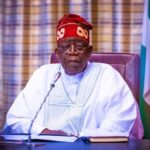
Since Nigeria returned to democratic rule in 1999, no president has confronted the nation’s economic contradictions as directly and aggressively as President Bola Ahmed Tinubu. Previous administrations spoke about subsidy removal, exchange rate reforms, fiscal discipline, and economic diversification, yet most avoided decisive action because of the political consequences attached to such reforms.
Tinubu, however, assumed office and immediately removed fuel subsidy, unified the foreign exchange market, halted the culture of endless monetary financing, and forced Nigeria onto the difficult but necessary path of economic restructuring. Those decisions triggered hardship across the country, but they also exposed a reality many Nigerians had ignored for years: the old economic system was already collapsing long before Tinubu arrived. What many citizens are experiencing today is not merely the pain of reform, but the accumulated consequences of decades of postponed economic decisions.
The truth is that every president of the Fourth Republic largely operated within a consumption-driven economic structure sustained by oil revenue, subsidy spending, artificial exchange rates, and borrowing. Olusegun Obasanjo stabilised the economy after military rule and successfully built foreign reserves from less than $5 billion to over $43 billion, while also securing debt relief that gave Nigeria breathing space. Yet even under Obasanjo, a former military general, fuel subsidy dependency remained untouched, while the structural distortions within the foreign exchange market were left unresolved because of their political implications.

The late Umaru Musa Yar’Adua presided over some of Nigeria’s highest GDP growth years, with growth rates reaching nearly 8–9 percent. However, that period of expansion was heavily oil-driven and lacked deep structural transformation. Major reforms in energy pricing, forex management, and public finance restructuring remained largely untouched. His administration maintained stability, but it did not fundamentally redesign the economy.
Goodluck Jonathan expanded infrastructure and oversaw years of strong economic output, but structural vulnerabilities deepened. Dependence on oil revenue continued, forex pressure intensified, subsidy spending remained enormous, and fiscal leakages persisted. His government could not survive the political resistance that followed attempted reforms, but Tinubu has so far succeeded where Jonathan politically struggled.
The late Muhammadu Buhari adopted a protectionist economic model built around strict forex controls, heavy market intervention, import restrictions, and delayed exchange-rate adjustments. While those policies were intended to protect Nigerians, they weakened investor confidence, pushed the country deeper into fiscal and foreign exchange crises, and significantly slowed economic growth.
Tinubu inherited perhaps the most fragile economic foundation any civilian president has faced since 1999. The economy he met was burdened by unsustainable subsidy obligations, rising debt-servicing costs, declining oil production, forex instability, weak investor confidence, low government revenue, and mounting fiscal pressure. Instead of postponing difficult decisions for political convenience, he chose to confront the crisis immediately, and that is what fundamentally separates his presidency from previous administrations.
While critics focus heavily on inflation, currency depreciation, and the rising cost of living, history shows that major economic restructuring often begins with painful adjustments before stability eventually emerges. Countries that transformed their economies rarely achieved that transition through politically convenient policies. Tinubu appeared to understand that Nigeria could not continue subsidising consumption while neglecting infrastructure, industrialisation, and productive investment.
That is why his administration has pursued reforms that extend far beyond routine governance. Under Tinubu, Nigeria introduced NELFUND to expand access to higher education financing, launched CreditCorp and the National Credit Guarantee Company to strengthen consumer and industrial credit systems, and pushed for local government autonomy in ways previous administrations hesitated to attempt.
His government also introduced the Naira-for-Crude policy, reduced fiscal pressure on public finance, proposed major tax reform initiatives, and reportedly increased non-oil exports within two years. The administration cleared billions of dollars in forex backlog, reduced exposure to IMF debt, stabilised the Central Bank system, and curtailed excessive dependence on money printing to sustain federal allocations. Even many state governments that previously struggled to pay salaries through borrowing are beginning to experience improved fiscal conditions.
Beyond fiscal reforms, Tinubu’s administration appears determined to rebuild productive sectors of the economy simultaneously. The Lagos-Calabar Coastal Highway and the proposed Sokoto-Badagry Super Highway represent some of the most ambitious infrastructure projects in recent Nigerian history, while the expansion of Compressed Natural Gas initiatives signals an attempt to reduce transportation dependence on expensive imported fuel.
His government has also moved aggressively on oil theft reduction, mining reforms, maritime monitoring systems, agricultural processing zones, and mortgage expansion initiatives aimed at stimulating industrial and housing growth. More importantly, Tinubu’s reforms are not limited to roads and finance alone. His administration has introduced youth-focused programmes such as 3MTT, TVET expansion, DL4ALL, Nutrition 774, the National Health Fellows Programme, and ward-level development initiatives designed to build a digitally skilled and economically productive population.
Unlike previous governments that relied almost entirely on oil revenue expansion, Tinubu’s economic model seeks to diversify productivity across agriculture, technology, manufacturing, logistics, mining, and digital services.
Critics may argue that the hardship is too severe, and indeed millions of Nigerians are struggling under inflationary pressure. Yet the deeper question remains whether Nigeria could have survived much longer without confronting those distortions. For decades, fuel subsidy consumed trillions of naira that could have gone into healthcare, infrastructure, education, power, and industrial investment, while artificial exchange rates encouraged rent-seeking, speculation, and corruption that weakened productive sectors of the economy.
Tinubu’s presidency is therefore not merely managing Nigeria’s problems; it is attempting to redesign the structure that created them. Even the increase in the national minimum wage to ₦70,000 reflects an acknowledgement that reforms must eventually translate into improved social welfare.
Meanwhile, rising foreign reserves, trade surplus figures, improved revenue generation, growing non-oil exports, and stronger investor interest suggest that the foundation of a new economic direction may already be forming beneath the current hardship.
Posterity often judges leaders differently from the emotions of the moment because transformational reforms rarely receive immediate applause from populations experiencing temporary pain. Obasanjo may be remembered for stabilising Nigeria after military rule, Yar’Adua for strong GDP growth, Jonathan for infrastructure expansion, and Buhari for economic protectionism, but Tinubu may ultimately be remembered as the president who confronted the deepest structural contradictions within Nigeria’s economy.
Whether his reforms fully succeed will depend on how effectively his government converts fiscal gains into visible improvements in jobs, production, electricity, security, and living standards over time, especially if he secures a second term. However, what already distinguishes him from every president of the Fourth Republic is his willingness to pursue politically dangerous reforms that others repeatedly avoided.
If those reforms eventually produce long-term prosperity, industrial expansion, and economic stability, then Bola Ahmed Tinubu may not simply rank above his predecessors; he may become the defining reform president of Nigeria’s democratic era.
*Idowu Faleye writes from Ado-Ekiti | +2348132100608*