
By Okoi Obono-Obla
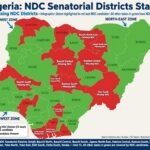
The chicken is finally coming home to roost. The issue of continued insecurity in eight Northern States has been raised by some senators, who are demanding that the Federal Government suspend political activities in these regions due to persistent insecurity and vicious attacks carried out by terrorists and bandits against military personnel, security operatives, and innocent civilians. The opposition has often used insecurity, banditry, and terrorism as political tools against the government, rather than working collaboratively to address a problem that began in the Northern States as far back as 2007.
Little did the opposition recognize that the Constitution of the Federal Republic of Nigeria, 1999, provides that the Federal Government can halt elections where there is a complete breakdown of law and order, or even an apprehension of such a breakdown. We have seen instances where opposition figures amplify attacks on military and security personnel through social media, as exemplified by the incident at Jilli Market in Borno State. Although the market had been closed for five years, it unfortunately became a hub for insurgent logistics, prompting precision strikes by the Nigerian Air Force.
Section 305 of the Constitution of the Federal Republic of Nigeria (as amended) empowers the President to declare a state of emergency, which may lead to the suspension of electoral processes if public order or safety has collapsed.

Key details regarding Section 305 include:
– Conditions: Applicable during war, imminent invasion, breakdown of law and order, or a clear and present danger requiring extraordinary measures.
– Procedure: The declaration must be published in the gazette and approved by two-thirds of both the Senate and the House of Representatives.
– Impact on Elections: If a state of emergency is declared, the Independent National Electoral Commission (INEC) may suspend elections in affected areas due to threats to public safety.
While Section 305 clearly allows for emergency declarations, it remains contentious whether it permits the suspension of elected officials themselves. This issue has often been legally contested, though recent rulings have affirmed broad emergency powers to manage crises.
Conclusion:
Nigeria’s constitutional framework provides mechanisms to safeguard public order during crises. However, the politicization of insecurity undermines collective efforts to restore peace. What is urgently needed is a unified front—government, opposition, and civil society working together—to confront terrorism and banditry, rather than exploiting them for political gain. As my people say: “When it rains, it does not fall on the roof of one person alone. It will surely rain on the roofs of everyone in the community.” Insecurity affects us all, and only through collective responsibility can lasting peace be achieved.