By Okoi Obono-Obla
29th July 1966 – 60 Years After: The Counter-Coup in Ibadan and the Road to Civil War
Today, 29th July 2026, marks the 60th anniversary of a watershed event in Nigeria’s history.
On 29th July 1966, in Ibadan, then the capital of the Western Group of Provinces, an event occurred that, among other chains of events, culminated in the tragic Nigerian Civil War which started on 6th July 1967 and ended on 15th January 1970.
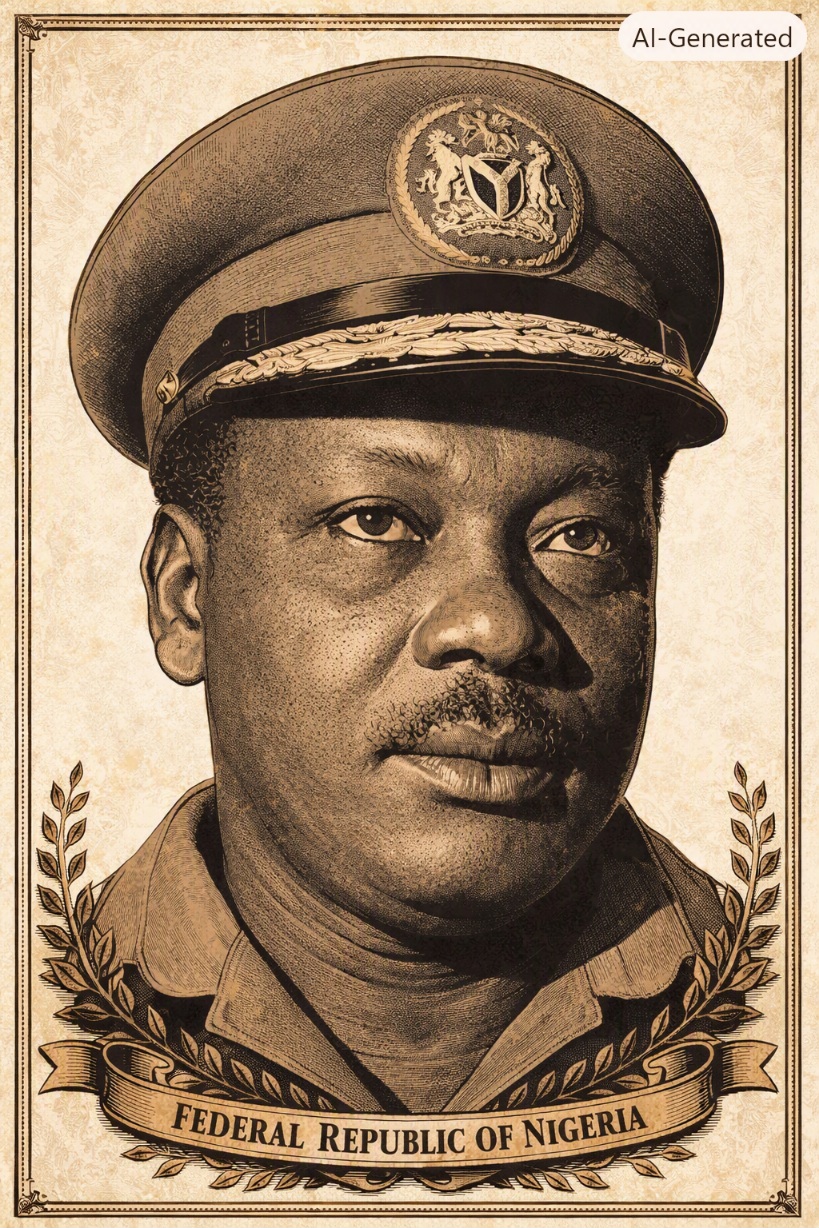
The Head of State and Supreme Commander of the Armed Forces, Major-General Johnson Thomas Umunnakwe Aguiyi-Ironsi, from Ibeku-Umuahia in present-day Abia State, then in the Eastern Group of Provinces, born on 3rd March 1924, was on a state visit to Ibadan. His host, Lt. Colonel Adekunle Fajuyi, the Military Governor of the Western Group of Provinces, was with him.
Both men were seized by soldiers led by then Major Murtala Mohammed and whisked away to an unknown destination, where they were later killed. It was essentially a revenge counter-coup in response to the military coup of 15th January 1966.
The 15th January 1966 coup, led by a group of army officers under Major Chukwuma Kaduna Nzeogwu, had toppled the civilian government of Prime Minister Sir Abubakar Tafawa Balewa and led to the killing of several political and military leaders from the Western and Northern Regions, including Prime Minister Sir Abubakar Tafawa Balewa, the Premier of the Northern Region Sir Ahmadu Bello, the Premier of Western Nigeria Chief Samuel Ladoke Akintola, and the flamboyant Minister of Finance Chief Festus Okotie-Eboh, among others.
The Nzeogwu-led coup was eventually countered and suppressed, and Nzeogwu was captured and imprisoned by Major-General Aguiyi-Ironsi.
Aguiyi-Ironsi was subsequently named Military Head of State on 17th January 1966, a position he held until 29th July 1966 when he was overthrown and killed by a group of Northern army officers.
During his brief tenure, Aguiyi-Ironsi took several controversial decisions that generated widespread resentment. These included centralizing the Nigeria Police Force, abolishing the federal system and replacing it with a unitary system through the Unification Decree, unifying the civil service, and other measures that were perceived as favouring one section of the country. These decisions triggered the counter-coup.
Aguiyi-Ironsi was married to Victoria Ironsi. His son, Thomas Aguiyi-Ironsi, was appointed Nigeria’s Minister of Defence on 30th August 2006, forty years after his father’s death.
In honour of his memory and service to the nation, a major boulevard in the Federal Capital Territory, Abuja, is named after him.