By Okoi Obono-Obla
The Akpa Are Not Jukun: A Rejoinder to Amah Jones on Atakpa, Jukun Hegemony, and the Atam Identity in the Cross River Basin
Introduction
In his rejoinder to my article titled From the Cross River to the Caribbean: The Atam Identity and the Agwagwune Echo in Jamaica, published on 27th July 2026, Mr. Amah Jones emphatically stated that the Jukun people are the Akpa people. I respectfully disagree with this conflation.

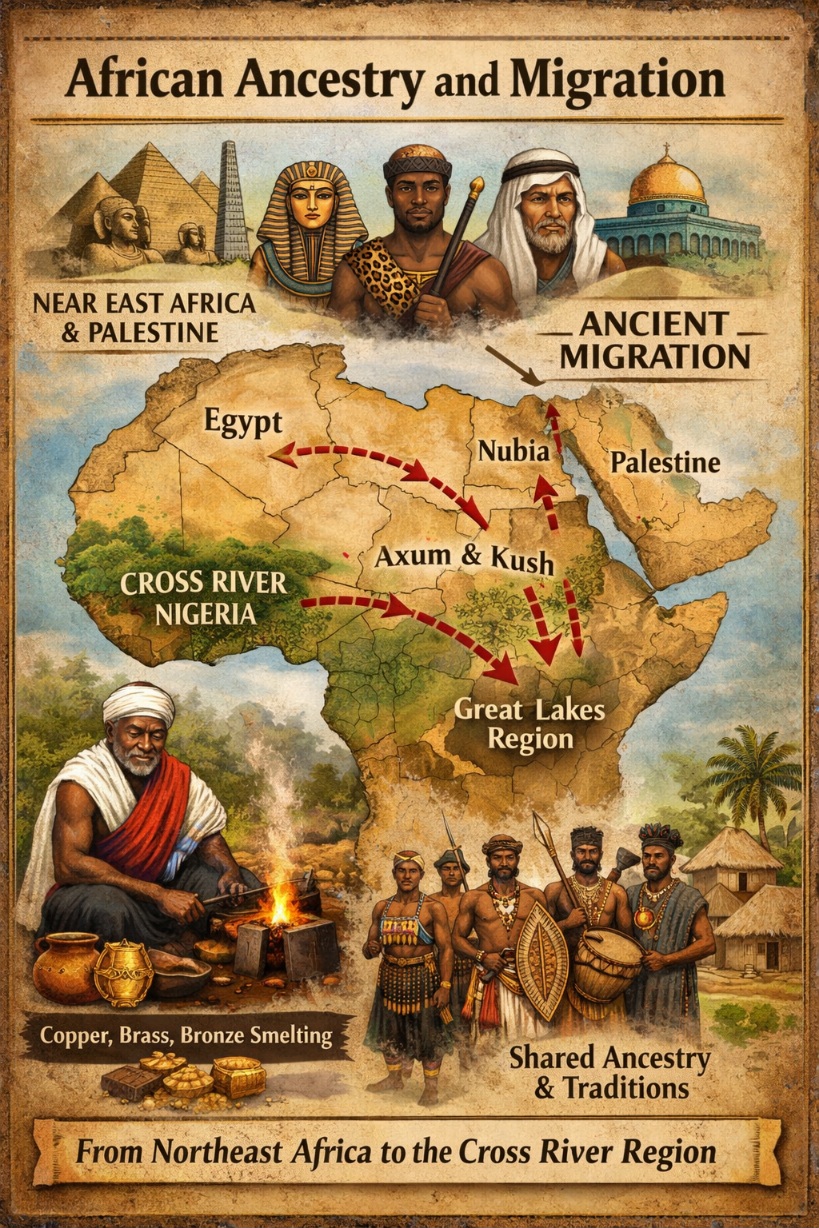
The Jukun people are presently concentrated in Taraba State in the North-Central geopolitical zone of Nigeria. They feature prominently in the oral traditions of the various cultures and peoples of the Cross River Basin and in the South-Western Province of the Republic of Cameroon. They were the governing elite of the Wukari Confederation, otherwise known as the Kwararafa Empire, which reigned between the 15th and 18th centuries. The collapse of that empire led to a massive movement of populations from the Benue Valley to present-day Ebonyi and Cross River States, but its sphere of influence encompassed what are now Benue, Nasarawa, Plateau, Kaduna, Enugu, Delta, and Abia States of Nigeria.
The Arikpo Thesis on Origins and Migration
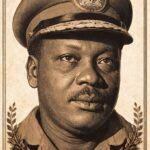
Dr. Okoi Arikpo, the foremost lawyer and anthropologist, in his Lugard Lecture series of 1957, alluded to the fact that the Yakurr people migrated to the region of West Africa which is today Nigeria and Cameroon from the Sudan, alongside the Jukun. They settled for a while in what is now southern Borno before moving southwards.
In the oral tradition of the Yakurr, the Akpa people feature prominently, and there is no doubt that the Yakurr people are part of the powerful groups known as Akpa. This manifests even in greetings usually chanted by priests such as Okpebri, such as Uwou Akpa, which means “Father Akpa”.
The Atakpa Evidence: Sultan Bello and Clapperton
Sultan Mohammed Bello of the Sokoto Caliphate, in his writings and in what he told the Scottish explorer Hugh Clapperton, stated that the King of the Jukun owned a port in Calabar known as Atakpa. Hugh Clapperton [1788–1827] was a Scottish naval officer and African explorer. He became the first European to provide a firsthand account of northern Nigeria and map parts of Central Africa alongside colleagues Walter Oudney and Dixon Denham, later dying of dysentery near Sokoto during a second expedition to find the mouth of the River Niger.
Dr. Okoi Arikpo on Jukun Origins
Dr. Okoi Arikpo wrote thus:
“The Jukun are undoubtedly people of Hamitic extraction who, according to tradition, migrated into Nigeria from the Kordofan and the region of the Nile valley. They claim kingship with the early ruling Berber race of Kanem, a type of Saharan Berbers known to the Arabs as the Zaghawa, and remnants of whom still occupy the region to the north of Wadai and Darfur.”
“A Wukari version of the Jukun legend of origin says that the Jukun came from the Yemen in company with the Kanuri, and together, they settled in Bornu. Here, a quarrel broke out over the question of succession to the kingship. This resulted in a breakup of the tribe. The Kanuri remained in Bornu while the Jukun migrated southwards to establish the settlements of Kona, Kororafa, Pindiga, and Wukari. Other versions of the Jukun group which broke away from the Kanuri and the Kona tradition add that some of the Jukun, after separating from the Kanuri, proceeded down the Benue as far as south of Idah, whence they drove out the Yoruba rulers and established the kingdom of Igala.”
“Whatever may have been the truth about these stories, there is some historical evidence that between A.D. 500 and 1400, these Zaghawa tribes dominated the region between Darfur and the valley of the Shari River; They established a powerful kingdom in the region of Fika, Biyiri and Ribadu in the valley of the Gongola River about A.D. 1250. From this centre, Jukun influence radiated in all directions until by A.D. 1550, the Jukun occupied the whole of South-western Bornu…”
Arikpo on the Jukun-Akpa-Aro-Calabar Nexus
Dr. Arikpo also linked the Jukun to the Arochukwu kingdom thus:
“The Jukun at one time conquered most of the region of the Niger-Benue confluence and extended their influence eastward to central Cameroons and southwards to the Bight of Biafra. They were called by the Kanuris as Kwana, by the Hausas as Kwara-Akpa, and by many of the tribes with whom they came into contact as the Akpa, the name by which Jukun designate themselves. It may be of some significance that the original inhabitants of what is now known as Calabar were also known as the Akpa.”
“The Jukun were in contact with these early inhabitants of Calabar and were probably ethnically and culturally related to them. Indeed, many of the traditions of origin of the peoples of the Cross River valley refer to the Akpa invasions. For instance, an Aro-Chukwu legend says that the Aros were the descendants of Akpa people who migrated into their present land from the northeast under the leadership of a king named Kakakpu. They drove out the original inhabitants and established the original seven Aro villages. The Akpas, whose skills and foresight soon made them masters of the surrounding territories, adopted the languages of their new neighbours and established trading posts over a wide area…”
Dr. Arikpo further established the linkage between the Jukun and Calabar, Ogoja, and Southern Cameroon, thus confirming Mohammed Bello:
“The Kakakpu of the Aro legend may well be the same legendary figure as the Katakpa of the Jukun. Legends about Akpa invasions are widespread amongst the people of Calabar, Ogoja, and Cameroons provinces; many of them have in their traditions of origin variants of the Akpa invasions. They all relate how they migrated from somewhere north of the Cross River as a result of pressure from the Akpa. All these peoples like the Efik-Ibibio, Aros, Ejagham, and Yakurr must have come from an area somewhere in the valley of the Benue. It is, of course, possible that the term Akpa was applied to a wide range of culturally distinct peoples all over the area of former Jukun influence. The Jukun played a prominent part in the slave trade, and the trade must have been one of the main incentives to the Jukun kings in carrying out war into distant regions such as Kano and Bornu…”
The Akpa Confederacy: A Distinct Ethnic Nation
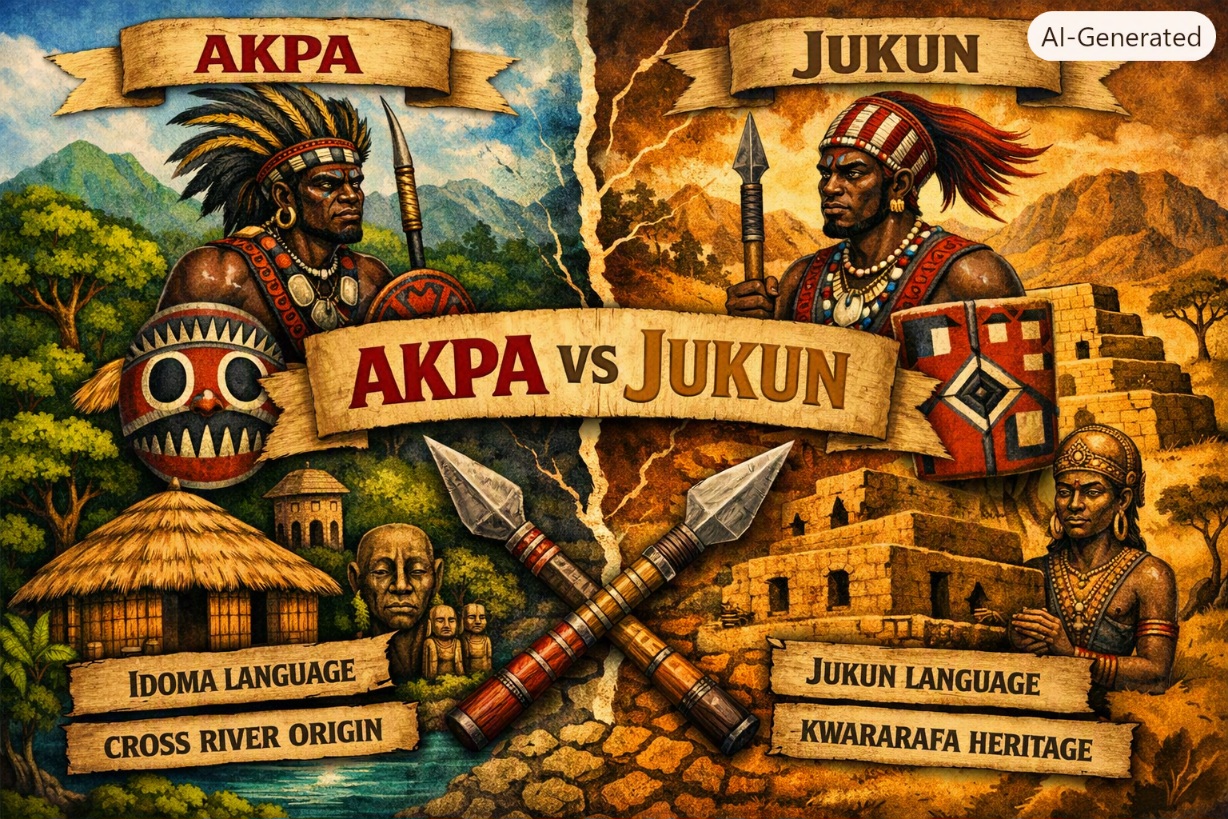
My contention is therefore that while the Jukun exercised imperial hegemony and were often called Akpa by their neighbours, the Akpa were a distinct ethnic nation who formed the core of a larger confederated kingdom or empire.
This position is supported by Ellie Yari, who is from Ogbia Local Government Area of Bayelsa State, who argues that the Ogbia people were originally Akpa people. He notes that the Jukun people were different from the Akpa but perhaps lived together and were part of the same political entity in the past. He stated thus:
“We definitely have relatives amongst them. They were part of the Akpa Confederated kingdom, it was like an empire. But they are a distinct group who trace their ancestry to I think Yemen. Idoma was also part of the confederacy but they are also a distinct group. We have relatives among all the groups that made up the confederacy. Akpa was an ethnic group who had its own distinct identity, while the confederacy included others like Akweya, Jukun etc. So even though we have relatives amongst them, they are distinct. The Jukuns are also an ancient group. All these groups share words with us because the Akpa language was the lingua franca of the confederacy. The confederacy is different from the ethnic nation. When Ajayi Crowther went to the elders in Igala to document their history, they told him that Akpa is one of the three ethnic groups that made up Igala. They told him that the Akpa language died. This shows Akpa had its own language and from the story you’ll also see that Akpa ethnic group was there before others joined and it became what it is now.”
Conclusion
In sum, the historical and oral evidence suggests a critical distinction between political nomenclature and ethnic identity. The term “Akpa” functioned on two levels: first, as the self-designation of a distinct, ancient ethnic nation whose language served as a lingua franca and whose descendants are traceable among the Ogbia, Yakurr, and Atam peoples; and second, as an exonym applied by Hausa, Kanuri, and Cross River peoples to the Jukun imperial elite of the Kwararafa Confederacy.
To equate the Jukun with the Akpa is to confuse the empire with its foundational ethnic core. The Jukun were a leading constituent and ruling elite within the broader Akpa confederacy, but they were not synonymous with the Akpa people themselves. Recognizing this distinction is essential to understanding the Atakpa port in Calabar, the Yakurr traditions of Uwou Akpa, and ultimately, the Atam identity that echoes in Jamaica.
Footnotes
Amah Jones, Rejoinder to Okoi Obono-Obla, From the Cross River to the Caribbean: The Atam Identity and the Agwagwune Echo in Jamaica, July 27, 2026.
Jukun history and Wukari Confederation: See C. K. Meek, The Northern Tribes of Nigeria (1925) and J. H. Greenberg’s classification of Benue-Congo migrations.
Dr. Okoi Arikpo, Lugard Lectures (1957), cited in Okoi Arikpo, The Development of Anthropology and Ethnographic Study in the Cross River Region.
Mohammed Bello’s account to Hugh Clapperton on Atakpa is documented in Dixon Denham, Hugh Clapperton and Walter Oudney, Narrative of Travels and Discoveries in Northern and Central Africa (1826).
Hugh Clapperton (1788-1827) biographical details: Bovill, E.W., Missions to the Niger, Vol II.
Arikpo, Lugard Lectures, Op. cit., p.12-14.
Ibid, p.15.
Ibid, p.18-20.
Ibid, p.22.
Ellie Yari, Personal Communication, Ogbia LGA, Bayelsa State, July 2026, on Ogbia-Akpa origins.
Samuel Ajayi Crowther, Journal of an Expedition up the Niger and Tshadda Rivers (1855) – Notes on Igala traditions referencing Akpa as one of three founding groups.
Bibliography
Arikpo, Okoi. The Origin of the Yakurr People and Other Essays: Lugard Lecture Series. 1957.
Bello, Mohammed. Infaku’l-Maysur. c. 1812.
Crowther, Samuel Ajayi. Journal of an Expedition up the Niger and Tshadda Rivers undertaken by Macgregor Laird Esq. in Connection with the British Government in 1854. London: Church Missionary House, 1855.
Denham, Dixon, Clapperton, Hugh, and Oudney, Walter. Narrative of Travels and Discoveries in Northern and Central Africa, in the Years 1822, 1823, and 1824. London: John Murray, 1826.
Meek, C. K. The Northern Tribes of Nigeria: An Ethnographical Account of the Northern Provinces of Nigeria Together with a Report on the 1921 Decennial Census. London: Oxford University Press, 1925.
Obono-Obla, Okoi. From the Cross River to the Caribbean: The Atam Identity and the Agwagwune Echo in Jamaica. July 2026.