By Okoi Obono-Obla
Politics, Tradition, and the Chieftaincy Crisis in Ugep,(1950s–1970s) Cross River State:
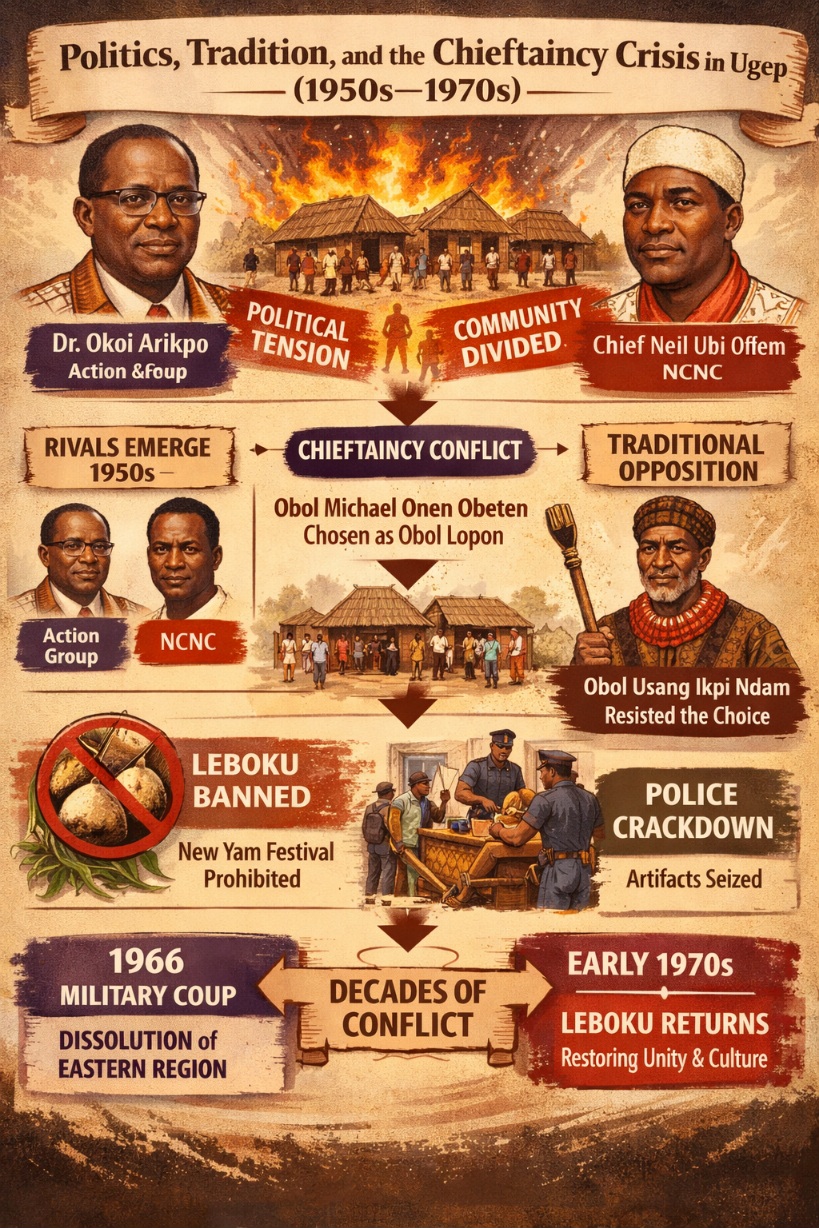
When a traditional African community that had largely preserved its pristine customs and traditions became enmeshed in political conflicts precipitated by bitter rivalry between the Action Group and the National Council of Nigeria and the Cameroons (NCNC), one can imagine the cauldron of combustion it would produce. This was the fate of Ugep, which became embroiled in a bitter and fratricidal political conflagration lasting almost three decades, deeply affecting the stool of the Obol Lopon of Ugep.
Ugep suddenly emerged as a major political hub in the Eastern Region of Nigeria in the 1950s due to its large population of about 17,500 and the prominence of two of its leading sons: Dr. Okoi Arikpo SAN and Chief Hon. Neil Ubi Ofem (MBE). Dr. Arikpo, having founded the United Nigerian Independent Party in 1953 after a crisis of confidence within the NCNC, aligned with the Action Group. Meanwhile, Chief Neil Ubi Ofem became a strong NCNC leader in Ugep. Their rivalry polarized the community, dragging it from its indigenous governance system into the turbulence of European-style parliamentary politics.

The crisis soon engulfed the institution of the Obol Lopon. Chief Neil Ubi Ofem, a member of the Ugep royal matriclan Leboljima, witnessed two Obol Lopons from his family die in quick succession within four years—an unprecedented event in over a century. To appease the gods, tradition demanded that a successor be chosen from outside Leboljima. However, politics complicated the process. Chief Neil Ubi Ofem, leveraging his NCNC influence and the support of the Eastern Nigeria Government, backed Obol Michael Onen Obeten, even though he was not from Leboljima. This angered traditional chiefs such as Obol Usang Ikpi Ndam, the Ebiyang (Obol Leboku), who belonged to Yakunkunebol, a lineage within Leboljima.
Obol Usang Ikpi Ndam, a wealthy and principled traditionalist with early exposure to trade and missionary work, strongly opposed Chief Neil Ubi Ofem’s political interference. His resistance triggered a chieftaincy crisis that engulfed Ugep for more than two decades. The consequences were catastrophic: the government of Eastern Nigeria banned the celebration of Leboku (the New Yam Festival), and Obol Usang Ikpi Ndam—my maternal grandfather—was falsely accused, with police seizing sacred artifacts used for Leboku rituals. The community was thrown into unprecedented pandemonium.
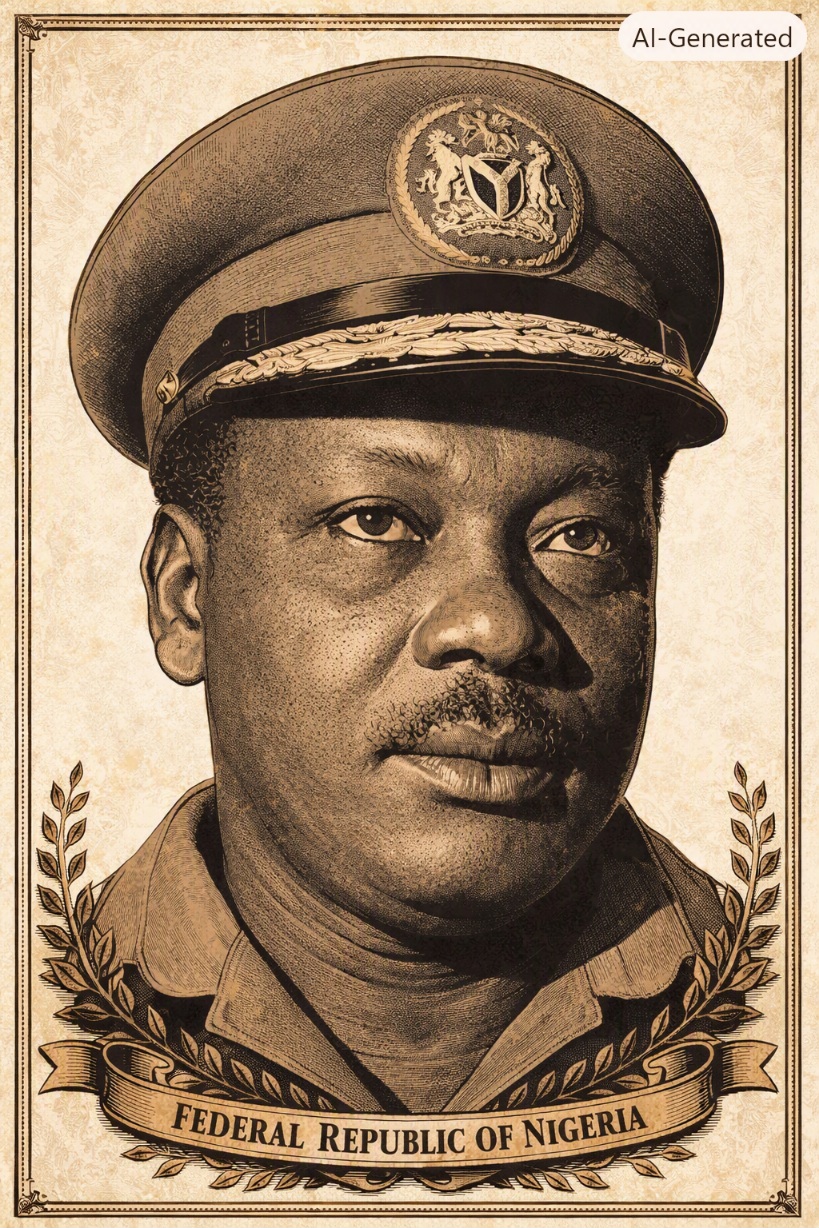
From the mid-1950s until the early 1970s, Leboku was never celebrated. The military coup of January 15, 1966, which dissolved democratic institutions and dismantled the Eastern Region, eventually weakened Chief Neil Ubi Ofem’s political clout. This brought calm to Ugep, and Leboku was resurrected, restoring cultural pride and unity after decades of turmoil.
Conclusion
The Ugep crisis illustrates how the intrusion of partisan politics into traditional African institutions can destabilize communities, erode cultural practices, and fracture unity. Yet, it also demonstrates resilience: despite decades of political and cultural upheaval, Ugep revived its traditions, reaffirming the enduring strength of indigenous identity.