By Okoi Obono-Obla
The Origins of the Name Biafra
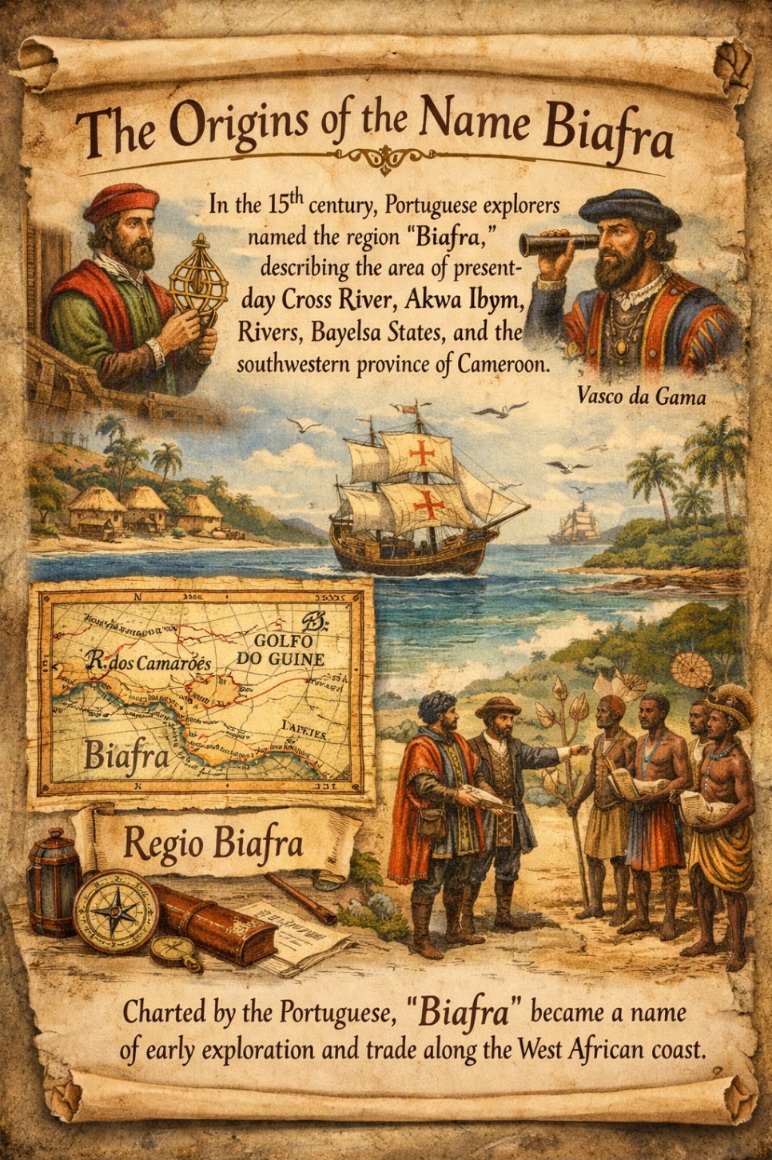
Biafra was the name Portuguese explorers in the 15th century used to describe the region encompassing present‑day Cross River, Akwa Ibom, Rivers, and Bayelsa States of Nigeria, as well as the southwestern province of the Republic of Cameroon. Early navigators such as Duarte Pacheco Pereira and Vasco da Gama, who charted the Gulf of Guinea and beyond, recorded this coastal expanse as part of their maritime encounters with West Africa. The term “Biafra” appeared in maps and chronicles of the era, reflecting the Portuguese fascination with the rich waterways, trade routes, and diverse peoples of the Niger Delta and adjoining territories.
This historical naming underscores the deep imprint of European exploration on African geography, where Portuguese cartographers and sailors left enduring legacies in nomenclature and mapping. The resonance of “Biafra” would later echo in modern history, carrying both cultural and political significance.

Conclusion: The Portuguese designation of Biafra in the 15th century was not merely a geographical label but a marker of early global contact, trade, and cultural intersections along the West African coast.