by Okoi Obono-Obla
On the 30th and 31st of December 1935, when dialogue failed in Ugep, a bloody conflict erupted between three wards — Ikpakapit, Bikobiko, and Ijiman — leading to a breakdown of law and order. Eventually, reason prevailed, and dialogue was restored to bring peace.
This conflict led to the arraignment of Obol Mbui Ubi, also known as Obol Lopon, who was accused of firing his gun at rioters attempting to set his house ablaze. He was charged with the murder of one Eteng Usani, tried, and sentenced to death.
Obol Mbui, a well-traveled, cultured, wealthy, and handsome man from Utom in Ijiman Okurubong Town of Ugep (Yakurr Local Government Area, then in Obubra Division of Ogoja Province, Southern Nigeria), faced the harsh judgment of the colonial legal order. Yet, fortune smiled on him as divine providence intervened.

The case was transferred from the High Court to the West African Court of Appeal (WACA), which had jurisdiction over appeals from Nigeria, Gold Coast (Ghana), Sierra Leone, and The Gambia. Obol Mbui enlisted a prominent Lagos lawyer to challenge his conviction. The WACA set aside his conviction, accepting the defense of self-defense. The lead judgment, delivered by Chief Justice Kingdon, noted:
> “The accused is a trader and is apparently well-to-do, although a comparatively young man. He had almost completed the building of a concrete and corrugated iron house, which was to have been one of the best in the town… While he was there, the riot was resumed, and stones were again thrown at his house… thoroughly exasperated, he seized a gun… went out on to the verandah and fired at the crowd. I do not believe that there was any previous intention to shoot, and I do not believe that he shot at any particular person.”
Freed from the death sentence, Obol Mbui rose to become the Obol Lopon of Ugep, a philosopher-king who played a pivotal role in the movement for the creation of Calabar-Ogoja-Rivers State out of the defunct Eastern Region.
The movement gained momentum after the political crisis in the Eastern Nigeria House of Assembly in 1963, when leaders from Calabar, Ogoja, and Rivers provinces — including Dr. Okoi Arikpo, Chief I.I. Murphy, and Professor Eni Njoku — broke away from the NCNC to form the United Nigeria Independence Party, which allied with the Action Group.
Earlier, on 19 December 1953, the Ibibio Union Conference convened in Uyo under the leadership of Justice Udo Udoma (later a Supreme Court Justice) and Dr. Okoi Arikpo. Delegates from Ogoja included Obol Mbui Ubi, Chief Nkang Abang (Paramount Ruler of Ikom), and Prince S.A. Takon of Aparabong, Ikom.
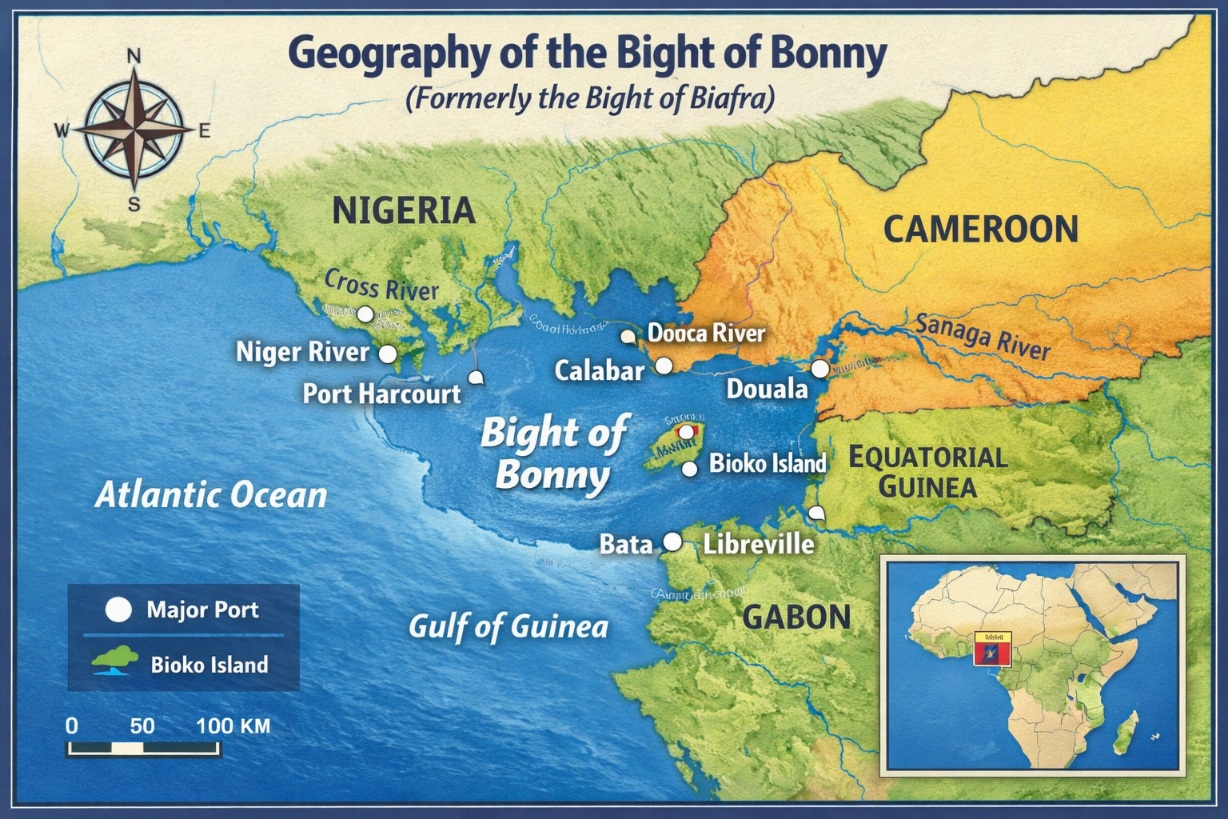
On 27 May 1967, General Yakubu Gowon’s military administration created the South Eastern State and Rivers State, even as Colonel Chukwuemeka Odumegwu Ojukwu declared the secession of Eastern Nigeria as the Republic of Biafra. In 1976, South Eastern State was renamed Cross River State, and in 1987, Akwa Ibom State was carved out of it.
Thus, it is correct to regard Obol Mbui Ubi, Obol Lopon of Ugep, alongside Chief Nkang Abang and Prince S.A. Takon, as architects of modern Cross River and Akwa Ibom States.
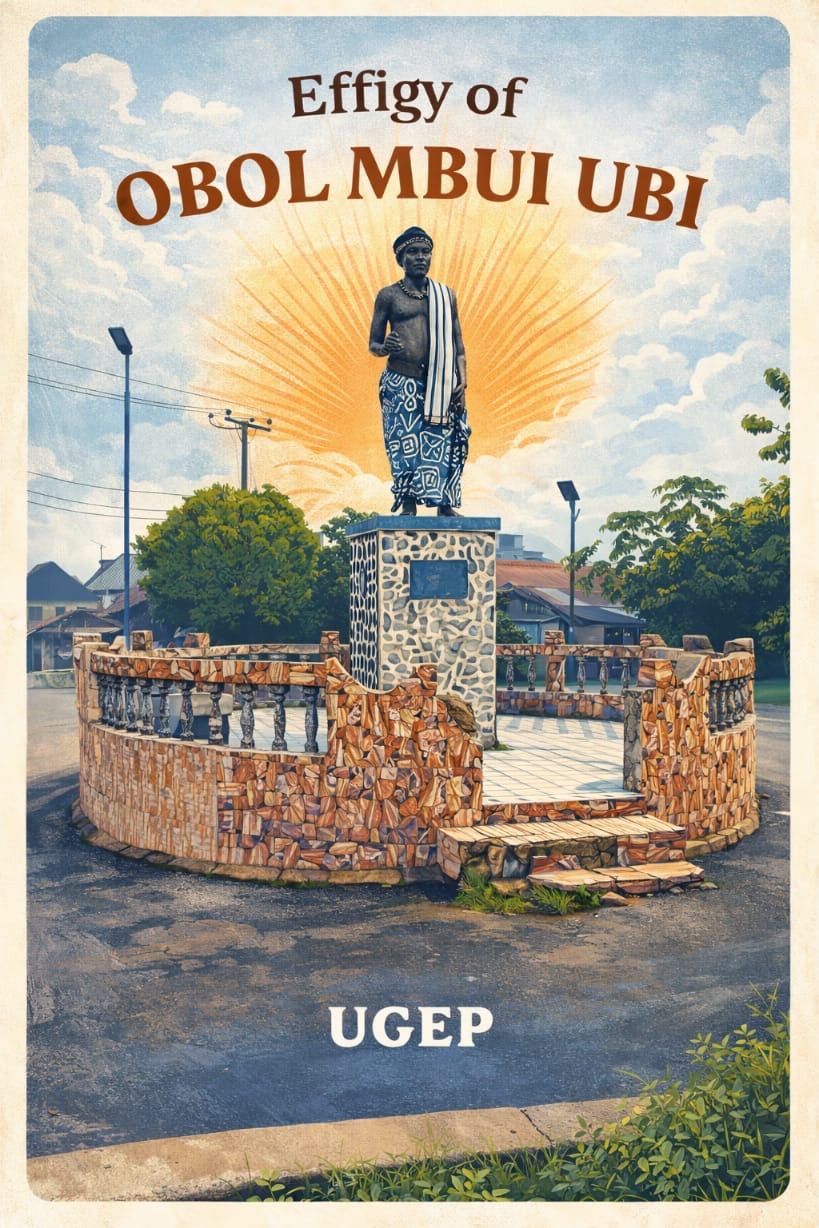
Today, in Ugep — headquarters of Yakurr Local Government Area — the statue of Obol Mbui Ubi, adorned in the blue Ukara cloth of the Ekpe society, stands majestically at the central roundabout, a lasting symbol of his resilience and legacy.
—
Conclusion
The life of Obol Mbui Ubi reflects the resilience of a leader who overcame colonial injustice, rose to prominence, and helped shape the political destiny of his people. His journey from trial to triumph underscores the enduring power of courage, dialogue, and vision in leadership.