

The 1968 Ubaghara Massacre
Breaking 58 Years of Silence for the Victims of Biakpan, Ikun, and Etono:
By Okoi Obono‑Obla
Lawyer, Writer, and Public Commentator
Introduction:
On 8 June 2026, I wrote about the genocide unleashed by Biafran forces on the Biakpan community in Biase Local Government Area on 2 April 1968. My account was based on testimony given to me in 1995 by an elder — a distinguished civil servant, academic, and soldier whose entire family was wiped out by Biafran soldiers.
At the time, I was a young lawyer in Calabar, still finding my footing. For publishing that article, I faced a barrage of personal attacks. Critics denounced me as a liar, a brainwashed man, and an agent of the Yoruba and Hausa people. Yet, I remained close to the elder who entrusted me with his story.

Today, I am gratified that people from Biakpan have corroborated my perspective, breaking decades of silence.
Eyewitness Testimony: George Agbor
George Agbor, a veteran of the Nigerian Civil War, offers this harrowing account:
“I was an eyewitness to the massacre of the Ubaghara people: Ikun, Biakpan, Etono Central, and Etono II. At that time, Etono II was still part of Biakpan. I am an Ikun man. My father, the Paramount Chief of Ikun, witnessed the holocaust. It was a massive decimation of the Ubaghara population.
The cause? Nothing — except that Dr. Kalu Ezera from Asaga Ohafia and Prof. Eni Njoku, also from Ohafia, sought to erase the Ubaghara people so that Ohafia could claim their territory if Biafra triumphed. They bribed Capt. Boniface Nwakama of the Biafran Army’s 9th Battalion with £300 to allow the massacre.
I was one of three Ikun boys who joined the Biafran Army afterward. Outwardly, we fought for Biafra; secretly, we sought to avenge the massacre by leaking information to Federal troops. I was deployed to Ekoli Edda sector under Capt. Agwu, liaising with Capt. Aliyhu of the Federal 27th Battalion. My friend, Sunday Kanu Onette, was sent to Arochukwu to liaise with Major George Innih of the 3rd Marine Commando.
Our plan was to lead Federal troops into Ohafia, hemming it in completely. But Arochukwu was not liberated in time. I was fatally wounded, and George Innih lost his way.
In Ikun, we lost about 400 persons, excluding those who died in refugee camps or elsewhere in Biafra. The massacre took place, as reported by Obono Okoi.”
Reflection
Fifty‑eight years have passed since these tragic events. They remain undocumented in Nigeria’s official war history, consigned to silence. Yet, some witnesses are still alive, and their testimony must be preserved — not to instigate hatred, but to honour the victims and ensure posterity remembers.
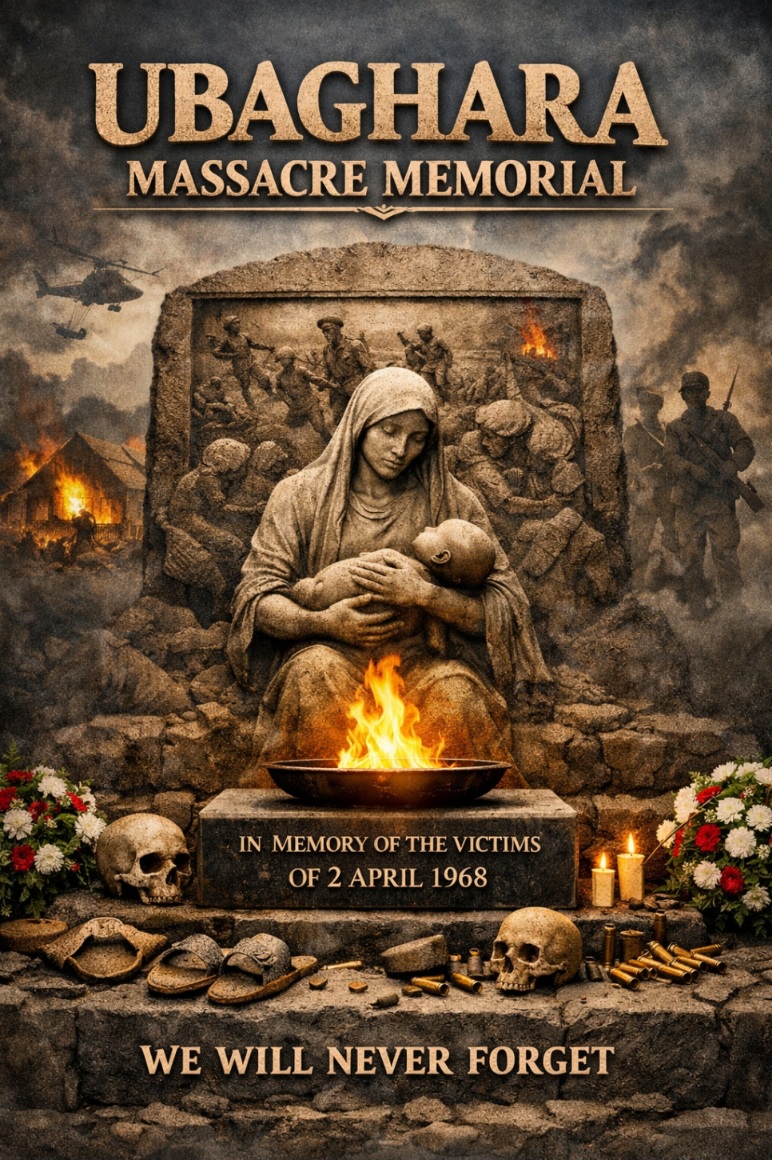
Denial or dismissal of these events is an assault on the memory of those who died on 2 April 1968. It is fitting that a memorial be erected in their honour.
Conclusion:
The killings of 2 April 1968 in Ubaghara demand acknowledgment. Eyewitness accounts like George Agbor’s affirm the dignity of the dead. Memorialisation is a moral duty owed to the victims and a step toward national healing. As time silences the last survivors, recording their testimony becomes ever more urgent.
Author’s Note
Okoi Obono‑Obla is a lawyer, writer, and public commentator. He has dedicated his career to documenting overlooked histories and advocating for justice and remembrance.








*A CLARIFICATION ON THE STATUS OF ETONO II AND HISTORICAL ACCURACY*
By Concerned Citizens of Etono II
In the interest of preserving history with accuracy and fairness, it is necessary to correct an important assertion contained in the account concerning the events of 2 April 1968.
The claim that Etono II was formerly a part of Biakpan is historically inaccurate. Etono II has never been administratively, territorially, or traditionally a constituent part of Biakpan. Etono II has always maintained its distinct identity and heritage within the Ubaghara clan.
What existed between Etono II and Biakpan was a long-standing relationship of friendship, cooperation, and mutual respect established by our forefathers. Such cordial relations and social interactions should not be misconstrued as evidence that Etono II belonged to Biakpan.
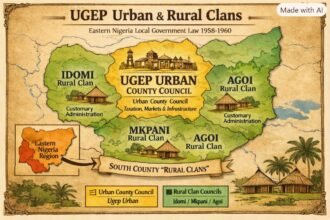
The only notable period of administrative collaboration between the two communities occurred in the 1950s when Ubaghara was divided into two councils. Under that arrangement, Ubaghara North Council comprised Biakpan and Etono II, while Ubaghara South consisted of Ikun and Etono I, now known as Etono Central. This administrative grouping was merely a matter of convenience and governance and did not imply that Etono II was subordinate to, or formed part of, Biakpan. To suggest otherwise is a clear misrepresentation of history.
Indeed, historical maps of the former Eastern Region clearly identified Etono II as a distinct community. Such records constitute objective evidence predating subsequent distortions of Ubaghara maps that omitted Etono II or sought to subsume it under another community. These later representations deserve careful scrutiny, for no historical narrative should be permitted to erase the identity of an established community.
Furthermore, while eyewitness accounts of the Nigerian Civil War are invaluable and deserve preservation, they should be weighed alongside established traditions and documentary evidence. It is surprising that a son of Ikun, a community with which the people of Biakpan once shared close historical ties before their eventual separation, would overlook these well-known traditions. Historical accounts, including those documented by respected authors and personalities from Biakpan themselves, have acknowledged the migration history of the Biakpan people and their earlier coexistence with their Ikun brethren.
Equally important is the fact that Etono II was never part of those migratory experiences associated with Othim Ogbo. Therefore, any attempt to retrospectively place Etono II within the territorial or political history of Biakpan is unsupported by oral tradition and available documentary evidence.
While honouring the memories of all those who lost their lives during the tragic events of the Nigerian Civil War and recognizing the importance of preserving eyewitness testimonies, it must be stated unequivocally that Etono II was never part of Biakpan. The relationship between the two communities was one of friendship and good neighbourliness inherited from our ancestors. Though relations between both communities have deteriorated over the last two decades owing to recurring disputes and tensions, such developments cannot alter historical facts.
Historical truth and collective memory are best served when facts are carefully distinguished from assumptions. Accurate documentation is essential not only for the sake of posterity but also for promoting genuine understanding, reconciliation, and lasting peace among the peoples of Ubaghara and beyond.
History must be remembered, but it must also be told truthfully.
Signed:
Concerned Citizens of Etono II
All of this write up is correct except for the part where the author claims Etono II was formerly a part of biakpan. Etono II is an autonomous community and has always been so. The Etono II people share no common history or ancestry with the biakpan people other than being neighbors.
Thanks for the write up tho @ Sir Okoi. We the Ubahara people appreciate 🙏🏽