By Okoi Obono-Obla
Voices from Bekwarra – Childhood Memories of War:
The Nigerian Civil War left indelible marks on communities across the country, and Bekwarra was no exception. Two eyewitnesses, Tom Ekawu and Emmanuel Adariku Godsward, recall their childhood experiences during those turbulent days.
Tom Ekawu, who was 11 years old in 1967 when fighting broke out in Garkem, Old Ogoja (now Bekwarra Local Government Area of Cross River State), between Nigerian Federal troops and the Biafran Army, recounts:

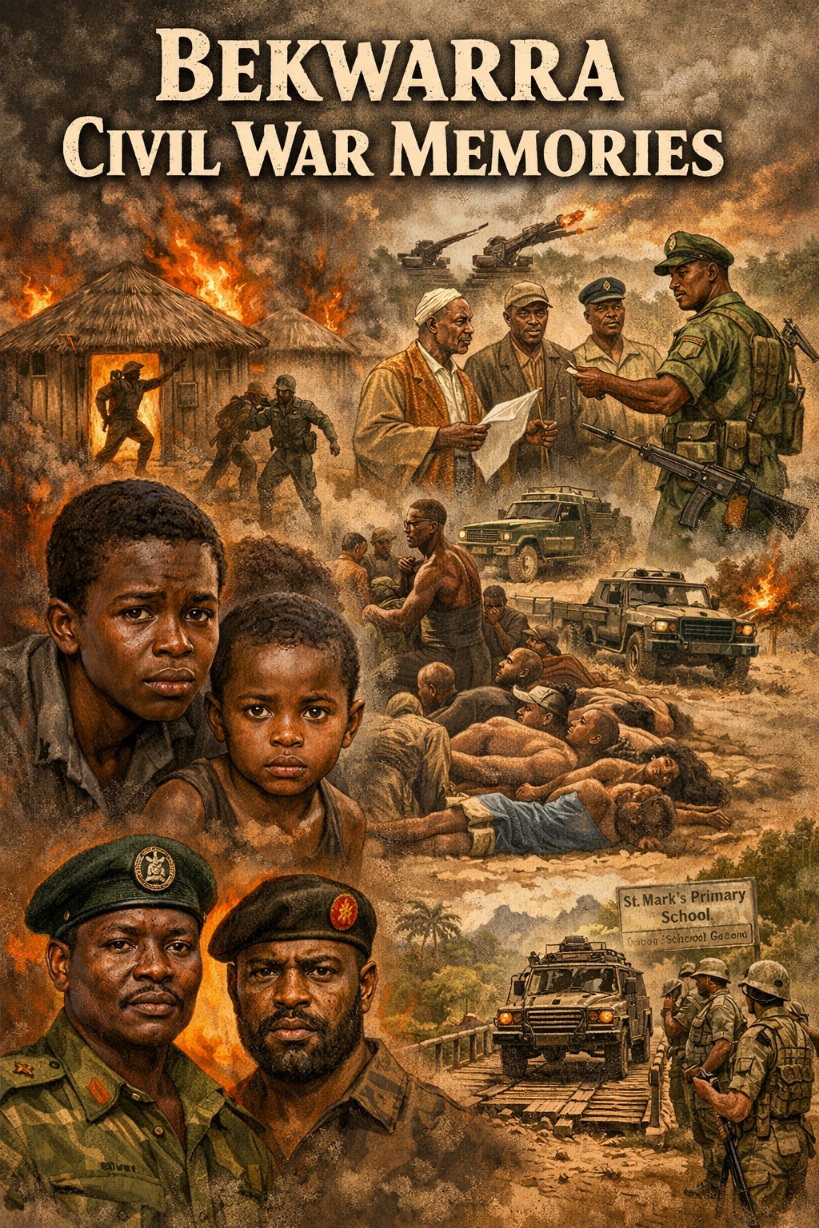
*”I was an eleven-year-old lad, forcefully relocated by our parents from Kaduna during the 1966 hostilities to Garkem. On the 6th of July 1967, in the early hours of that fateful day, we experienced unusual artillery bombardment from a nearby location close to Vandeiyka in Benue State. Within a short period, while parents were still trying to understand what was happening, we heard troops rushing around, shouting and banging on the doors of our houses, immediately setting fire to our huts at Iyeh-Ukan, Late Ogar Ajor’s compound, and demanding: ‘Who amongst you here are soldiers?’
Earlier, before we were dragged out and stripped to our pants along with our parents, I narrowly escaped a stray bullet that struck our house box. Walahi, it was all like a movie. I recall our fathers and teenagers being stripped to their pants and forced to lie down while firing continued against the Biafran soldiers within the hills of Garkem.
The cries of the women and the strong voice of an officer stopped the continuous burning of our houses, declaring: ‘This is not an Igbo town.’ Needless to say, Garkem was liberated the same day as troops overran the opposition. They quickly settled at St. Mark’s Primary School, Gakem, Bekwarra.
It was remarkable to see tall, black-faced men with intimidating appearances, meant to frighten any opposition. We had earlier been informed that they had carried out reconnaissance in Garkem on the 5th and repaired the burned bridge at night to enable armored vehicles to enter the town.
For me, and for some of us, that baptism of civil war from this sector remains a generational memory.”*
Emmanuel Adariku Godsward, reflecting on the same events, adds his perspective:
*”The Asaba massacre had a leader in the person of Lt. Col. Murtala Mohammed. Who then was the leader of the ‘Biakpan massacre’? I come from Bekwarra, and Gakem is in Bekwarra where the war event took place. My community is barely 3 kilometers from Gakem. I think I might have been 3 to 4 years old when the war began, because I can remember my father, being a community leader then, leading the headmaster of St. Joseph Primary School, Akpakpa—one Mr. Christopher Eyake—Mr. Asaba, and a few other teachers to the war front in Gakem. They appealed to the federal troops that bullets, grenades, and bombs had to be redirected, as they were devastating our community. I witnessed this with my own eyes; it was not a fairy tale.
The account we have differs from the one presented here. The war was a very sad event in the history of the country, and there is no need to falsify narratives to suit anyone’s whims and caprices. The only two figures to blame in this conflict were Ojukwu and Gowon—period—for the way and manner they both mishandled a soluble situation.”*
Conclusion:
These voices from Bekwarra remind us that the Nigerian Civil War was not only a clash of armies and leaders but also a lived reality for ordinary families and children. Their testimonies preserve the memory of fear, resilience, and survival, ensuring that future generations understand the human cost of war.