



by Okoi Obono-Obla
Culture is the way people live — what they eat, how they dance, the music they play, their folklore, dress, customs, and traditions.
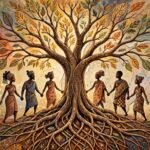
Culture is interlocked, intertwined, and interconnected with the indomitable spirit of humanity, which regenerates from generation to generation across millennia.
It is like an anthill that sprouts in a particular location. Even if it is destroyed and for many years nothing appears, one day, after many years, the same spot will sprout another anthill — a clone or replica of the old one that stood in exactly the same place. That is how the human spirit is. It never dies permanently; it always regenerates from generation to generation.

This truth is seen in history. In late August 1619, the first groups of Africans to arrive in English North America landed at Point Comfort, Virginia — now Hampton, Virginia. They were “twenty and odd” captives, originally from the Kingdom of Ndongo in what is now Angola, who had been taken from the Spanish slave ship San Juan Bautista. They were traded to the colonists for foodstuffs and held under horrendous conditions in a totally strange environment.
They were enslaved and reduced to less than chattel — goods to be sold in the open market. They lost their dignity, their humanity, and became human property and beasts of burden. They lost their names, heritage, culture, language, identity, and even self-esteem. Every unimaginable measure and regulation was introduced to erase their identity, heritage, and roots.
Yet despite all those horrendous measures to cut their umbilical cord from their roots, the attempt failed woefully. For almost four hundred years — from the 16th to the 19th century — during which about 12.5 million Africans were forcibly embarked and about 10.7 million survived the Middle Passage to the Americas, they still managed to preserve their culture, identity, humanity, and essence from generation to generation.
I have written about how we have Agwagwune settlements in Jamaica known as Cunacuna, and how there are Atam people in Jamaica and other places in the Caribbean as a result of the infamous Transatlantic Slave Trade. But the most profound culture preserved by people who were forcefully taken from here to strange environments in the Caribbean and South America, which survived for hundreds of years and remains till date, is **Ekpe **.[Mgbe]
In the Caribbean, the legacy of the West African Ekpe secret society — from the Cross River region of Nigeria and Cameroon — lives on most prominently through the Abakuá, a historic, initiatory men’s fraternity established by enslaved Africans in Cuba during the 1830s.
History and Roots: Enslaved Efik, Ejagham/Ekoi and other Cross River peoples from the Calabar port region, known in Cuba as Carabali, brought Ekpe traditions across the Atlantic. In Cuba, these traditions transformed into Abakuá lodges or potencias, serving as mutual-aid and protective societies. The tradition took root heavily in urban ports like Havana and Matanzas.
Core Survivals in the Caribbean:
1. The Ireme Masquerade: The sacred forest spirit of Ekpe is represented in Cuba by the Ireme, or diablito, a costumed dancer who performs during rituals and community festivals.
2. Nsibidi Script: The ancient graphic communication system tied to Ekpe is preserved within Abakuá visual art, symbols, and sacred writings.
3. Music and Percussion: The distinct rhythms of the Ekpe/Abakuá drums remain a foundational pillar of Afro-Cuban folkloric music and rumba traditions.
Conclusion: From the anthill that refuses to die, to the twenty and odd Africans at Point Comfort, to the Cunacuna settlements of Jamaica and the Abakuá lodges of Cuba, the lesson is the same. You can take a people from their land, you can take their names and their freedom, but you cannot permanently kill their spirit. Culture regenerates.








Interesting read. Have become active reader of posts from ChatAfrik