By Professor Anthony Ejiofor
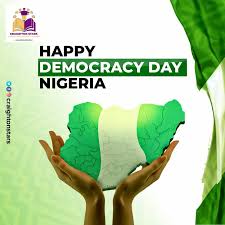
Democracy Day offers every nation an opportunity not merely to celebrate its democratic journey but also to examine, with honesty and humility, the distance yet to be traveled. It is a day for stocktaking—a moment to reflect on the state of the republic, the welfare of its citizens, and the effectiveness of those entrusted with the responsibilities of leadership.
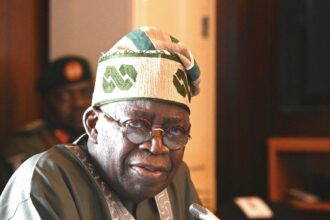
President Bola Ahmed Tinubu’s Democracy Day address was delivered in that spirit of optimism and national purpose. The speech sought to reassure Nigerians that difficult reforms are beginning to bear fruit and that the country is on a path toward economic recovery, improved security, and institutional renewal.
A fair assessment requires that we acknowledge areas where progress has indeed been recorded.

In recent months, Nigerian security forces have achieved notable operational successes, including the rescue of hundreds of abductees from terrorist enclaves and the neutralization of significant terrorist commanders in the Lake Chad region. These achievements deserve recognition and commendation.
Likewise, there are encouraging signs within the broader economy. Foreign capital inflows have increased. Trade balances have improved. Government revenues have strengthened. Investor confidence appears to be recovering after years of uncertainty. These developments suggest that some of the administration’s reforms may be producing positive macroeconomic outcomes.
Such progress should neither be ignored nor dismissed.
Yet the essence of statesmanship is not found in celebrating achievements alone. It is found in the willingness to confront uncomfortable truths with equal candor.
And it is here that the Democracy Day speech leaves important questions unanswered.
The Difference Between Economic Stability and Economic Well-Being
The administration’s strongest argument remains its claim that it has restored a measure of macroeconomic stability to Nigeria.
There is merit in this claim.
Difficult decisions such as the removal of fuel subsidies and foreign exchange reforms have improved government finances and reduced some long-standing distortions within the economy. International financial institutions and investors have largely welcomed these reforms.
However, there is a profound difference between stabilizing an economy and improving the well-being of citizens.
Macroeconomic indicators matter. Trade surpluses matter. Foreign investments matter.
But ultimately, citizens experience an economy not through statistical reports but through daily life.
They experience it at the marketplace.
They experience it at the fuel station.
They experience it when paying school fees, purchasing medicines, renewing rent, or attempting to put food on the family table.
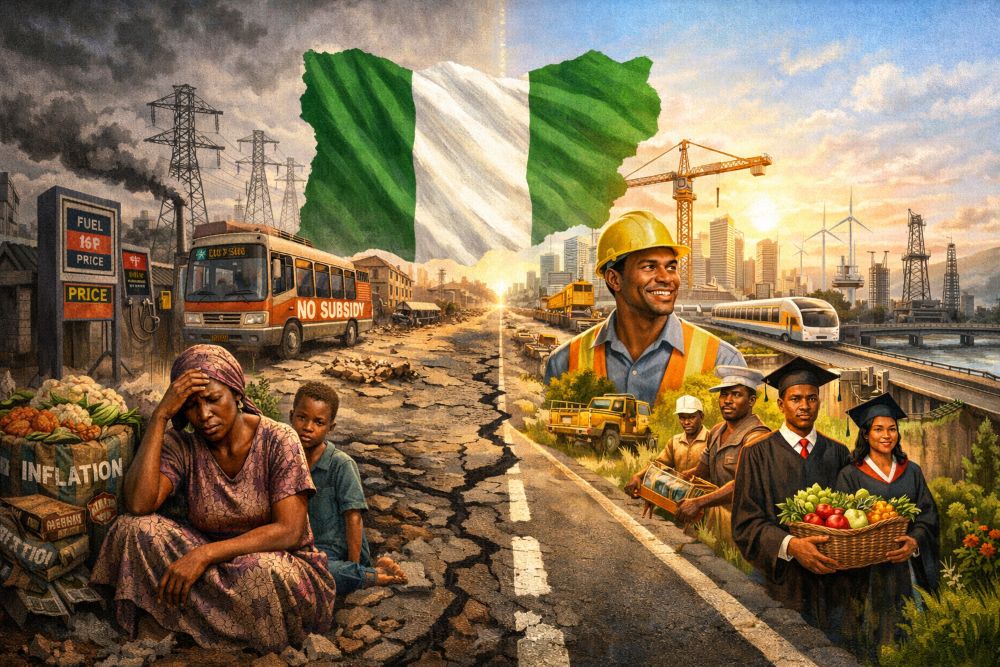
For millions of Nigerians, life remains extraordinarily difficult.
Inflation has eroded incomes. Food prices remain painfully high. Transportation costs continue to strain household budgets. Small and medium-sized businesses struggle under mounting operational expenses. Young graduates continue to confront uncertain employment prospects.
These realities do not negate the administration’s economic achievements. They simply remind us that economic reforms cannot be considered fully successful until they translate into measurable improvements in the lives of ordinary people.
The ultimate purpose of economic policy is not the satisfaction of economists but the welfare of citizens. Without safety nets, “successful” macroeconomic strategies ring hollow.
Security Progress and the Continuing Burden of Fear
The President rightly highlighted gains in the fight against terrorism, banditry, and criminal violence.
Yet many Nigerians continue to live under the shadow of insecurity.
Communities remain vulnerable to attacks. Kidnapping for ransom continues to plague large sections of the country. Farmers still face threats that limit agricultural productivity. Businesses continue to bear the cost of insecurity through disrupted supply chains and reduced investment.
A nation cannot achieve its full economic potential while large segments of its population remain fearful.
Security must therefore be judged not merely by military operations conducted or criminals neutralized or paraded but by the extent to which citizens can live, work, travel, farm, and conduct business without fear.
While progress has undoubtedly been made, much work remains.
The Food Security Question
Perhaps no issue speaks more directly to the condition of a nation than the ability of its people to feed themselves.
The President spoke of agricultural modernization, mechanization, and increased support for farmers. These initiatives are welcome and necessary.
Yet hunger remains one of Nigeria’s most pressing challenges.
Millions of households continue to struggle with rising food costs. Agricultural productivity remains constrained by insecurity, poor rural infrastructure, inadequate storage facilities, limited access to financing, and weak extension services.
No nation can claim meaningful economic recovery while food insecurity remains widespread.
The success of agricultural policy must ultimately be measured not by announcements made but by the affordability and availability of food for ordinary citizens.
The Elephant in the Room: Nigeria’s Cost of Governance
If there was one subject conspicuously absent from the Democracy Day address, it was the issue of governance costs.
This omission is unfortunate because it touches the very heart of Nigeria’s developmental challenge.
Nigeria remains burdened by one of the most expensive systems of governance in the developing world.
At every level of government, vast resources are consumed by political administration. The cost of maintaining public offices, official residences, convoys, security details, legislative structures, political appointments, foreign travels, and administrative bureaucracies continues to place enormous pressure on public finances.
This is not merely an accounting issue.
It is a moral issue.
Citizens have been repeatedly asked to make sacrifices in the national interest. They have been told that subsidies must be removed. They have been told that economic reforms require patience. They have been told that difficult choices are unavoidable.
These arguments may well be valid.
But sacrifice cannot be demanded exclusively from the governed while the governing class appears insulated from comparable restraint.
A government that asks its citizens to tighten their belts must be visibly prepared to tighten its own.
Without meaningful reductions in governance costs, economic reforms risk losing both their legitimacy and their public support.
The conversation about national development cannot forever avoid this fundamental question.
Accountability, Waste, and the Challenge of Public Trust
Another area that deserved greater attention in the President’s address is the issue of accountability.
Nigeria’s development challenges are not solely the result of insufficient resources. They are also the consequence of inefficiencies, waste, corruption, weak institutions, and poor implementation.
Citizens deserved to hear more about how government intends to reduce wasteful expenditures, strengthen procurement processes, improve transparency, and ensure that public funds are deployed effectively.
Trust is built not merely by announcing policies but by demonstrating stewardship.
At a time when debt servicing consumes a significant portion of public revenues, Nigerians are entitled to demand evidence that every borrowed naira is being used productively and responsibly.
Fiscal discipline must apply to government as rigorously as it applies to citizens.
Hope Must Be Matched by Performance
A substantial portion of the President’s speech focused on future possibilities—improved electricity, greater industrial output, expanded agricultural production, stronger infrastructure, and increased employment opportunities.
These aspirations are commendable.
Indeed, no nation can progress without hope.
Yet democratic societies do not evaluate governments primarily on promises. They evaluate governments on performance.
Three years into this administration, Nigerians are entitled to ask a simple question:
How much of the promised future has become present reality?
This is not an expression of cynicism.
It is an expression of democratic accountability.
The burden of proof in governance always rests with those who hold power.
The Unfinished Promise of Democracy
As Nigeria marks another Democracy Day, it is worth remembering that democracy is not merely the periodic conduct of elections.
Democracy is the continual effort to improve the lives of citizens.
It is measured by the quality of governance, the strength of institutions, the rule of law, economic opportunity, public trust, and social justice.
President Tinubu’s speech reflected confidence that Nigeria is moving in the right direction.
Perhaps it is.
But confidence must never substitute for evidence, and optimism must never replace accountability.
The true verdict on this administration will not be rendered by political allies or opponents. It will be rendered by history—and by the everyday experiences of millions of Nigerians.
If the reforms of today ultimately produce greater prosperity, security, opportunity, and dignity for ordinary citizens, they will be vindicated.
If they do not, history will judge them as yet another chapter in Nigeria’s long tradition of unfulfilled promises.
That is why the task before this administration remains both urgent and profound.
The challenge is no longer simply to reform Nigeria.
It is to ensure that those reforms are felt in the homes, markets, farms, businesses, and communities of the Nigerian people.
Only then will the promise of democracy begin to match its reality.
—————————————————————————————————————————————
Prof. Anthony Ejiofor is an academic, public intellectual, and community leader engaged in issues of governance, development, and the future of Nigeria.