


By Khaleed Yazeed
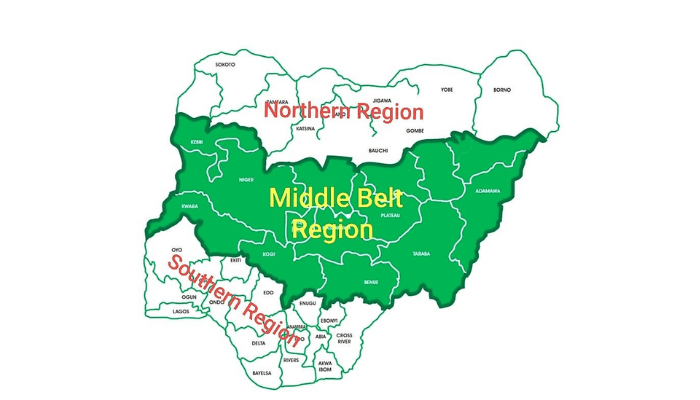
The Sokoto Caliphate was not content with conquering the Hausa states. Its ambition extended far beyond the walls of Kano, Katsina, and Zazzau. The Caliphate’s leaders, drunk on the success of the 1804 jihad, set their sights on the lands to the south, the vast, diverse, and fiercely independent peoples of the Middle Belt. They envisioned a single Islamic empire stretching from the Sahel to the forests, with the Fulani elite ruling over all.
But they failed.
The Middle Belt did not submit. It resisted. It fought. And it refused to be incorporated into the Fulani-dominated Caliphate. The evidence of this failure is not hidden; it is written in the Caliphate’s own records, in the letters of its leaders, and in the enduring resistance of the Middle Belt peoples. This is the story of how the Caliphate’s grand imperial design was shattered by the determination of a people who refused to bow.

The Sokoto Caliphate’s expansion into the Middle Belt was not a haphazard series of raids. It was a calculated, ideological project. The Caliphate’s leaders, and later the British colonial administrators who allied with them, developed what historian Moses Ochonu calls a “Hausa-Caliphate imaginary” . This was a vision of a politico-cultural uniformity that sought to remake the Middle Belt in the image of the Sokoto Caliphate . The British, ever pragmatic, found this model useful for their policy of Indirect Rule. By imposing Hausa-Fulani administrative structures on the non-Hausa, non-Muslim peoples of the Middle Belt, they hoped to create a more “suitable” and governable territory .
This project was not simply administrative; it was ideological. It was a “colonialism within colonialism,” where the Fulani emirs acted as sub-colonial agents, ruling over the Middle Belt peoples with British backing. The British outsourced the administration of the Middle Belt to Hausa-Fulani subcolonials, who ruled with an iron fist and imagined themselves as bearers of Muslim civilization rather than carriers of the white man’s burden . The Fulani elite, who had been junior partners to the British, used this opportunity to extend their dominance over the very peoples who had resisted them for decades.
This was not a union of equals; it was a hierarchy imposed from above. As one scholar notes, the British “constructed a political imaginary of a precolonial Hausa-Fulani Muslim aristocracy as natural rulers of the ‘backward’ autochthonous peoples of the Middle Belt” . The Fulani were not just collaborators; they were colonizers in their own right.
The evidence of this ideology is found in the Caliphate’s own records. Sultan Muhammad Bello’s Infaq al-Maysur (1813) contains the earliest recorded evidence of the Hausa-Banza discourse . This discourse classified northern Nigerian communities into two distinct categories: the Hausa Bakwai, described as the seven “legitimate” Hausa states; and the Banza Bakwai, derogatively labelled as the “illegitimate” states. The cultural meaning of the word Banza includes “any person who is outside the table of affinity” . By labeling the Middle Belt peoples as Banza, the Caliphate was denying them their own history, their own sovereignty, and their own right to exist as distinct peoples. This is the foundational lie upon which the Fulani domination of the North was built.
The Kwararafa Confederacy: The Middle Belt’s Greatest Challenge to Fulani Power
Before the Sokoto Caliphate ever conceived of conquering the Middle Belt, there was a power that had already humbled the Hausa states and challenged the Kanem-Bornu Empire. That power was the Kwararafa Confederacy.
Kwararafa was a multiethnic state centered along the Benue River valley, in what is today central Nigeria. It rose to prominence before 1500 and was led by the Jukun people . The Kano Chronicles among other Hausa sources record successful invasions of Hausaland by the Kwararafa, specifically against Kano around 1600, again in the middle of the century, and another in 1671 . In the 1670s, the Kwararafa assaulted Katsina, sacked Zaria, and launched an invasion of Bornu . Bornu sources recount Kwararafa striking towards the capital of Ngazargamu and being turned aside in a great battle by Mai Ali bin Umar. The Katsina chronicler Dan Marina recounts the Mai Ali killing, wounding and capturing many Kwararafa and sending three captives back to their leader, with their ears severed and hung around their necks .
The Kwararafa were not a backward people waiting to be conquered by the Fulani. They were a sophisticated political entity that had held its own against the great empires of the region. They practiced a bureaucratic state of rule, were led by a priest-king (the Aku) whose powers were greatly limited, and had a long tradition of interaction with their neighbours. During the 18th century, communities of each apparently lived in the cities of the other, and a tradition of Muslim emissaries served the Kwararafa. Hausa communities too were found in the Kwararafa territory .
The Kwararafa Confederacy was a direct challenge to the Fulani ideology of conquest. It demonstrated that the Middle Belt was not a vacuum waiting to be filled, but a region of proud, independent peoples with their own political structures and their own determination to remain free. Even after its decline in the 18th century, the Kwararafa continued to resist the Fulani jihad. By the 19th century, they were reduced to small towns, but they resisted the Sokoto Caliphate for a period. The Kwararafa were a symbol of Middle Belt resistance that the Fulani could never fully extinguish.
The Ideological Foundation of Conquest: The Banza Discourse
The Caliphate’s ambition to conquer the Middle Belt was not just a military project; it was an ideological one. The leaders of the Sokoto Caliphate needed a justification for their expansion, and they found it in the Hausa-Banza discourse.
The Bayajidda narrative, a popular Hausa mythology, classifies northern Nigerian communities into two distinct cultural enclaves: the Hausa Bakwai, described as the seven “legitimate” Hausa states; and the Banza Bakwai, derogatively labelled as the “illegitimate” states. The cultural meaning of the word Banza includes “any person who is outside the table of affinity”. Going by this definition, it is little wonder that the Middle Belt peoples, who happen to be traditionally outside the Hausa cultural universe, were labelled as arna or guwarawa. The nineteenth-century Sokoto Jihad and the emergence of the Caliphate widened the division between Muslims and non-Muslims.
Indeed, the earliest recorded evidence of the Hausa-Banza discourse is contained in Muhammad Bello’s Infaq al-Maysur (1813) and the Raudat al-Afkar of Abd al-Qadir al-Mustafa (1824) . The Caliphate’s leaders used this concept to delegitimize the Middle Belt peoples, labeling them as pagans or ignorant of Hausa culture. This was not just a theological debate; it was a political weapon. By labeling the Middle Belt peoples as “Banza,” the Caliphate was denying them their own history, their own sovereignty, and their own right to exist as distinct peoples.
This ideology of conquest had a profound impact on the relationship between the Fulani and the Middle Belt. It created a hierarchy where the Fulani were seen as the “civilized” bearers of Islam, and the Middle Belt peoples were seen as “backward” pagans in need of subjugation. This hierarchy was later reinforced by the British colonial system of Indirect Rule, which outsourced the administration of the Middle Belt to Hausa-Fulani subcolonials. The British “constructed a political imaginary of a precolonial Hausa-Fulani Muslim aristocracy as natural rulers of the ‘backward’ autochthonous peoples of the Middle Belt”. The Fulani elite, who had been junior partners to the British, used this opportunity to extend their dominance over the very peoples who had resisted them for decades.
The Bayajidda narrative has continued to be repeated and reproduced in different shades in school texts and popular historical discourse. While the narrative is still popular among Hausa-Fulani Muslims, the Middle Belt communities, which correspond roughly to the Banza Bakwai cultural and spatial imaginary, would outrightly dismiss it as negative cultural profiling . Although the intellectual derivation of the narrative remains problematic, it replicates the division between Muslim communities and the non-Muslim Middle Belt societies in northern Nigeria.
The Nature of the Conflict: Slave Raiding and Resistance
The Sokoto Caliphate’s expansion into the Middle Belt was characterized by a brutal system of slave raiding. As historian Moses Ochonu notes, the jihad in the lower Benue region “assumed a commercial character,” characterized by slave raiding and military intrusions. The Caliphate’s economy was built on the backs of enslaved people, and the Middle Belt was a primary source of captives.
The Agatu people, a subset of the Idoma, resisted the Caliphate’s intrusions. They responded proactively and reactively to the demands of the Hausa and Fulani Muslims. The British colonial administrator William Wallace, who led campaigns against the Agatu in the early 20th century, described the Agatu district as a “thorn in the side of the colonial administration” . He blamed the Agatu’s “daring and successful resistance” to “Hausa and Fulani oppression.” This is a damning admission from a colonial official: the Agatu were fighting back against Hausa-Fulani oppression.
The Tiv people, another major Middle Belt group, also resisted the Fulani. The Tiv language itself contains a derogatory word for the Fulani, “Jarawa”, which means “slaves”. This is a testament to the brutal legacy of the Fulani slave trade. The Tiv, the Idoma, and other Middle Belt groups were targets of Fulani raids, and they resisted fiercely. According to researcher Adinoyi Ojo, “There was a Fulani attempt to conquer the Tiv, Idoma, Igede, and Agatu people, but they failed”. The Fulani were stopped by the river Benue, but more importantly, they were stopped by the fierce resistance of the Middle Belt peoples.
The colonial records reveal the scale of this violence. The colonial administrator William Wallace, in his diary, recounts the capture of Yelwa, a town in the Benue valley, by “the Fulani”. He described the Fulani as “marauders” who had “destroyed and enslaved” the local population. This is a rare admission from a colonial source: the Fulani were not just conquerors; they were enslavers.
The British Alliance: How the Fulani Became Colonial Agents
The British did not conquer the Fulani; they allied with them. When the British defeated the Sokoto Caliphate in 1903, they did not dismantle the Fulani emirate system. They preserved it. They saw the Fulani emirs as a ready-made administrative class, a junior partner in the project of extraction.
The British provided the Fulani with weapons and legitimacy; the Fulani provided the British with obedience and information. This alliance, forged in 1903, has never been broken. It is the foundation of the Fulani elite’s power to this day.
The British colonial system of Indirect Rule did not dismantle the Fulani hierarchy; it reinforced it. The British outsourced the administration of the Middle Belt to Hausa-Fulani subcolonials, who ruled with an iron fist and imagined themselves as bearers of Muslim civilization rather than carriers of the white man’s burden. The Fulani did not just collaborate; they became “colonizers in their own circumscribed rights”.
This “sub-colonialism” was a violation of the fundamental tenet of British Indirect Rule: indigenous mediation. The British were supposed to rule through “traditional” rulers, but they imposed Fulani rulers on non-Fulani peoples. This created a double oppression: the Middle Belt was oppressed by the British, and it was oppressed by the Fulani.
The Fulani elite were the agents of this system. They were the ones who collected taxes, enforced colonial edicts, and suppressed resistance. They were the visible embodiment of British colonialism, and they were hated for it. The Middle Belt peoples knew that the Fulani were not their brothers; they were their oppressors. The British colonial administration actively sought to make the Middle Belt more like the Sokoto Caliphate sector, which was deemed more suitable for their administrative policy of Indirect Rule. This project, known as the “Hausa-Caliphate imaginary,” was imposed on the non-Hausa speaking, non-Muslim peoples of the Middle Belt . These impositions provoked violent backlashes in many cases. They complicated Idoma and Tiv engagements with British colonialism, victimizing both the Idoma and Tiv, and the Hausa auxiliaries, who were perceived and treated by the Idoma and Tiv as the visible and vulnerable embodiment of British colonialism.
The Failure of the Caliphate’s Dream
The Sokoto Caliphate dreamed of a unified Islamic empire stretching across the North. It failed. The Middle Belt did not submit. It retained its own identity, its own religions, and its own determination to resist Fulani domination. The Fulani elite have ruled the North for two centuries, but they have never fully conquered the Middle Belt.
The Caliphate’s failure is not a secret; it is a historical fact. The Middle Belt peoples have never accepted the Fulani as their natural rulers. The Fulani elite will tell you that they are the natural leaders of the North. They will tell you that the Hausa and Fulani are one people. They will tell you that the Middle Belt is just a collection of backward peoples who needed to be “civilized.” But the evidence tells a different story. The evidence is in the resistance of the Jukun, the Agatu, the Idoma, and the Tiv. The evidence is in the enduring consciousness of the Middle Belt. The evidence is in the fact that the Fulani have never been able to conquer the spirit of the Middle Belt.
The Middle Belt has always been a region of proud, independent peoples. The Kwararafa Confederacy challenged the Fulani Caliphate. The Agatu resisted the Fulani. The Tiv fought back. The British recognized the power of the Middle Belt, even as they tried to subjugate it. And today, the Middle Belt continues to resist Fulani domination. The Middle Belt Forum rejects the “One North” narrative. The Middle Belt peoples are asserting their own identity. The Middle Belt is the living proof that the Sokoto Caliphate’s imperial dream failed.
Khaleed Yazeed
Founder, Wakilin Yamma Youth Development Network
Katsina State, Nigeria