by Boma West
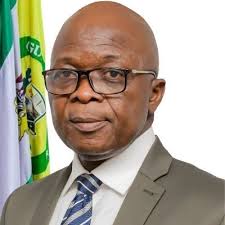
Youth Minister Ayodele Olawande recently issued a charge that cut through the noise of motivational rhetoric and landed with the weight of hard truth: certificates alone are no longer enough. Nigerian youths, he said, must acquire practical skills. For millions of young Nigerians clutching freshly minted degrees and standing at the edge of an indifferent job market, those words were not news. They were a verdict long overdue.
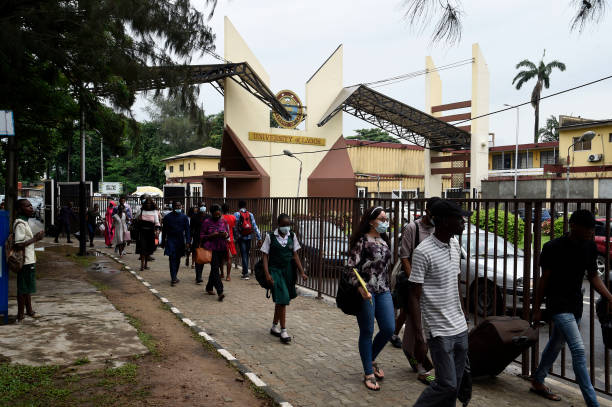
The numbers tell a story that no one in Abuja’s corridors of power should be comfortable ignoring. Nigeria’s universities, polytechnics, and colleges of education produce an estimated 600,000 graduates annually. Government agencies, multinationals, and the formal private sector absorb a fraction of that figure. The arithmetic is brutal. A country that graduates hundreds of thousands of young people into a white-collar economy that has room for a few tens of thousands is not producing a workforce. It is producing frustration.
The traditional white-collar economy is contracting even as the population of graduates expands at a pace it cannot absorb.

What makes this particularly painful is that the educational system itself has been complicit in maintaining the illusion. Secondary school curriculum in Nigeria remain largely theoretical, heavy on memorisation and examination preparation, and light on anything a student can do with their hands, their creativity, or their entrepreneurial instinct. By the time a student reaches university, the pattern is entrenched. Four to six years later, they emerge holding a scroll and waiting for someone to validate their existence with a job offer letter.
The waiting, for too many, becomes permanent.
Across Nigeria today, a competent website developer earns more monthly than many entry-level bank employees. A skilled welder who runs a backyard operation nets him more than a hundred thousand naira weekly. Consider a fashion designer who supplies boutiques or a videographer whose clients include corporate organisations willing to pay premium rates for content creation. Neither built a career by waiting for recruitment advertisements or submitting applications to a government agency. They identified what the market needed, acquired the skill to deliver it, and created their own table to sit at.
This is not a coincidence. It is a model. The digital economy has dismantled the gatekeeping function that formal employment once held. A young person with demonstrable skill in graphic design, data analysis, software development, carpentry, plumbing, agribusiness, cosmetology, or content creation now has global access to clients, platforms, and income. Fiverr, Upwork, LinkedIn, and Instagram have become employment agencies that charge no application fee and discriminate against no one.
The question is no longer whether opportunities exist outside the office. The question is whether Nigerian youths are being equipped to pursue them.
The ecosystem for skills acquisition in Nigeria is growing, even if it remains uneven and underfunded. Government-run institutions like the Industrial Training Fund, the National Directorate of Employment, and the various state Technical and Vocational Education and Training centres have frameworks in place. Private coding academies, fashion schools, culinary institutes, and digital marketing bootcamps have mushroomed in urban centres. YouTube, Coursera, Google Career Certificates, and ALX Africa have made world-class technical training accessible to anyone with a smartphone and data.
The gap is not entirely one of availability. It is one of orientation. Many young Nigerians still arrive at skills training reluctantly, after exhausting every avenue in the formal job market. The cultural messaging that treats skills acquisition as a fallback rather than a first choice must change. A young man who chooses to train as an electrician at eighteen rather than pursue a degree he has no passion for should be celebrated, not pitied. A young woman who completes a professional baking programme and opens a home bakery at twenty-two should be seen as an entrepreneur, not someone who could not make it.
That cultural reorientation cannot happen in isolation. It must be engineered, and the most powerful instrument for engineering it is the school curriculum.
If Nigeria is serious about solving youth unemployment, the secondary school system must be restructured around productivity, not just certificates. Vocational and technical subjects, including coding, agriculture, construction trades, fashion design, food technology, and creative arts, must be treated as core subjects with the same academic rigour applied to mathematics and English. Students should leave secondary school with at least one practical skill they can monetise, whether or not they proceed to higher education.
At the undergraduate level, the reform must go further. Every degree programme, whether in law, medicine, accounting, education, or even the humanities, should carry compulsory entrepreneurship and skills modules integrated into the curriculum, not tagged on as afterthoughts. A law graduate who also understands basic financial management, digital marketing, and how to run a small business is fundamentally different from one trained only to pass bar examinations. The university should produce employers, not just employees.
Countries that have confronted similar demographic pressures have leaned into this model. Germany’s dual education system, which combines classroom learning with mandatory vocational apprenticeships, has made it one of the world’s lowest youth-unemployment nations. Singapore restructured its polytechnic system decades ago to produce technically excellent graduates who could immediately contribute to industry. Rwanda has made skills-based education a pillar of its national development agenda.
Nigeria has the institutions, the population, and the intellectual capital to do the same. What it has lacked is the political will to prioritise it.
Youth unemployment is not merely an economic problem. It is a national security crisis, a public health emergency, and a moral failure compacted into one. A country where millions of young, educated, and able-bodied people have no productive outlet is a country permanently at risk of crime, social unrest, brain drain, and wasted human capital that no amount of crude oil revenue can compensate for.
The National Bureau of Statistics has consistently recorded youth unemployment rates above thirty percent. Independent surveys suggest the real figure, accounting for underemployment, is significantly higher. A young person who spent five years in university, who comes from a family that sacrificed to fund that education, who graduates into a market that has no space for them, does not simply stay poor. They lose faith in institutions, the state and the idea that the social contract means anything at all.
That erosion of faith is the most dangerous product of a failing educational and employment system. It is what drives talented young Nigerians to risk the Mediterranean crossing. It is what makes recruitment into extremist groups possible. It is what produces a generation of cynics who have been failed so comprehensively that they no longer believe failure can be reversed.
Minister Olawande’s charge, if it is to mean anything beyond a press conference soundbite, must be backed by policy, curriculum reform, a national apprenticeship framework, microcredit schemes that are genuinely accessible and not buried in bureaucracy. These are not radical proposals. They are baseline requirements for any government that takes nation building seriously.
Every young Nigerian who learns a skill, who builds something, who finds a niche and serves it with excellence, is doing two things simultaneously: securing their own future and demonstrating to the nation what its youth are capable of when given, or when they create, a chance.
The certificate is a document. Skills are a capability. In an economy as dynamic, as chaotic, and as full of raw opportunity as Nigeria’s, capability will always outlast documentation.
Ayodele Olawande said what needed to be said. Now the youths must hear it, and the government must mean it.