By Okoi Obono-Obla
On 26 May 2026, I made a post on my Facebook page which I want to quote verbatim so that any reader will understand where I am coming from:
“He was among those who contributed to Nigeria’s destruction during his tenure as Vice President. He oversaw the privatization and sale of more than ten thousand industries, factories, and public enterprises belonging to the Nigerian people, transferring them to incompetent businesses.
Today, those industries, factories, and enterprises lie dormant. Imagine the impact on our national economy and the well‑being of our youth if these establishments were still functioning.
Now, he pontificates about waging a war to save Nigeria. What gripping hypocrisy!”
The post generated many reactions. Some asked me a flurry of questions, including which industries or public enterprises were privatized, and who appointed the Chairman of the Privatization Council. I intend to answer these questions briefly.

National Council on Privatisation:
The National Council on Privatisation (NCP) is the apex Nigerian government think‑tank responsible for setting political, economic, and social objectives for privatization, commercialization, and reform of public enterprises. It also drives public‑private partnerships (PPPs) and asset optimization to unlock economic liquidity.
Chairmanship under Obasanjo:
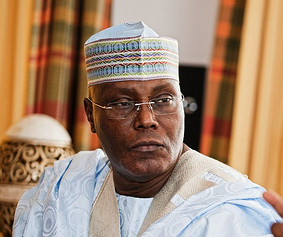
During President Obasanjo’s tenure (1999–2007), the Chairman of the NCP was Alhaji Atiku Abubakar, who is presently one of the factional presidential candidates of the African Democratic Congress (ADC) for the 2027 general elections.
Core Mandates of the NCP:
1. Policy Formulation – Determines which public enterprises should be privatized or commercialized and approves strategic investors.
2. Sector Reforms – Initiates market liberalization and structural reforms in critical sectors like power, transportation, and communications.
3. Pricing and Valuation – Approves guidelines for enterprise valuation and the final pricing of shares or assets offered to the public.
4. Transaction Oversight – Evaluates and appoints privatization advisers, consultants, and issuing houses.
5. Post‑Privatization Monitoring – Tracks ongoing performance and compliance of privatized and commercialized entities.
Industries and Enterprises Privatized:
Under Atiku Abubakar’s chairmanship, more than ten thousand industries, factories, and public enterprises established between 1940–1995 were privatized. These spanned aviation, telecommunications, manufacturing, hotels, banks, oil and gas, among others. Notable examples include:
– Nigeria Airways – Established in 1958, liquidated in 2003. Once a proud national carrier, it was older than Ethiopian Airlines, which thrives today.
– Delta Steel Company – Commissioned in 1980, privatized and later suffered severe setbacks.
– Ajaokuta Steel Mill – Begun in 1979, still incomplete after 45 years due to mismanagement.
– Katsina Steel Rolling Mill – Privatized in 2006, now operated by Dana Steel.
– Jos Steel Rolling Mill – Constructed by German firms, later privatized.
– Osogbo Steel Rolling Mill – Commissioned in 1983 with technical assistance agreements.
– ANAMCO – Established in 1977 to assemble Mercedes‑Benz trucks.
– Leyland Ibadan – A joint venture with British Leyland to assemble trucks and Land Rovers.
– Peugeot Kaduna – Incorporated in 1972 as a joint venture with Automobiles Peugeot of France.
– Nigerian National Shipping Line – Established in 1959, liquidated in 1995.
– Volkswagen Nigeria – Established in 1972, produced Beetle, Golf, Kombi, Jetta, and Passat.
– Aluminium Smelter Company of Nigeria (ALSCON) – Sold in 2004 to UC Rusal for $250 million, later stripped of assets and abandoned.
Conclusion:
The privatization program of the 2000s, under the leadership of Atiku Abubakar as Chairman of the NCP, was marred by corruption, cronyism, and policy failure. Instead of revitalizing Nigeria’s economy, it led to the collapse of industries that could have employed millions of young Nigerians. If these enterprises had been transparently privatized and entrusted to competent hands, Nigeria’s economic story might have been different. The irony remains that those who presided over this colossal failure still parade themselves as saviors of the nation.