by Okoi Obono-Obla
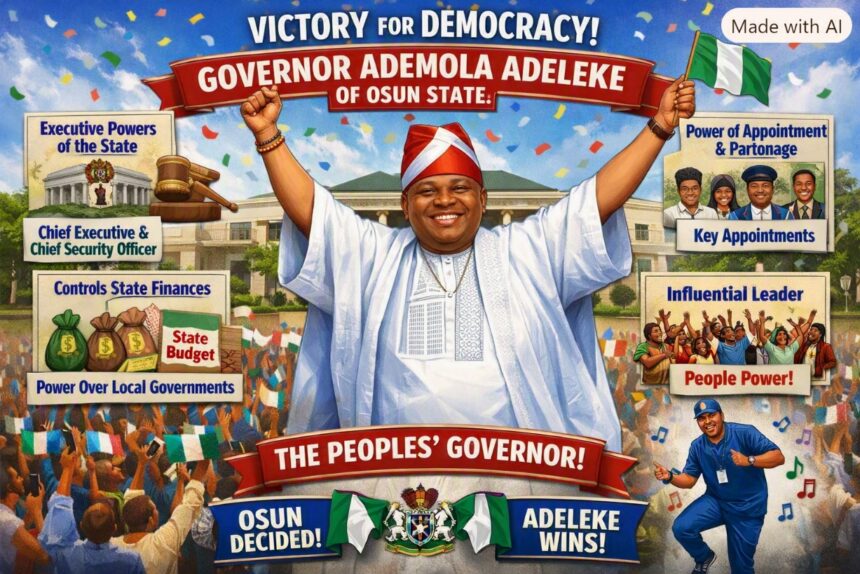
The victory of Senator Ademola Jackson Nurudeen Adeleke of Osun State in the Osun State gubernatorial election is a victory for democracy. It demonstrates unequivocally that Nigeria is not teetering on the brink of sliding into a one-party dictatorship, as some naysayers often claim.
It also exemplifies the fact that Governors are very powerful grassroots leaders in the political ecosystem of the country. Anyone who dismisses them in the mobilization and organization of people at the grassroots level does not know what he is talking about.
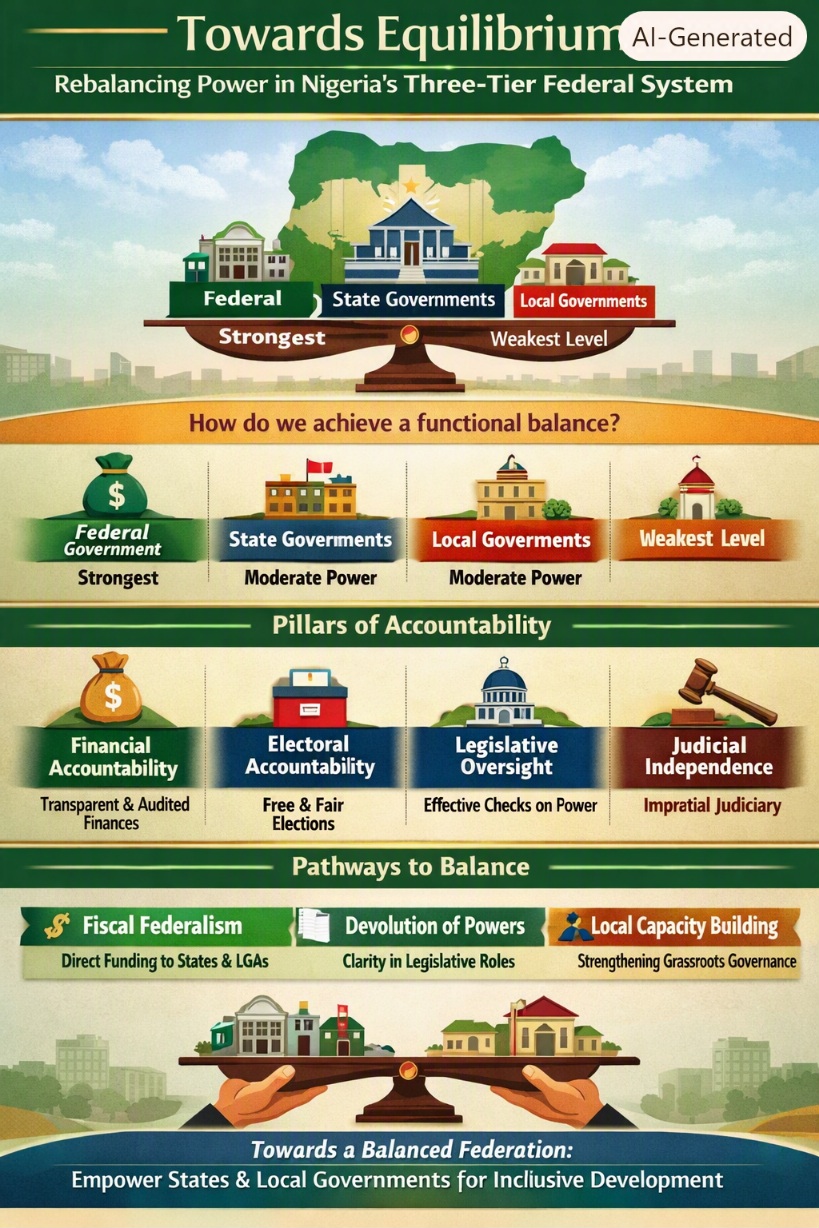
The 1999 Constitution of the Federal Republic of Nigeria (as amended) makes Governors extremely powerful. They are totally in charge of the financial and political nexus of their States. They control the levers of State power.
This constitutional supremacy is not of their own making, but of the deliberate design of the framers of the Constitution:
1. Executive Powers of the State are Vested in the Governor: Section 5(2) and Section 176(1) & (2) of the Constitution vest the entire executive powers of a State in the Governor. He is the Chief Executive and Chief Security Officer of the State.
2. Control Over State Finances: Under Sections 120, 121 and 122, no money can be withdrawn from the State Consolidated Revenue Fund or any other public fund of the State except in a manner prescribed by the House of Assembly, but the Governor initiates, prepares and controls the budgetary process. Section 162(6) creates the State Joint Local Government Account, which places all allocations to Local Governments from the Federation Account and the State Government under the control of the State Government headed by the Governor.
3. Control Over Local Governments – The Acme of Grassroots Mobilization: Section 7(1) guarantees democratically elected Local Governments, but makes the State Government responsible for their existence and funding. Through the State Joint Local Government Account, control of Local Government elections via the State Independent Electoral Commission under Section 197(1)(b) and Part II of the Third Schedule, and de facto control of caretaker committees, Governors control the Local Governments, which are the acme of grassroots political power and mobilization.
4. Power of Appointment and Patronage: Under Sections 192, 193, 198 and 208, the Governor has the power to appoint Commissioners, Special Advisers, the Secretary to the State Government, Heads of Extra-Ministerial Departments, and members of all Boards and Parastatals. This gives him enormous patronage and political leverage.
In essence, Governors are constitutional potentates – not out of their own making and design, but by the design of the framers of the Constitution.
Some political pundits have been dismissive and have boastfully preached that Governors do not matter in the political calculus of the country. However, the spectacular victory of Governor Adeleke, who is a study in lightheartedness and humour, is proof that these pundits are wrong.
When Matto Circle carried out a poll a few days ago on who would win the Osun State governorship race, I rightly forecast that Senator Adeleke would win, which means I rightly read the political barometer well.
Congratulations to Governor Adeleke.