
By Khaleed Yazeed
*Part One:* The Anatomy of a Miracle, The Unmaking of a Lie, and the Man They Fear
There is a profound and terrifying silence that echoes across the vast, bruised plains of the Nigerian state. It is not a peaceful silence, it is the suffocating silence of a people who have been betrayed so thoroughly, so systematically, that they no longer possess the vocabulary to articulate the depth of their own agony. It is the silence of a mother staring at the protruding ribs of her child because the local clinic is a morgue with empty medicine shelves. It is the silence of a young man watching his future evaporate into the thick smoke of a broken, rigged system. This is the landscape of the modern Nigerian tragedy, a sprawling graveyard of broken dreams where the promise of independence has been replaced by the reality of a highly organized, state-sanctioned extortion racket.
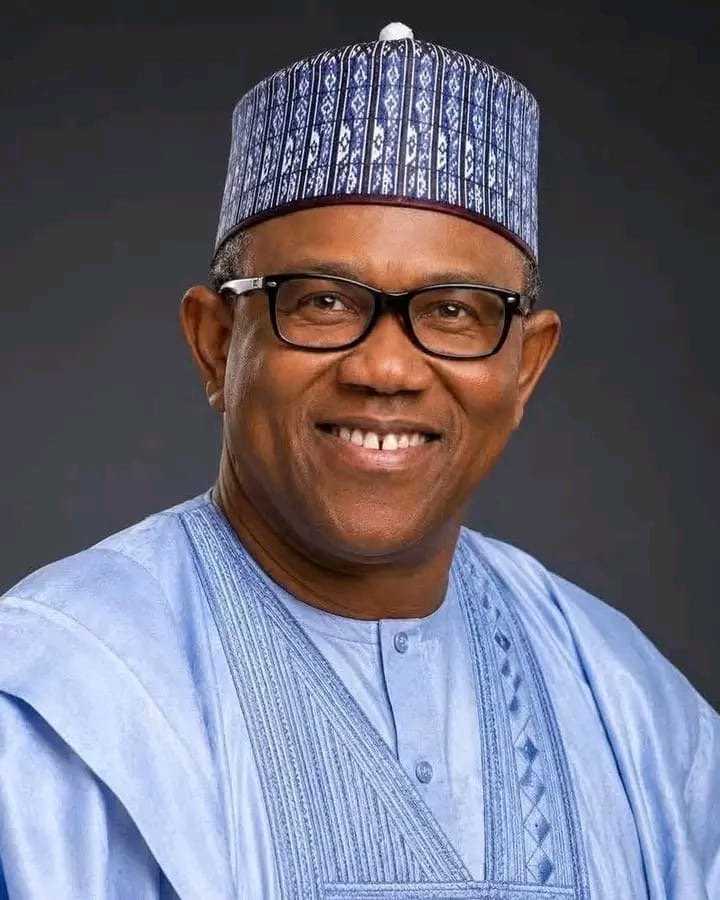
Yet, in the midst of this suffocating darkness, a solitary figure stands in stark, unyielding contrast to the architects of our collective misery. He is the anomaly. He is the glitch in the matrix of endemic corruption. He is PETER GREGORY OBI. To understand why the North, the most battered, bruised, and deeply deceived region of this nation will ultimately become the unconquerable fortress of his political revolution, we must first unearth the foundations of a deception so deep, so deeply woven into the fabric of our reality, that it has held the entire savannah hostage for generations.

To look upon Peter Obi is to look upon a man who views political power not as a gilded crown of entitlement to be paraded before the poor, but as an apron of sacrificial service to be worn in the kitchen of national development. He is the quiet accountant who entered the chaotic, blood-soaked ledger of the Nigerian state and demanded that the numbers must finally balance. His intention was never to acquire the messianic title of a savior, nor to build a dynasty of political godfathers who would trade his legacy for personal wealth. His intention is far more terrifying to the old order: he intends to change the very fundamental purpose of government from the primitive allocation of a shrinking national cake to the aggressive, scientific baking of a much bigger one.
He walks into the grand, air-conditioned rooms of statecraft and asks the one question that sends violent tremors down the spine of the political class: “Why should a country so immensely blessed by the Almighty, a nation with vast fertile lands, endless natural resources, and the most brilliant minds on the continent, be so heavily cursed with abject poverty?” The answer, of course, is that the poverty is not a curse from the heavens, it is a deliberate, coldly calculated business plan crafted by the elites to keep the masses desperate, dependent, and easily manipulated. It is a system where the poverty of the many becomes the wealth of the very few.
His character was not forged in the noisy, smoke-filled rooms of political opportunism, nor was it shaped by the toxic fumes of tribal and religious bigotry. His character was hardened in the crucible of the global marketplace, where the laws of supply and demand do not care about your religious affiliations, your political connections, or your tribal lineage. He built an empire of logistics and business without ever holding a single government contract, and he became staggeringly wealthy without ever stealing a kobo from the public treasury. When he entered the political arena as the governor of Anambra, he performed a miracle that the Nigerian psyche still struggles to process: he left the state richer, more developed, and more structurally sound than he found it. He built schools, he built roads, and he built human capacity. But most importantly, he left the treasury cleaner than he met it.
In a nation where politicians use state funds to build personal monuments to their own vanity, Obi used state funds to build the human infrastructure of the future. “Leadership is not a title but a life,” he often reminds the world. “Trust is not a gift; it is a reward. When those in government are richer than the entrepreneurs, they manufacture poverty.”
This man belongs to the entirety of the nation, and his footprints in the sands of the North were laid long before his name ever echoed in the noisy corridors of national politics. Long before the political machinery was built, Obi’s business networks, his intellectual partnerships, and his developmental allies spanned deep into the heart of the savannah. He understands a fundamental economic truth that the political elites have deliberately ignored: the South cannot truly prosper in isolation, because an industrial, wealthy South is absolutely meaningless and ultimately doomed without a secured, flourishing, and highly productive North.
He did not come to the North to buy votes with bags of rice and Pieces of spaghetti; he came to the North to build businesses, to empower the youth, and to stand shoulder-to-shoulder with the northerners in the pursuit of a collective economic destiny. “A hand cannot wash itself without the other,” he has declared, recognizing that the true wealth of the nation lies not in the oil swamps of the South, but in the uncultivated, highly fertile, and abundantly rich soil of the North. The North is the lungs of Nigeria, and any leader who does not understand this is merely a tourist in the halls of power.
From this singular, unshakeable man, a phenomenon was born that no political party could control, no godfather could hijack, and no security agency could dismantle. The Obidient idea was not conceived in the air-conditioned boardrooms of the elite; it was sparked in the dusty streets, in the crowded markets, and in the shattered hearts of the Nigerian youth who had been told their entire lives that they were too small to matter. The aims and goals of this movement are startlingly simple, yet they threaten the very foundation of the political establishment: to strip politics of its criminal profitability and return it to the realm of human dignity.
It is a collective rebellion against a system that trades poverty for votes and religions for weapons. The movement is built on the four unshakeable pillars of true governance: Competence, Capacity, Character, and Compassion. It is a direct declaration that the life of a poor child in the forgotten corners of Sokoto holds the exact same value as the life of a politician’s child in the glimmering streets of Abuja.
To understand why the North will be the ultimate beneficiary of this man, one must confront the brutal, ugly truth of the old order that has ruled the North for decades. The politicians who claim to hold the mandate of the northern people did not protect the soil; they mined the desperation of the people. The vast, fertile lands of the Upper Niger and the Chad Basin were meant to be the undisputed food basket of the entire African continent. Instead, due to systemic neglect, institutional corruption, and the abject failure of leadership, they became landscapes of fear, insecurity, and unfulfilled promises.
The old guardians built personal estates in the cities while the children of the poor were left without classrooms. They purchased luxury fleets of private jets while the local farmer could no longer walk into his own field without the terrifying fear of never returning. They treated the North not as a home to be nurtured, but as a mine to be ruthlessly emptied.
The hypocrisy of the old northern political class is a wound that festers in the open. They build universities in their villages but ensure their own children study in London and Dubai, completely disconnected from the decay they have sponsored. They stand in the grand mosques on Fridays, praying for peace, only to step into bulletproof convoys and drive past the very congregations they left behind to walk home in the dark, vulnerable to the very bandits they claim to be fighting. They have weaponized poverty, turning the almajiri into a political thug during elections and a tragic statistic after the ballots are counted. They promise heaven to the desperate while hoarding the resources of the earth, treating the masses as mere stepping stones to their insatiable greed.
And then, there is the greatest deception of all, a weaponization of faith so vile that it borders on blasphemy. The corrupt political establishment, sensing their grip on power slipping away, has decided to lift the garments of religion and tribe to blind the eyes of the populace. They try to paint Peter Obi with the colors of sectarianism, whispering in the corners of the mosques that the people must not vote for a Christian, no matter how competent, how honest, or how pure his intentions are.
But look closely at this illusion. The hunger in the stomach of a family in the plains of the Savannah does not check if the leader is a Muslim or a Christian. The bullet of a bandit does not choose its victims based on the way they pray, nor does the pain of an unemployed graduate in Kano ask for the religion of the man who creates his job.
The sacred texts themselves destroy the arguments of these deceptive politicians. True scholarship from the Holy Qur’an and the Hadith has always emphasized that justice, competence, and character are the ultimate requirements for leadership. In Islamic jurisprudence, a just leader who governs with equity and fairness even if he is of a different faith background is infinitely more beneficial to the community than an unjust leader who uses the name of the Almighty only as a political shield to cover his sins. The prophet’s own narratives show instances of trusting just rulers of different faiths because of their unyielding integrity, from the Najashi of Abyssinia who offered refuge to Muslims, to the treaties made with Jewish and pagan tribes.
To use the holy words to justify the retention of corrupt, incompetent rulers who allow children to starve and bandits to rule the land is a massive misinterpretation, a deliberate deception, and an insult to divine justice. A good Christian who feeds the hungry is undeniably closer to the teachings of the Prophet than a bad Muslim who starves them and steals their wealth. The blood of the poor is on the hands of those who use the holy book to cover their sins.
This is not a matter of ambiguous claims or emotional pleas. It stands as an unyielding monument of logic, fact, and economic truth. The record is an open book for the entire world to read. A single bag of stolen fertilizer linked to his name cannot be found, nor a single dollar looted from the treasury to build a hidden empire. The silence on his integrity echoes loudly, cutting through the deafening noise of a failing state. It is a silence that terrifies the establishment, because it leaves them with no ammunition, only their own glaring failures.
The stark realities of this nation demand a direct explanation. Why does a country blessed with millions of hectares of fertile, arable land rely on importing food just to survive? Why do the factories and farmlands remain completely quiet and abandoned while politics is treated as the most highly profitable, blood-sucking enterprise? We are looking at the direct consequences of a system that has completely abandoned its primary duty to the people. It is a system that feeds the politicians while starving the farmers, a system that builds private estates in the cities while letting public infrastructure rot into dust.
The ultimate indictment of this failed order is found in the raw, unfiltered realities of our daily lives. Walk into any local hospital ward. Look at the sick child gasping for breath, fighting for every ounce of life because the basic medical supplies are non-existent, the wards are dilapidated, and the doctors are owed months of salaries. When that child is fading on a bare mattress, do the loud religious verses chanted by the governor on the television provide the basic medical care that could have saved that child’s life? Or does the sheer incompetence of that governor simply become the final nail in the child’s coffin?
The answer to that question exposes the devastating, naked failure of the entire system. Blind loyalty and empty prayers cannot cure disease. A government that cannot provide the most basic medical care in hospitals for its citizens has already confessed its absolute uselessness in the face of reality. The failure is laid bare in the very simple things Nigerians should never have to struggle for basic healthcare, affordable food, and a functioning economy. Any attempt to defend this order only exposes the devastating rot of the system it is trying so desperately to protect.
The tragedy of the North is not written in the ink of Southern domination, but in the blood of its own children, sacrificed on the altar of a false regional agenda. For decades, the northern masses were told that their survival depended on keeping a northern Muslim in power, a narrative so potent that it blinded them to the fact that the men at the helm of affairs were not their fathers, but their parasites. The peasant in Katsina and the trader in Kano have been taught to cheer for a ruling class that builds sprawling mansions in Abuja while their own ancestral lands become battlefields. This elite cartel has weaponized the North’s demographic weight, trading their collective future for political relevance, leaving the region with nothing but the empty shell of a glorious past and the agonizing reality of a desperate present.
But the winds of change are sweeping through the Sahel, carrying with them the scent of a new consciousness. The young northerner who has watched his friends die in the forests and his sisters sold into early marriages is no longer moved by the tribal drums of the old guard. He sees through the charade. He understands that a leader’s religion does not fill the empty silos of the North, nor does a politician’s ethnicity repair the shattered roads of Kaduna or the flooded farmlands of Kebbi. The awakening of the Northern youth is a terrifying prospect to the establishment because it is the realization that their votes can no longer be bought with a bag of rice, and their allegiance can no longer be held hostage by the fear of the “infidel.” They are ready to embrace the quiet accountant, not because he shares their faith, but because he offers them a future that the men who share their faith have ruthlessly stolen.
Truth has no duplicate, and a man who does not need their money does not fear their threats. A man who does not bow to their idols cannot be controlled by their puppetry. The era of deceptive politics is coming to a definitive end, and the reawakening of the North is already underway. The quiet accountant is coming, and the balance sheet of the Nigerian state is about to be ruthlessly audited.
To be continued in Part Two.
Khaleed Yazeed is the Founder of the Wakilin Yamma Youth Development Network, Katsina State, Nigeria.