
By Okoi Obono-Obla
Borno and Yobe States are the hotbed of political resistance in the North-Eastern geopolitical zone, defined by a historic opposition to the conservatism of the North-West. This resistance is rooted in the fierce independence of the Kanuri people, who constitute the largest ethnic nationality in the zone and whose history stretches back to the glorious Kanem-Bornu Empire.
That empire, which straddled present-day Nigeria, Cameroon, Chad, Niger, Algeria and Libya, is regarded as one of the earliest regions where Islam took root in Africa over a thousand years ago. It is this antiquity that shaped its political psychology.
In the early 19th century, the Fulani Islamic scholar, proselytizer and revolutionary, Usman dan Fodio, attempted to extend his jihad into Borno after consolidating the Sokoto Caliphate. He met a stiff response from the Shehu of Borno, Muhammad al-Amin El-Kanemi, who wrote him a trenchant letter warning him against meddling in Borno, where Islam had been entrenched hundreds of years before it took root in the North-West. Dan Fodio backed down. Borno was never incorporated into Sokoto, and that spirit of autonomy endured.

In the First Republic, the rivalry played out in party politics. Ibrahim Imam founded the Borno Youth Movement [BYM] and used it as a bulwark against the Northern Peoples Congress [NPC], allying instead with the Action Group. In 1979, when the National Party of Nigeria [NPN] became the refuge for remnants of the NPC and the dominant party in the North-West, Borno characteristically went the other way and embraced the Great Nigeria Peoples Party [GNPP], founded by a Borno man, Alhaji Waziri Ibrahim. The old Borno State — from which Yobe was carved out in 1991 — thus remained within the orbit of progressive politics in Nigeria.
From 1983 to 1999 Nigeria was under military dictatorship. When General Ibrahim Babangida introduced a transition programme, he decreed only two government-sanctioned parties: the National Republican Convention [NRC], a little to the right, and the Social Democratic Party [SDP], a little to the left. Borno and Yobe allied with the SDP. That experiment was aborted in November 1993, with military rule lasting until 1999 when it succumbed to the global wind of change following perestroika and glasnost in the Soviet Union.
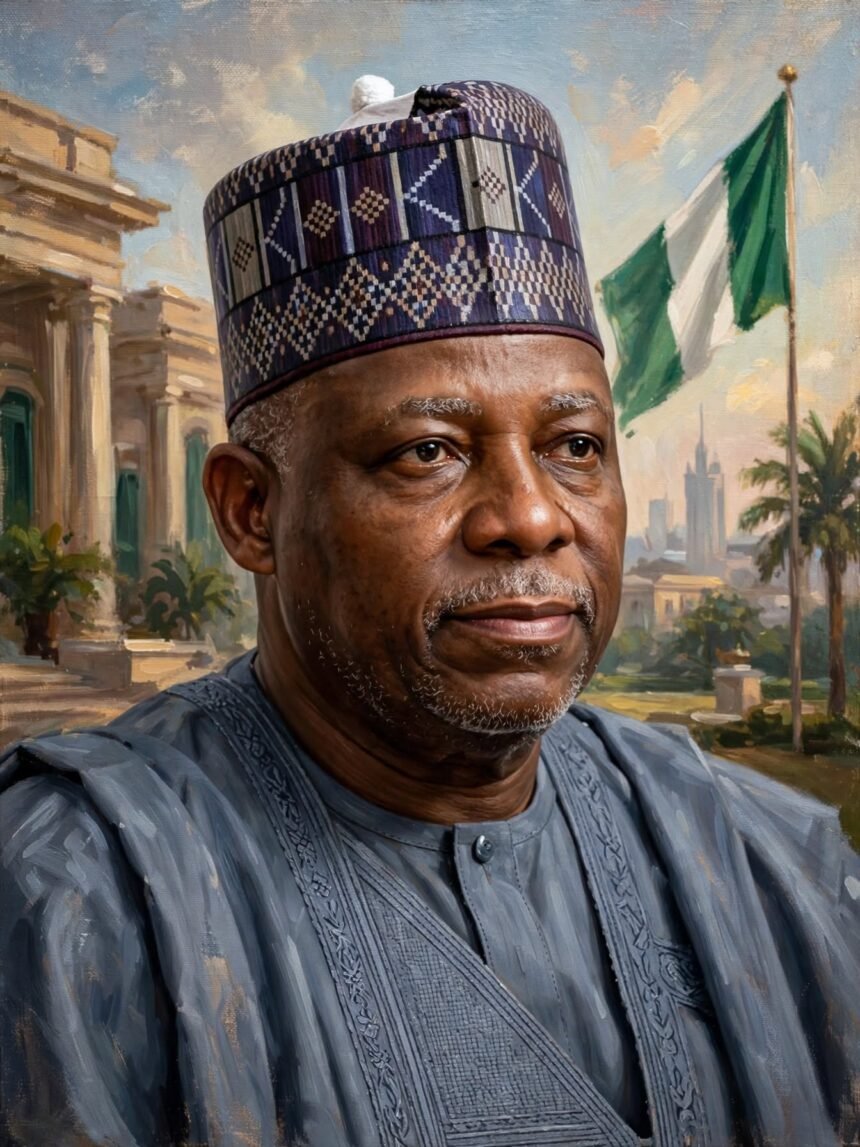
From 1999 to 2013, Borno and Yobe, epicentres of North-Eastern radical politics, stayed in the ANPP. In 2013 the ANPP, ACN, CPC and factions of APGA and DPP merged to form the All Progressives Congress [APC], which defeated the PDP in 2015. In a deft political manoeuvre in 2023, President Bola Ahmed Tinubu nominated a Borno man, Kashim Shettima, as his running mate.
The Voting Strength
The North-East is the fifth largest voting bloc in Nigeria with 12.8 million registered voters according to INEC. Within it:
Borno State: 2,513,281 registered voters, with 2,447,209 PVCs collected [97% collection rate].
Yobe State: 1,485,146 registered voters.
Together they control nearly 4 million votes — a bloc larger than many South-East states combined. Turnout has historically been suppressed by insecurity, but even with low turnout, the margin matters in a tight presidential race.
Who Won in 2023? A Split Verdict
The 2023 presidential election revealed the old fault line:
In Borno, APC won. Bola Ahmed Tinubu won the state with 375,183 votes, defeating PDP’s Atiku Abubakar who scored 284,898, while Labour Party’s Peter Obi polled 80,452. INEC listed Borno among the 12 states Tinubu won.
In Yobe, PDP won. Atiku Abubakar won his neighbouring state with 198,567 votes, defeating Tinubu who secured 151,459 votes, with Rabiu Kwankwaso at 18,270 and Obi at 2,406. Yobe was among the 12 states Atiku won.
The split was logical: Borno voted for its son as Vice-Presidential candidate; Yobe, home of the Senate President Ahmad Lawan at the time, was more competitive and went to Atiku, himself a North-Easterner from Adamawa State.
The 2027 Projection: Why the Dynamism of 2023 Will Not Return
The realities that made 2023 competitive in Yobe no longer exist.
First, the PDP has imploded. The party that used to be the second biggest in the North-East has splintered into smithereens. One major faction, operating under the name Rainbow Coalition, has allied with the APC. Without a unified PDP, Atiku’s 2023 Yobe victory cannot be replicated.
Second, the ADC is yet to gain momentum. The African Democratic Congress, now parading Atiku Abubakar after his defection, lacks ward and local government structures in Borno and Yobe. It has name recognition but not organizational ability to dislodge the APC.
Third, the Shettima Factor. In 2023, Shettima was a new face on the national ticket. For 2027, he is the incumbent Vice President and the potential presidential candidate for 2031 when President Tinubu’s second term peters out. The people of Borno and Yobe will not stake their brightest chance of clinching the Nigerian presidency by voting against their own.
With these new realities, the most likely outcome for 2027 is an APC sweep. The party is positioned to win the presidential election in both Borno and Yobe by wider margins than 2023, including overturning Yobe, and to retain the governorships and most State and National Assembly seats. The Borno-Yobe axis, historically defined by resistance to Sokoto conservatism and by progressive alignment, will once again assert itself — this time as the guarantor of its own path to the presidency.