
By Khaleed Yazeed
A Historiographical and Socio-Political Analysis Backing the IPOB Declaration
Introduction: The Seeming Paradox and the Historical Truth
The recent declaration by Nnamdi Kanu’s Indigenous People of Biafra (IPOB) that “Hausa are our brothers,” coupled with the renewed demand for a Biafra referendum, has unsettled the conventional Nigerian political establishment. To the uninformed observer, this appears contradictory. How can a movement seeking secession simultaneously embrace the very ethnic group with which it is often presumed to be at war? The answer lies in a deep historical excavation that reveals the truth: the Igbo and the Hausa were not ancient enemies. They were historical brothers whose organic fraternity was shattered by the Fulani Jihad of 1804, distorted by the British conquest of 1903, and finally weaponized by the Nigerian state after 1914.

The IPOB posture is not a contradiction. It is a profound reclamation of memory. It distinguishes between the ordinary Hausa masses, the indigenous Habe descendants who share a millennium of peaceful economic integration with the Igbo and the Fulani-dominated political oligarchy that conquered them both. The demand for a referendum is, therefore, not a declaration of ethnic war against the Hausa. It is a demand to dissolve a forced political marriage (the 1914 amalgamation) that trapped two historically connected peoples under a predatory central government. This article serves as the historical backing for that declaration, tracing the long arc of coexistence, rupture, and the possibility of restoration.
*Igbo-Ukwu and the First-Millennium Trade Networks*
In 1939, in Igbo-Ukwu, Anambra State, a man named Isaiah Anozie struck bronze while digging a cistern. The formal excavations by Charles Thurstan Shaw between 1959 and 1964 revealed a civilization of extraordinary sophistication dating to the eighth to tenth centuries AD. The site contained over seven hundred objects of lost-wax bronze casting, alongside thousands of glass beads traced to Egypt and the Middle East. This was not the work of an isolated people. It was the nerve center of a vast, first-millennium trade network that reached deep into the savannah.
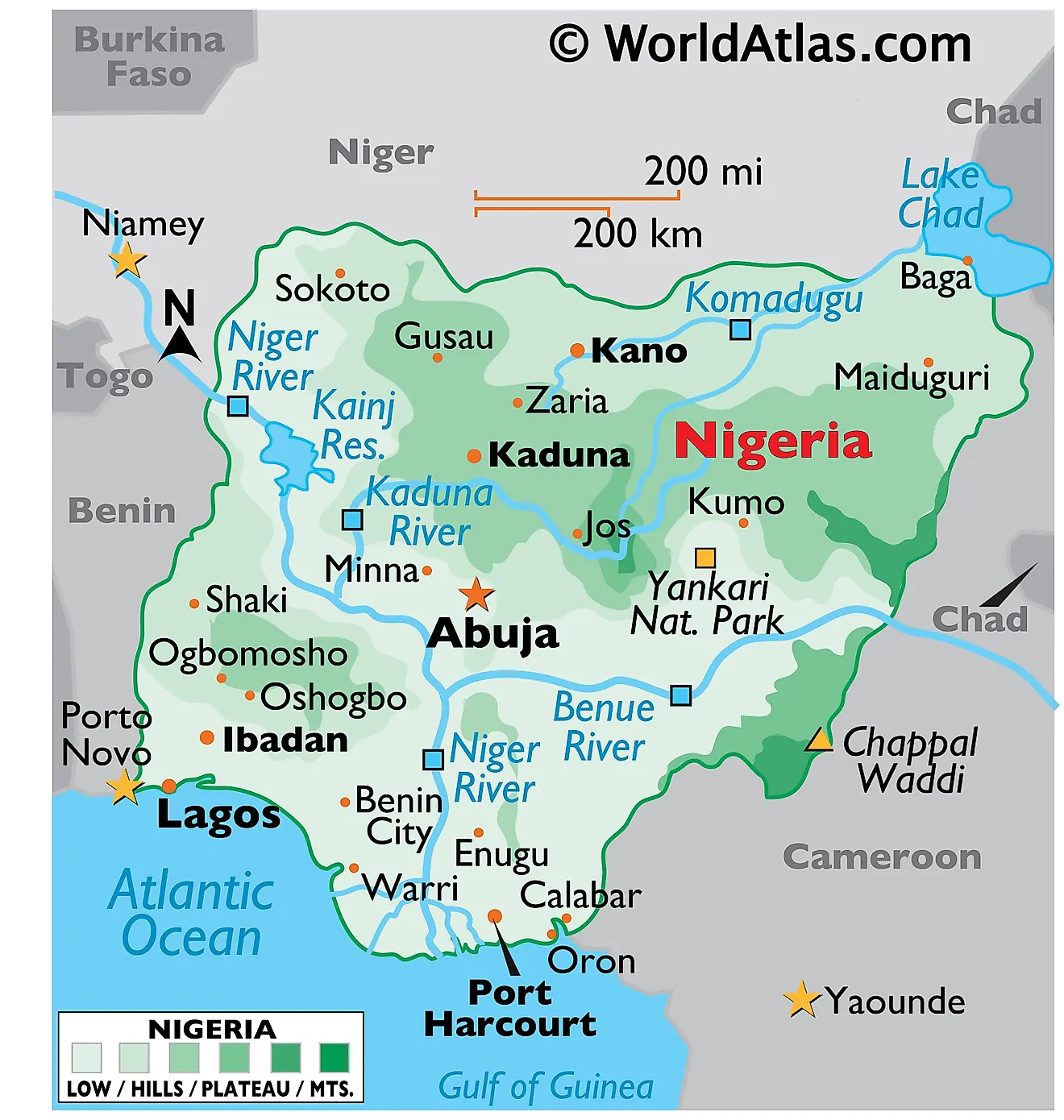
The routes were already there. Trade from the Niger-Cross River hinterland ran overland by the most direct route, crossing the Benue just above its confluence and continuing on to Zaria and Kano. Before the transatlantic slave trade, before the Fulani jihad, and before any European set foot in the region, the Igbo were navigating these corridors. The archaeological record proves that long-distance commerce was flowing across the Niger-Benue corridor by the ninth century, meaning the Igbo were part of the economic world that made the later Hausa city-states possible.
The historiographical significance of this cannot be overstated. The conventional periodization of Nigerian history treats the nineteenth century as the beginning of meaningful northern commercial integration. But the Igbo-Ukwu evidence inverts this timeline. The south-east was not waiting to be brought into the northern economy. The south-east was already inside it, and had been for centuries, long before the political order that Nigerians now call “traditional” had even been conceived. The bronzes are not merely artifacts of artistic genius. They are the material testimony of a world in which the Igbo were not strangers to the north, but architects of its commercial foundations.
*Nri, the Habe Kingdoms, and the Architecture of Trust*
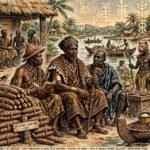
The Kingdom of Nri, founded around 900 AD, was the oldest kingdom in what is now Nigeria. It was not a military empire, but a ritual and cultural hegemony. Its founder, Eze Nri Ifikuanim, was a trader-diplomat, and its authority rested on commerce, negotiated relationships, and the Ọzọ title society. Nri priests traveled freely, settling disputes and opening markets. When this commercial infrastructure reached the central savannah, it found a receptive partner in the indigenous Habe kingdoms of Kano, Katsina, Zaria, and Gobir.
The Habe kings were not proto-nationalists defined by ethnic exclusion. They were commercial realists. Their cities were walled trading emporia, and their power depended on taxing and protecting trade. The Igbo smiths of Awka, renowned for superior metallurgy, established workshops in Hausa territories, producing the hoes, cutlasses, and weapons that sustained Hausa agriculture. The Uburu salt pans provided a biological necessity. The Habe kings granted these traveling technicians special protection and royal patronage. This was not romance, it was structural dependency. When one person’s tool feeds another’s family, the bond transcends ethnicity.
The relationship between the Igbo and the Habe was not merely commercial. It was constitutive of the material reproduction of Hausa society. The hoe that tilled the soil, the cutlass that cleared the bush, the knife that prepared the meal, these were not imports of convenience. They were the conditions of survival. When a people’s tools come from another people, the relationship between them is not optional. It is structural. And structural relationships, unlike political alliances, cannot be dissolved by a change of dynasty or a new ideology.
*Barbushe, Bagauda, and the Pre-Islamic Hausa Order*
To understand how deep the timeline runs, one must return to the foundation of Kano itself. Before Bagauda arrived around 999 AD and founded the Kano kingdom, there was already a settlement on Dala Hill. That settlement was ruled by a priest-king named Barbushe, the custodian of the Dala cult and the last of the pre-Islamic priest-kings of Kano. He ruled over a community with its own religion, its own governance, and its own trade. And that community was already connected to the wider networks of West Africa.
The Kano Chronicle records that Bagauda came from the east and conquered the indigenous pagans of Dala Hill. He did not build from nothing. He inherited a settlement that was already old, already organized, already connected. The routes that would later carry Igbo salt and iron northward were already active while Barbushe sat on Dala Hill, watching caravans arrive from lands his successors would later claim to have discovered. Barbushe ruled roughly 900 to 999 AD, while the Igbo-Ukwu bronzes date to 800 to 1000 AD and Nri was founded around 900 AD.
The timeline does not merely overlap with the Hausa kingdoms. The Igbo presence in the networks that reached Hausaland predates the Kano kingdom itself. This is the fact that the conventional narrative cannot accommodate. It is not that the Igbo arrived in Hausaland after the Hausa states were established. It is that the trade networks that connected the Igbo interior to the central savannah were older than the states themselves. The Igbo were not latecomers to Hausaland. They were part of the world in which Hausaland was born.
*The Kano Chronicle and the Historiographical Problem of Silence*
Bagauda founded Kano around 999 AD, and the Kano Chronicle records the reigns of its kings from that point onward, documenting wars, alliances, famines, the arrival of scholars, and the growth of markets. But a critical fact must be acknowledged. The Kano Chronicle, in its surviving form, made no mention of interactions between Hausa and the peoples of Eastern Nigeria, and some scholars have taken this silence as evidence of absence. That conclusion is dangerous and intellectually lazy.
The Kano Chronicle is not a comprehensive ethnographic survey. It is a political chronicle focused on kings, wars, and Islamic scholarship. It records the arrival of Fulani scholars and the conversion of the ruling dynasty. It does not record every merchant who passed through its markets or every trade route that fed its economy, and it was never intended to do so. The silence of the Chronicle about the Igbo is not evidence of absence. It is evidence of the Chronicle’s limited scope and purpose. It is the same logic that would conclude, from the absence of a wife’s name in a king’s war chronicle, that he never married.
And here is the historiographical irony that should trouble every serious student of Nigerian history. The very sources that Nigerian schools teach as authoritative, including the Kano Chronicle, the Tarikh al-Sudan, and the Tarikh al-Fattash, are not neutral documents. They are political texts written by and for the victors of the 1804 jihad, composed to legitimize the caliphate and marginalize the Habe order it replaced. To read them as neutral records of pre-Fulani Hausaland is to read a prosecution brief as if it were a court transcript. The archive is not a window into the past. It is a mirror reflecting the interests of those who compiled it.
*The Aro Confederacy and the Commercial Empire of the Oracle*
If Nri and Igbo-Ukwu provided the cultural and archaeological foundation, the Aro Confederacy provided the commercial engine, and the Aro were the people who carried Igbo trade deepest into Hausaland. The Arochukwu kingdom was founded around 1690, with Akuma as its first king, or Eze Aro. After Akuma’s death, the Igbo took over the throne with Oke Nnachi, son of Nnachi, around 1720, inaugurating the Nnachi Ipke dynasty. This inaugurated a period of commercial expansion that would last for two centuries.
The Aro controlled the Ibini Ukpabi oracle, known to Europeans as the Long Juju, which functioned as the highest court of appeal for communities across the entire region. Disputes that could not be settled locally were brought to the oracle, its judgments were final, and its authority extended far beyond Igboland into territories that had never been conquered by Igbo arms. The oracle, not the sword, was the instrument of Aro power. It was a governance structure built on spiritual authority and commercial necessity.
What the Aro built with that religious authority was a commercial empire. By the end of the eighteenth century, the Arochukwu had secured a virtual monopoly of the overland trade in slaves and valuable commodities, carving Igboland into spheres of influence and establishing colonies across the interior that functioned as divinely ordained trade centers. Their network connected the Cross River region, the lower Niger, and the markets of the north, and where they reached, they settled. The Aro Confederacy was not merely a trading network. It was an alternative governance structure that performed functions that modern states claim for themselves: adjudication, protection, currency, and mobility.
*Uburu Salt, Awka Iron, and the Material Foundations of Brotherhood*
Before the British amalgamation of 1914 or the political rivalries of the twentieth century, a sophisticated network of internal trade routes connected the rainforests of the Southeast with the arid plains of the North, and two commodities drove this exchange. The communities of Uburu and Okposi in present-day Ebonyi State were legendary for large-scale salt panning, and the Igbo controlled a significant share of the supply that moved north. Salt is not a luxury. It is a biological necessity. And the Igbo controlled the supply that kept Hausa households alive.
Iron was the second commodity. The blacksmithing guilds of Awka were renowned across West Africa for superior metallurgy, and the ụmụ ọkpụ were not sedentary craftsmen but travelling technicians who moved seasonally or permanently to wherever their services were needed. Awka men were renowned throughout the Igbo country, and even beyond its borders, as clever blacksmiths, producing cutlasses, hoes, knives, spearheads, and swords using local kilns and furnaces. The Hausa plains required a massive, continuous influx of high-quality iron to sustain their cultivation of grains, millet, and cotton.
The savanna was agricultural, and it needed metal. This industrial complementarity created a necessity for Awka and related smithing guilds to establish workshops within Northern territories, and these travelling technicians were granted special protection and royal patronage by the Habe kings, not out of sentiment but out of self-interest. A kingdom without good tools is a kingdom that starves. The protection was not sentiment. It was enlightened self-interest. And it worked for centuries, creating a relationship of mutual dependency that neither party could afford to break.
*The Pluralistic Habe Kingdoms and the Logic of Inclusion*
The political architecture of the original Hausa states, including Daura, Kano, Katsina, Zaria, Gobir, Rano, and Biram, was structured around commerce, urbanisation, and regional cosmopolitanism. This is not a modern reinterpretation, because it is visible in the physical remains of the cities themselves. By the eleventh century, some Hausa states such as Kano, Katsina, and Gobir had developed into walled towns engaging in trade, servicing caravans, and manufacturing various goods. Pre-1804 Hausa cities were walled trading emporia.
They had gates that were controlled but not sealed. They had markets that operated on fixed schedules and attracted merchants from across the region. The Habe kings did not govern through rigid ethno-religious exclusion, but through the optimisation of economic prosperity, because their power depended on their ability to tax and protect trade. A king who drove out merchants destroyed his own revenue, and a king who welcomed them grew rich. The logic of the Habe state was the logic of the market: inclusion was profitable, and exclusion was self-defeating.
The original Hausa monarchs respected the technical and commercial prowess of their Southern neighbours, and the relationship was built on mutual benefit. And it is this era of peaceful, unmediated cross-cultural exchange that provides the historical foundation for the framing of the Hausa and Igbo as historical brothers. The argument here is not that pre-Fulani Hausaland was egalitarian. The argument is that it was pluralistic, structured around inclusion rather than exclusion, because inclusion was profitable. And profit, unlike sentiment, is reliable.
*The 1804 Jihad and the Severing of the Old Order*
The year 1804 is the great rupture. The Fulani Jihad, spearheaded by Sheikh Usman dan Fodio, systematically dismantled the ruling dynasties of the Hausa Habe kingdoms, replacing the traditional monarchs with a centralised caliphate governed by appointed Fulani Emirs. The sequence was rapid, and the consequences were irreversible for the old order that had hosted southern traders for centuries. Usman dan Fodio was a scholar who had lived and studied within the Gobir Kingdom, and he was given refuge, support, and a position by the Gobir authorities.
He repaid that hospitality with war. The jihad began in February 1804, and by 1808 the Hausa states had been overthrown. The Habe kings were killed, exiled, or reduced to vassals. Their libraries were burned, their institutions were replaced, and their history was rewritten by the victors. Here is the point that is so often buried. This was not merely a change of dynasty but the severing of the direct, organic channels that had connected the indigenous Hausa with southerners peoples for centuries. A new ruling class was superimposed over a conquered population.
New hierarchies were created, new narratives were imposed, and the ancient, trade-based fraternity between the Habe and the Igbo was progressively obscured. The conquered were not simply converted. They were subordinated. The jihad created a new political class, a new land tenure system, and a new ideological apparatus. And it did so by erasing the legitimacy of the order it replaced. The Habe kings were not simply defeated. They were delegitimized, recast as pagans, as unjust rulers, as enemies of God. Their relationship with southern traders, which had been central to their economy, became a liability rather than an asset. The new order needed new enemies. And the Igbo, who had been partners of the Habe, became convenient targets of the new ideology.
*The British Conquest of 1903 and the Preservation of the Caliphate*
In 1903, the British conquered the Sokoto Caliphate. The last independent Sultan, Muhammadu Attahiru I, fled Sokoto rather than submit, was pursued and killed at the Battle of Burmi in July 1903, and the British displayed his severed head across the North as a warning. But here is what the British did not do. They did not destroy the emirate system. They preserved it. The British found the Fulani emirate structure efficient for extraction and made it the backbone of indirect rule.
They guaranteed the Sultan of Sokoto and the Fulani emirs their continued authority in exchange for cooperation. They kept their titles, their palaces, and their power over the Hausa masses. They simply became subordinate to a new master, and the architecture of internal domination was preserved intact beneath the architecture of colonial rule. This is what the *”Hausa-Fulani”* label was designed to conceal. The Fulani were not only conquerors. They were collaborators in the colonial project. And the British were not only colonizers. They were inheritors of a system of internal domination they found convenient and preserved.
And in the same moment, the British also destroyed the Aro Confederacy in the South. The Aro capital fell in 1902, the oracle was dismantled, and the trading network was broken. In the space of two years, the British destroyed the two great indigenous systems that had connected North and South for centuries, the Habe kingdoms and the Aro Confederacy, and then they told both peoples that they had always been enemies. The colonial archive did not merely record history. It produced it. By preserving the emirate system while destroying the Aro Confederacy, the British ensured that the North would enter the twentieth century with its pre-colonial political structures largely intact, while the South would enter it with its pre-colonial structures dismantled.
*The 1914 Amalgamation and the Invention of Separation*
When the British administration under Lord Lugard enforced the amalgamation of the Northern and Southern Protectorates in 1914, they did not create a relationship between Hausa and Igbo out of nothing. They superimposed modern state boundaries onto a centuries-old network of pre-existing human interactions. The amalgamation was not designed to unite but to administer, and the primary aim was economic. Lugard needed the surpluses of the South to offset the deficits of the North.
The result was a single political entity held together by force, with two different administrative systems serving one imperial master. The introduction of the Sabon Gari system after 1914 formalised the segregation of strangers’ quarters. In Kano and other Northern cities, non-indigenous populations, including the Igbo, were pushed into separate wards, and this was a colonial policy of division designed to keep communities separate and controllable. It was not a continuation of pre-colonial practice. It was a break from it.
Before European gunboats and administrative lines divided the landscape, the Hausa and Igbo had already built an equilibrium of mutual economic respect. The railways simply modernised and accelerated a trans-regional commercial pipeline that the ancestors of both peoples had navigated for centuries using caravans. The British did not create the connection. They distorted it, and they built the spatial infrastructure for the ethnic hostility that would explode in the pogroms of 1945, 1953, and 1966. By segregating strangers’ quarters, the colonial state created the physical infrastructure for ethnic separation.
*Language, Blood, and the Honest Answer*
Any honest account must address the linguistic question directly, because it is where the brotherhood narrative faces its most serious challenge. The Hausa language is classified within the Chadic branch of the Afroasiatic family, while the Igbo language belongs to the Volta-Niger branch of the Niger-Congo family. The two languages are not related, and the claim of linguistic brotherhood cannot be sustained. But here is what that proves, and what it does not prove. It proves that the Hausa and Igbo are not the same people. It does not prove that they were enemies.
Language families do not determine political relationships. The Swiss speak four unrelated languages and built one of the most stable federations in the world, while the Rwandans speak one language and committed one of the worst genocides of the twentieth century. Therefore, the concept of brotherhood is not rooted in a shared proto-language but in a powerful socio-historical fraternity forged through centuries of peaceful trade, shared regional spaces, and a common structural experience under later political systems. That is a different kind of kinship, and in practice, it is more durable than blood.
The historiographical lesson is: ethnic identity is not a biological fact. It is a political artifact. The Igbo and the Hausa are not brothers because they share genes. They are brothers because they shared markets, tools, roads, and time. And that, in the long view of history, is a stronger foundation than any bloodline. The linguistic argument is a red herring, designed to foreclose the possibility of solidarity by appealing to an essentialist notion of ethnic identity. But ethnicity is not destiny. It is a historical construct, shaped by politics and economics and power.
*Metallurgy as the Catalyst of Trust*
In the pre-industrial era, iron was the ultimate currency of power, agriculture, and survival. The Hausa plains required a massive, continuous influx of high-quality iron implements. A farmer with a good hoe feeds a family, and a farmer with a bad hoe feeds no one. This simple material fact is the foundation upon which the entire Igbo-Hausa relationship was built, and it explains why that relationship endured for centuries. The Igbo master smiths were unparalleled in their metallurgical craftsmanship.
The Awka smiths were not just crafters but innovation engineers who adjusted their products to the needs of different environments and different crops, and in the immediate pre-colonial period they were considered wealthy by the standards of the day, not through practising their craft in the Awka region alone, but through their travels. This created a necessity for Awka and related guilds to establish seasonal or permanent workshops within Northern territories. These travelling technicians were granted special protection and royal patronage by the Habe kings, illustrating a deep level of institutional trust that transcended ethnic origins.
A king who guaranteed the safety of the Awka smith guaranteed his own harvest. The protection was not sentiment but enlightened self-interest, and it worked for centuries. Trust between peoples is not built in the abstract. It is built in the material. It is built when one person’s tool feeds another person’s family. It is built when a king’s guarantee of safety creates a market that sustains both parties. The Igbo-Hausa relationship was not founded on rhetoric. It was founded on iron and salt. And that is why it lasted for a thousand years, and why the attempts to destroy it in the twentieth century required so much deliberate effort.
*Counting the Years Before the Arrival of the Horsemen*
Now let us put the arithmetic in one place, plainly. Igbo-Ukwu (c. 800 AD) to the Fulani Jihad (1804) is approximately 1,004 years. The Kingdom of Nri (c. 900 AD) to the Fulani Jihad is approximately 904 years. Barbushe of Dala Hill (c. 900 to 999 AD) to the Fulani Jihad is approximately 805 to 904 years. Bagauda and the founding of Kano (c. 999 AD) to the Fulani Jihad is approximately 805 years. The Aro Confederacy (1690 AD) to the Fulani Jihad is approximately 114 years.
Every figure tells the same story. When the Fulani horsemen crossed the savannah in 1804, they were not entering a land that had never seen a southerner. They were entering a land where southern traders had been buying and selling for a thousand years, where Igbo salt had been seasoning Hausa food, where Igbo iron had been tilling Hausa soil, and where Igbo merchants had walked the same roads the caravans used. The Fulani did not introduce the Igbo to Hausaland. The Igbo were already there.
The Fulani introduced a new political order, but they did not introduce the connection. That connection was older than their language, older than their grandparents, and older than their jihad, and the arithmetic of a thousand years makes this impossible to deny. This is the arithmetic that the conventional narrative cannot accommodate. It is the arithmetic that the promoters of Hausa-Igbo hostility do not want you to do. Because once you do the arithmetic, the entire edifice of ethnic antagonism begins to crumble. Once you do the arithmetic, you realise that the enmity is not ancient. It is recent. It is manufactured. And it can be unmade.
*Contemporary Re-Alignment and the Reclaiming of Memory*
The rhetoric of recent years, when Nnamdi Kanu and the Directorate of State of IPOB extended a hand of brotherhood to the ordinary indigenous Hausa and other northern nationalities, represents an intentional ideological shift designed to deconstruct decades of post-colonial hostility. By defining ordinary Hausa citizens as brothers rather than adversaries, the narrative seeks to heal fractures that have plagued Nigeria since the civil war era of 1967 to 1970. The civil war was the culmination of the colonial strategy of division.
The Igbo were scapegoated, starved, and slaughtered, the Hausa masses were mobilised against them, and the Fulani elites profited from the chaos. But that was not the beginning of the story, and it does not have to be the end. This framework encourages the masses of both North and South to recognise that their true historical legacy is one of peaceful economic interdependence, shared regional spaces, and mutual respect, rather than the state-engineered rivalries of the twentieth and twenty-first centuries.
The socio-political analyst must be clear about what is at stake. The enmity between Hausa and Igbo is not ancient. It is modern, the product of specific political decisions made by specific actors at specific moments, including the 1804 jihad, the 1903 British conquest, the 1914 amalgamation, the 1966 coups, the 1967 to 1970 civil war, and the decades of military rule that followed. None of these were inevitable, and all of them were choices that can be unmade. The IPOB declaration is a recognition of this truth, and the referendum demand is the political mechanism through which the truth can be actualized.
*The Consensus of Modern Africanist Historiography*
Today, a growing consensus of progressive Africanist historians validates the principle that pre-colonial African societies were fluid, highly interactive, and rarely isolated by rigid ethnic boundaries. No single ethnic group in the West African sub-region evolved in a vacuum, and the deep-rooted economic linkages between the Igbo nation and the indigenous Habe dynasties of Hausaland represent a core pillar of the historical Western Sudanic trade complex. The savanna needed forest products, the forest needed savanna goods.
In between, a thousand intermediaries moved a thousand things across routes that predated states, empires, and jihads. Recognizing this ancient fraternity does not diminish the unique cultural identity of either group but enriches the collective historical consciousness by demonstrating that cross-regional unity is an ancient, organic reality rather than a modern, artificial invention. It suggests that the default condition of these peoples was connection, not hostility, and it suggests that the hostility was taught, which means it can be untaught.
This is not naive idealism but a strategic imperative, because Nigeria cannot survive as a nation if its largest ethnic groups remain locked in a cycle of mutual suspicion that was engineered by conquerors and colonizers who are long dead. The consensus of modern scholarship is: the Igbo and the Hausa are not natural enemies. They are historical partners whose partnership was stolen by a series of conquerors, and whose descendants have been taught to blame each other for the crimes of their oppressors.
*Breaking the Architecture of Domination*
A rigorous evaluation of oral histories, regional trade timelines, and archaeological evidence reveals that the relationship between the Igbo and the peoples of Hausaland is rooted in antiquity, extending far deeper than the geopolitical transformations brought about by the 1804 Fulani Jihad. The Igbo were present in and connected to Hausaland for centuries before the Fulani conquest, and that is not a slogan but a calculation. From Igbo-Ukwu to 1804 is over a millennium, from Nri to 1804 is over nine centuries, and from Bagauda to 1804 is over eight centuries.
The concrete realities of seventeenth-century Aro merchant settlements, combined with the timeless regional exchange of salt, iron, and agricultural goods, provide a foundation for the narrative of pre-colonial brotherhood that cannot be dismissed by those who prefer a simpler story. The Aro Confederacy, founded in 1690, built the commercial infrastructure. The Awka smiths provided the tools. The Uburu salt pans provided the mineral. And the Habe kings provided protection and the markets. This was a civilization of interdependence, not a history of enmity.
The same system that conquered the Habe in 1804 and destroyed the Aro in 1902 is still standing. It has changed its clothes, learned new languages, and produced new inheritors, but the architecture of domination remains, a system that survives by keeping the majority poor and the minorities afraid. The Igbo were not made to be enemies of the Hausa. They were made to be brothers, and the arithmetic of a thousand years says so. The IPOB declaration is a reminder of that truth, and the referendum is the political mechanism through which the truth can be restored. The question that remains is whether Nigerians will have the courage to do the arithmetic.
Khaleed Yazeed, a writer, and the founder of the Wakilin Yamma Youth Development Network in Katsina State, Nigeria.